

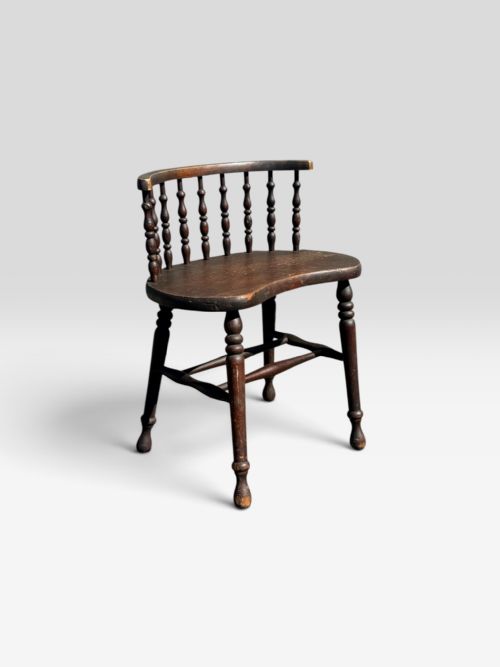
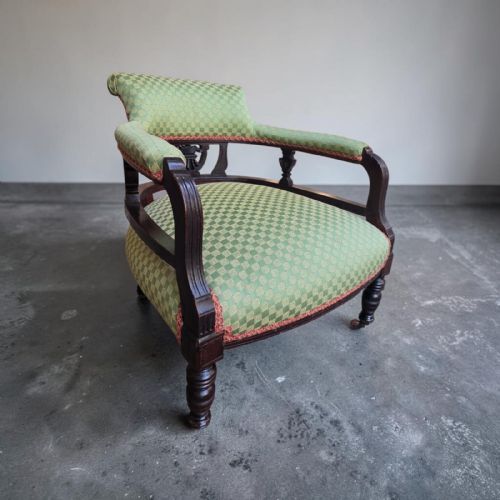
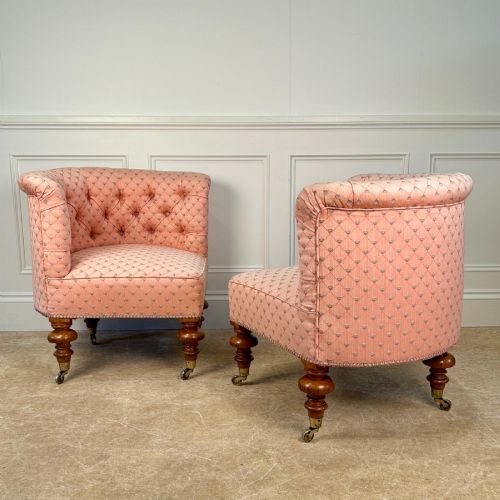
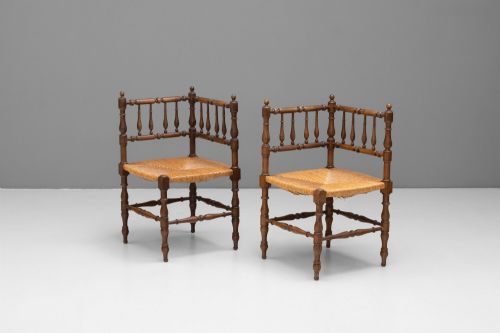
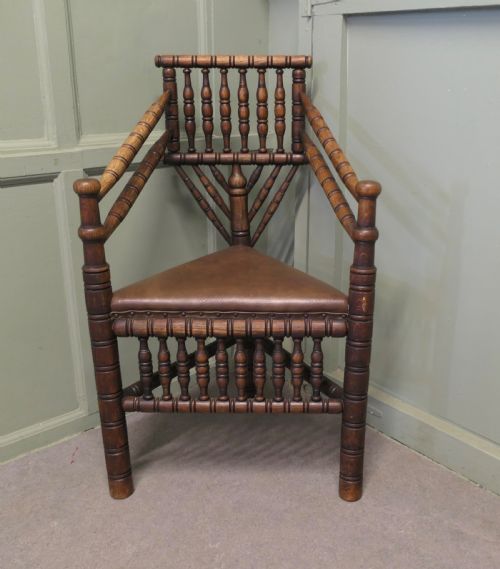
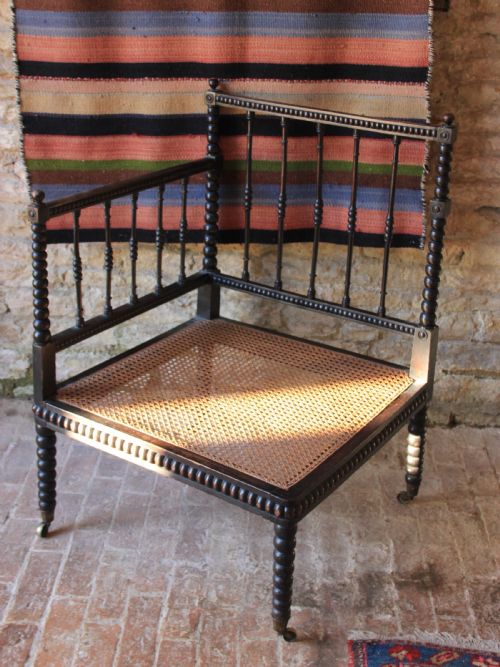


Turned Leg Corner Chair
These turned leg corner chairs combine heavy framing with distinctive spool turnings, offering a sturdy seat designed to fit neatly into domestic angles.
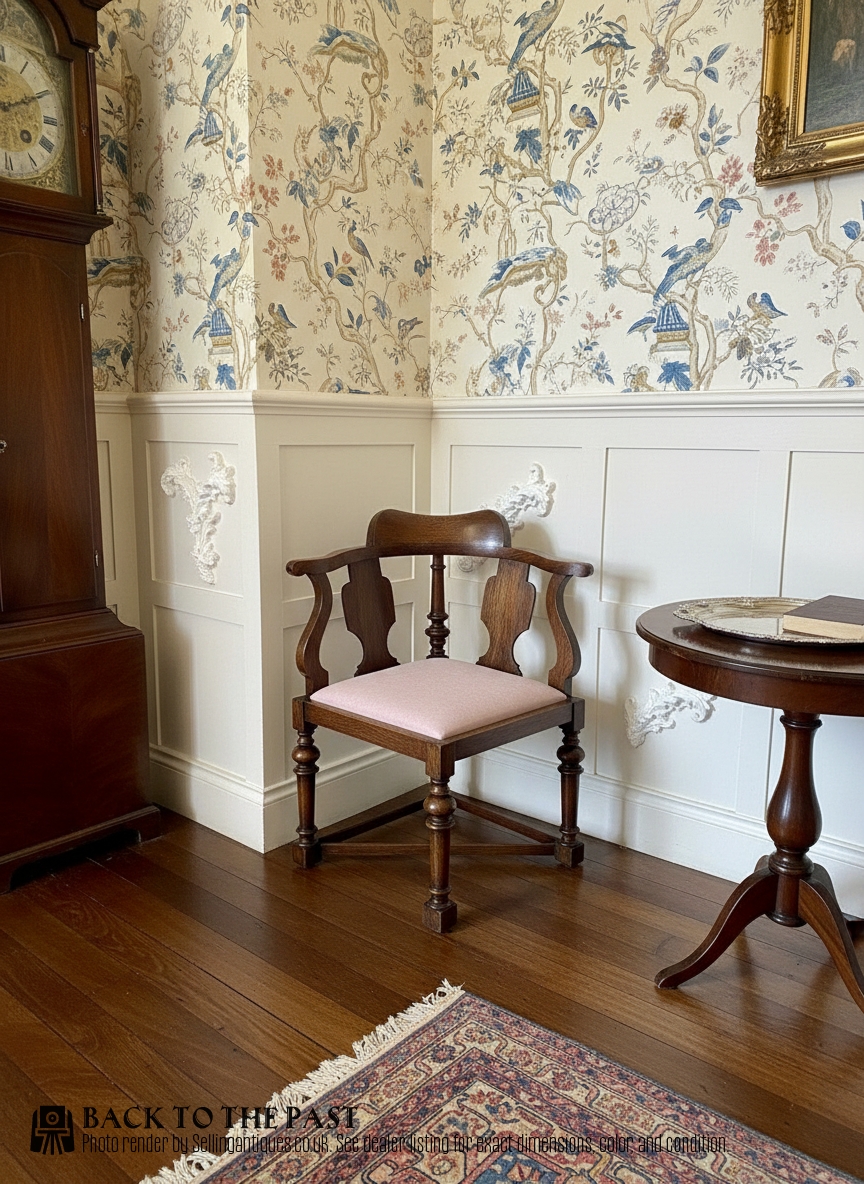
Turned Leg Corner Chair
A turned leg corner chair provides a distinctive seating option designed specifically to occupy the junction of two walls in a room. These pieces appear across Victorian, Edwardian, and early twentieth-century periods, utilising forms such as corner armchairs, tub chairs, and low stools.
The evidence shows examples emerging from the nineteenth century through the nineteen-twenties, incorporating English country, Gothic revival, and traditional styling. Buyers will encounter robust oak and beech frames alongside mahogany variations paired with upholstery fabric, leather, and brass details.
Many items in this category feature repetitive spool or bobbin turnings along the legs and spindles, echoing older vernacular traditions like the turner's chair or Old Saxon designs. Others present simpler upholstered squab seats or velvet restorations suited to domestic accent seating.
How they were made
Construction relies heavily on domestic timbers like oak and beech, shaped through lathe work to produce the characteristic turned members and spindles. Workshops occasionally utilised mahogany for more refined examples, integrating brass castors at the foot of legs.
Joinery methods secure the angular frame of a corner seat to withstand lateral pressures placed on the corner post. Upholstered elements incorporate fabric, leather, and traditional stuffing materials fixed over frames or loose squab seats.
The recorded periods range from mid-nineteenth-century Victorian examples to Edwardian and nineteen-twenty pieces.
What varies in quality
The integrity of the turned spindles and the crispness of the lathe work distinguish standard production from superior pieces. Heavier framing timbers and carefully chosen grains in oak or mahogany alter the physical presence of the furniture.
The choice of covering materials, from plain upholstery fabric to purple velvet or red leather, changes the finish of the seating. Integration of maker attribution or specific revival styling elevates certain examples above simpler vernacular forms.
Miles & Edward’s
The Turned Leg Corner Chair Glossary
- Turned leg
- A structural support shaped by rotating timber against a cutting tool on a lathe. This technique produces repetitive cylindrical or spool profiles found across nineteenth-century seating.
- Corner chair
- An armchair designed with a diagonal orientation to fit into room angles. The backrest typically sweeps around two adjacent sides above a square seat set lozenge-wise.
- Turner's chair
- A heavy wooden armchair constructed almost entirely from turned spindles and posts. These pieces reference ancient vernacular designs often called Old Saxon or Warwick chairs.
- Squab seat
- A loose cushion placed over the rigid wooden base of a chair or stool. This addition provides movable padding without altering the fixed frame below.
- Castor
- A small wheel mounted in a swivel housing attached to the base of a furniture leg. They assist in moving heavy wooden frames across floor coverings.
Turned Leg Corner Chair: Frequently Asked Questions
What is a turned leg corner chair?
A turned leg corner chair is an angular seat built to fit into the corner of a room, featuring legs shaped on a lathe. They incorporate turned spindles and heavy wooden frames originating across the Victorian and Edwardian eras.
These chairs use timbers such as oak, beech, and mahogany, often paired with upholstered squab seats or leather pads.
Where did people place corner chairs?
Historical room layouts utilised corner chairs to occupy unused wall junctions without obstructing central floor space. Their diagonal design allowed them to tuck neatly into room boundaries.
They served as accent seating in studies, bedrooms, and parlours alongside larger armchairs and sofas.
How do I identify a Victorian corner chair?
Victorian examples frequently display revival styles such as Gothic details or Old Saxon spool turnings. The listed pieces span various dates through the nineteenth century down to nineteen-twenty.
Materials visible from this era include dark oak, turned beech, and occasional mahogany frames fitted with brass castors.
What materials were used for these chairs?
Frame construction relies primarily on hardwoods like oak and beech, alongside mahogany on select pieces. Metal components include brass castors and fittings.
Upholstery elements incorporate leather, fabric, and velvet to cover squab seats and tub chair backs.