



Dark Wood Corner Chair
A dark wood corner chair fits neatly into neglected spaces, offering both curious design and sturdy seating from centuries past.
Dark Wood Corner Chair
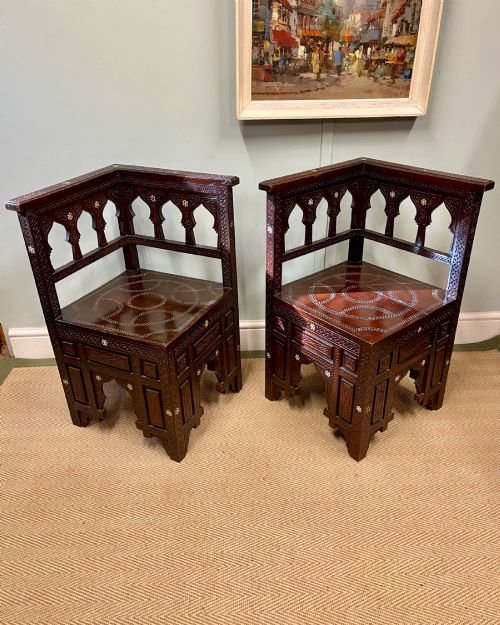
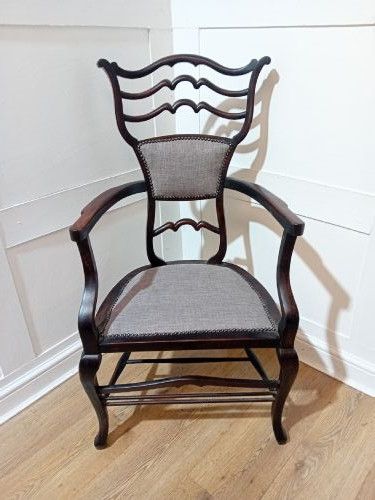
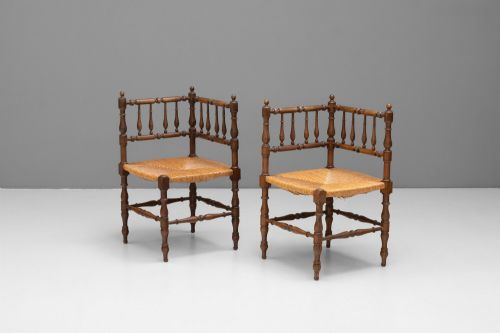
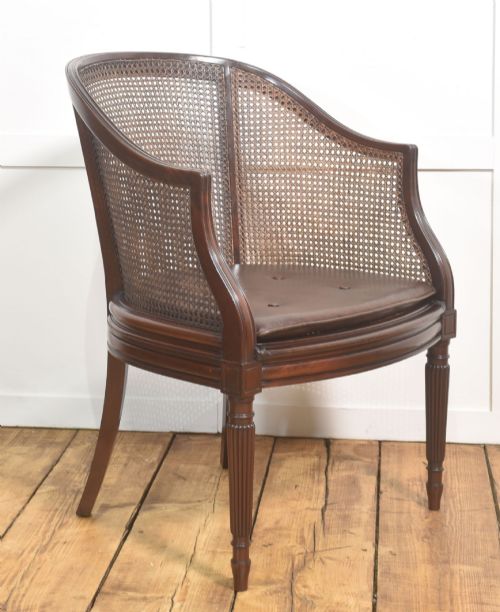
A dark wood corner chair is designed to tuck into room angles, utilising timber like mahogany, oak, and elm across various periods. When browsing this selection, you encounter forms ranging from Georgian country models to Edwardian marquetry-inlaid variations.
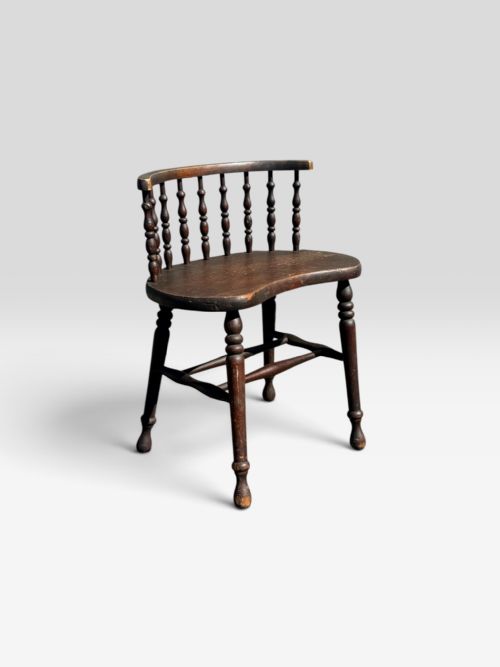
The assortment spans pieces from the eighteenth century up through the Edwardian era, featuring styles such as Victorian, Anglo-Moorish, and rustic country. These seating options include turned spindles, carved panels, and rush seats tailored for domestic rooms.
Materials and construction
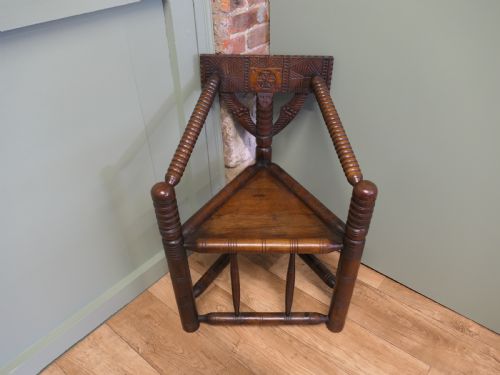
Cabinetmakers constructed these seats using dense timbers such as mahogany, oak, walnut, and elm, often shaping the frames with turned bobbin members or curved backs. Joinery relied on traditional pegging and mortise joints to support the angled design.
Surface decoration incorporated inlaid marquetry, brass accents, carved figural details, and cane or tapestry upholstery. Mashrabiya panels also appear on specific artistic models influenced by broader stylistic revivals.
Dark Wood Corner Chair Retail Price Guide 2026
Typical asking prices for dark wood corner chair among the pieces listed under this phrase on Sellingantiques today, from the lower quarter to the upper quarter. They describe what is for sale here now, not the wider market.
One eccentric eighteenth-century Chinese export model brings a remarkably curvaceous silhouette to the lineup.
Judging execution and finish
Quality rests in the crispness of the carving, the selection of figured timber, and the structural integrity of the angled joints. Finer examples display deliberate proportions and sophisticated inlay work rather than plain utility.
Country pieces show simpler vernacular workmanship using local elm or oak, where charm derives from honest wear and straightforward construction. Finer formal chairs demonstrate greater refinement in turning and joinery.
Liberty and Co
The Dark Wood Corner Chair Glossary
- Corner chair
- A seating form engineered with a diagonal orientation to fit precisely into room junctions, typically featuring a curved backrest supported by multiple uprights.
- Bobbin
- A turned furniture member shaped to resemble wooden spools or bobbins threaded together, common on nineteenth-century frames.
- Marquetry
- Decorative veneer work arranged in pictorial or geometric patterns on the wood surface, frequently seen on Edwardian pieces.
- Mashrabiya
- An intricate wooden lattice screenwork utilised in traditional Middle Eastern joinery, appearing in late nineteenth-century Anglo-Moorish items.
- Vernacular
- Everyday domestic furniture made by regional joiners using local materials rather than following high urban academic designs.
Dark Wood Corner Chair: Frequently Asked Questions
Where do I place a dark wood corner chair?
These seats are specifically built to occupy empty room corners, making awkward junctions functional while adding architectural interest.
They also serve well in hallways, bedrooms, or studies as accent seating without obstructing pathways.
How do I identify a Georgian corner chair?
Georgian versions typically display heavier proportions, rich mahogany or elm timber, and restrained carving appropriate to the eighteenth century.
Earlier iterations often incorporate drop-in seats and sturdy turned supports designed for heavy daily use.
What is an Anglo-Moorish corner chair?
This style reflects late nineteenth-century fascination with Middle Eastern design, incorporating detailed lattice panels and exotic woodwork.
Such pieces stand out through intricate pierced decoration rather than standard European turning.
Are these chairs comfortable for daily sitting?
Most antique examples were constructed with upright postures in mind, intended for polite conversation or writing desks.
Cushions can improve comfort, though their primary appeal lies in their distinctive geometry and historic craftsmanship.