



Bobbin Turned Corner Chair
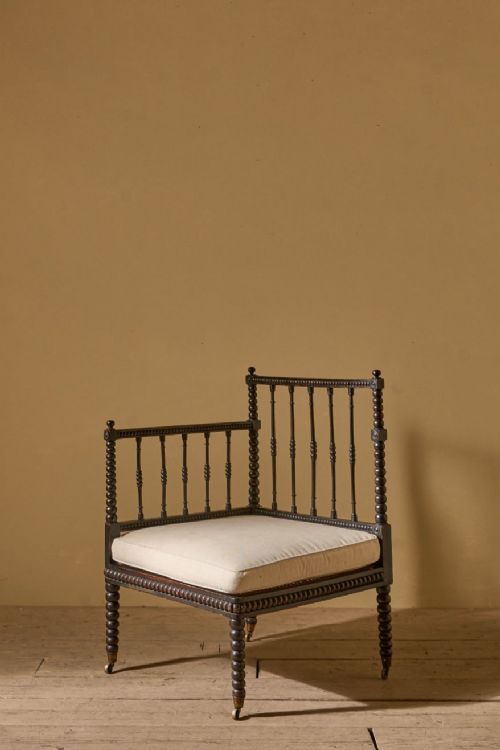
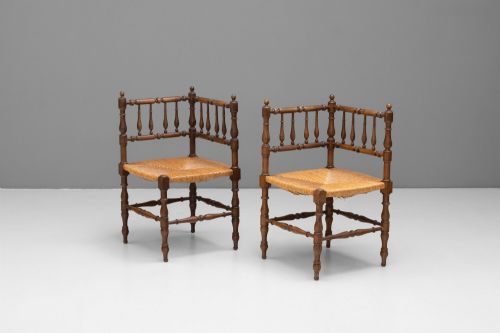
A bobbin turned corner chair is a striking vernacular seat built around spool-turned spindles and a diagonal plan, offering compact form and deep historical presence.
Bobbin Turned Corner Chair
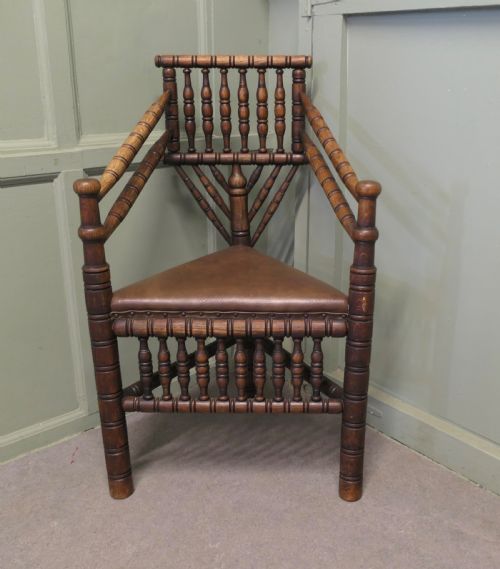
A bobbin turned corner chair occupies a distinct place in British seating history, combining the angled design of a corner chair with the repetitive spool-turned framing known as bobbin turning. These pieces draw on centuries-old vernacular traditions, often referred to in the evidence as turner's chairs, old Saxon chairs or elbow seats.
On this page, buyers will most frequently encounter nineteenth-century examples, with dates stretching from eighteen fifty through to nineteen twenty. The material palette ranges from robust English oak and beech to ebonised timber and black lacquered finishes, often paired with rush, cane, fabric or woven sea-grass seats.
How they were made
The construction relies on the lathe-turner's skill, producing long sequences of rounded wooden bobbins or spools that form the legs, stretchers and arm supports. Joinery is traditionally pegged or jointed to support the stress placed upon a diagonal frame.
Timbers such as oak and beech provide the structural integrity required for the intricate turned members, while ebonised wood achieves a dense, dark finish mimicking more costly exotic hardwoods. Seat platforms are formed through traditional methods including cane work, rush weaving and upholstered pads.
Listings feature oak, beech and ebonised timber alongside seats of cane, rush, leather and fabric across Victorian and early twentieth-century periods.
What varies in quality
Quality in these chairs rests upon the crispness and depth of the turned bobbins and the structural honesty of the timber framing. Sharply defined turnings with uniform spacing demonstrate greater workshop skill than flat or smoothed-out profiles.
The choice of material and the survival of original seating surfaces, whether woven rush, cane or early upholstery, also separate standard examples from finer pieces. Oak and ebonised timber hold their structural definition well over time when properly seasoned.
LIBERTY of LONDON
The Bobbin Turned Corner Chair Glossary
- Bobbin turning
- A type of woodturning characterised by a series of rounded, spool-like shapes carved along the length of a spindle. This decorative technique became popular in the seventeenth century and saw revivals during the Victorian era.
- Corner chair
- A seating form designed to fit neatly into the corner of a room, featuring a diagonal plan with one leg pointing forward and a curved backrest supported by turned pillars.
- Turner's chair
- An early form of armchair constructed entirely from turned wooden members and spindles, often associated with vernacular English and Saxon revival styles.
- Ebonised timber
- Wood that has been stained, painted or treated to resemble heavy, black ebony. This finish was widely utilised during the nineteenth century for dramatic contrast.
- Rush seat
- A traditional seating surface woven from dried marsh rushes or sea-grass stretched tightly across the chair rails. It provides a resilient and textured pad.
Bobbin Turned Corner Chair: Frequently Asked Questions
Where did people put corner chairs?
These chairs were historically placed in corners or small spaces where standard square-fronted armchairs would obstruct movement. Their diagonal footprint allowed them to utilise awkward interior angles effectively.
In modern rooms, they work well as accent seating in studies, hallways or bedrooms, offering distinct architectural lines without taking up excessive floor space.
How do I care for rush and cane seats?
Woven rush and cane require moderate humidity to prevent the natural fibres from becoming brittle and snapping. Avoid placing them near direct heat sources or in overly dry conditions.
Dust them gently with a soft brush and clean occasionally with a barely damp cloth, ensuring the material dries completely afterward.
Are these chairs comfortable to sit in?
While the low backs and open wooden arms are designed for upright sitting rather than deep lounging, the curved back rail provides adequate lower back support. Many versions include supportive woven or padded seats.
They function best as occasional chairs for reading or conversation rather than primary seating for long periods.
How can I tell a Victorian revival chair from an older one?
Most examples found today date from the Victorian period onwards, drawing inspiration from seventeenth-century turner's chairs and Saxon styles. Examination of the timber age, tool marks and construction methods reveals the period of manufacture.
Turned components on nineteenth-century pieces often display uniform machine assistance, whereas seventeenth-century originals show hand-carved irregularities in the lathe work.