

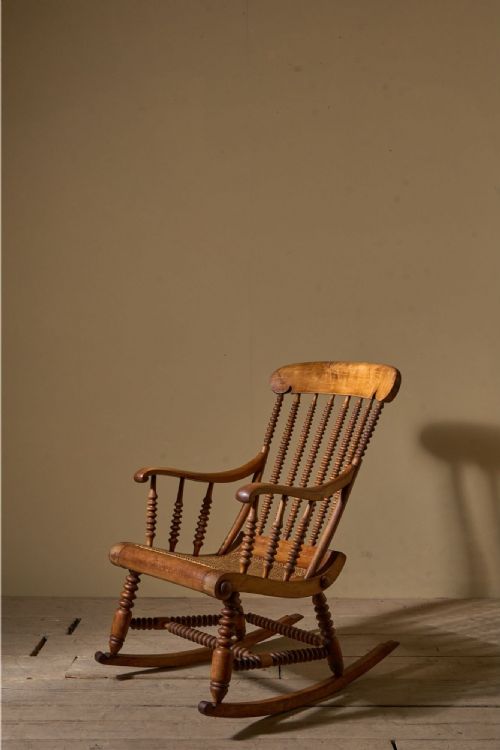


Antique Bobbin Spindle Chair
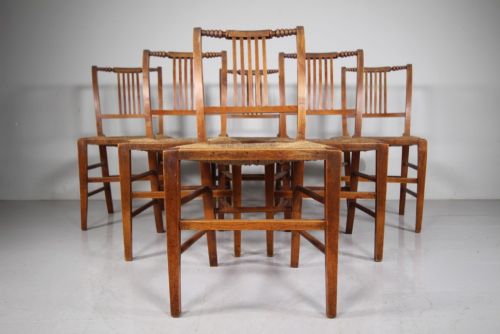
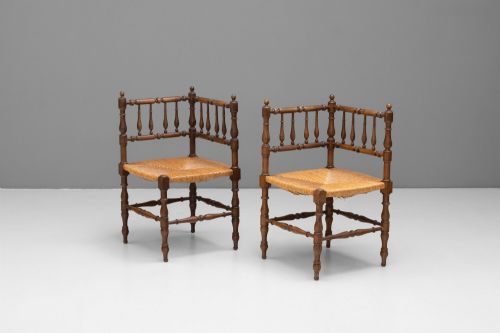
An antique bobbin spindle chair brings turning to the fore, offering a sculptural silhouette built from rounded wooden spool motifs.
Antique Bobbin Spindle Chair
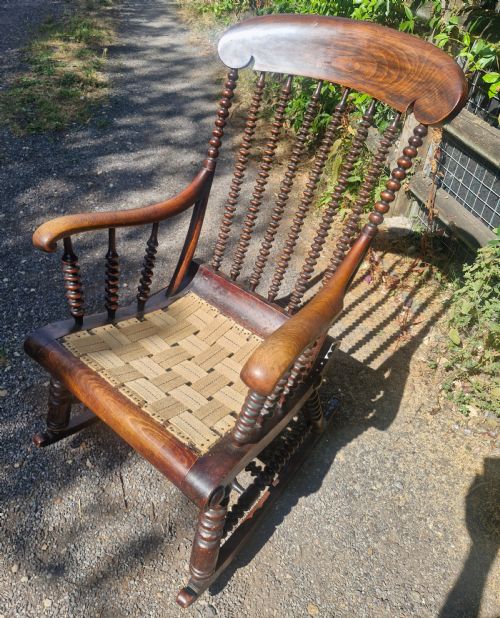
An antique bobbin spindle chair relies on repetitive lathe-turned rounded segments that resemble spools or bobbins along the uprights, stretchers, and rails. These seating forms span various regional traditions from English country workshops to Scandinavian folk art centres.
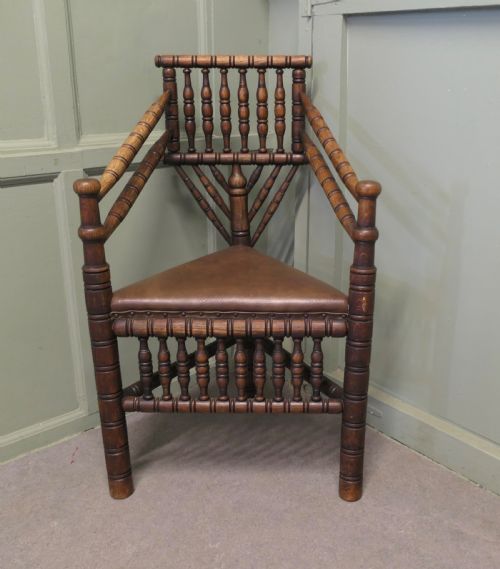
The most common examples on this page date to the nineteenth century, taking the form of robust turners chairs, rocking chairs, and elbow seats. Regional variations include Scottish vernacular pieces and Swedish country thrones constructed with distinctive turned woodwork.
Makers utilised a range of domestic timbers including oak, elm, beech, and occasional exotic woods like rosewood to shape these framed seats. Forms stretch from simple side chairs and corner chairs to substantial daybeds and armchairs.
How they were made
The defining characteristic of these chairs is woodturning, where artisans shaped solid timber on a lathe to create regular rows of spherical or cylindrical bobbin profiles. Carpenters joined these turned spindles into sturdy frames using traditional peg and mortise joints.
Seats required supportive webbing or weaving to complement the rigid wooden frames, utilising materials such as natural rush, woven cane, or fitted leather pads. Certain regional interpretations integrated solid timber planks or painted surfaces to finish the woodwork.
Listings feature nineteen-century pieces alongside rarer examples from eighteen-hundred, constructed in oak, elm, beech, rosewood, rush, cane, and paint.
What varies in quality
Quality rests primarily in the precision of the lathe work and the uniformity of the spool turnings across structural members. Crisp, well-defined turning profiles require skilled carpentry that elevates simple utility pieces into sculptural seating.
The choice of primary timber also dictates the character and weight of the frame, moving from standard local hardwoods like elm and beech to dense figured oak or decorative rosewood. Original surface treatments, whether aged paint or natural patinated wood, preserve the integrity of the piece.
The Antique Bobbin Spindle Chair Glossary
- Bobbin turning
- A form of lathe work creating a series of rounded, spool-like swellings along the length of a wooden spindle. This decorative technique defines the entire aesthetic of these seats.
- Turners chair
- A heavy wooden armchair constructed almost entirely from turned spindles and rails, often featuring a triangular or triangular-derived seat. These historic forms date back centuries before Victorian revivals.
- Rush seating
- Woven marsh grasses used to form a durable, pliable seating surface within a wooden frame. It provides traditional texture to country vernacular chairs.
- Vernacular furniture
- Domestic objects made by local craftspeople using regional materials and traditional methods rather than adhering to formal academic styles. These pieces reflect local practical needs and rural tastes.
- Stretcher
- A horizontal wooden member connecting the legs of a chair to provide structural rigidity. In bobbin chairs, these stretchers are heavily turned to match the upper frame.
Antique Bobbin Spindle Chair: Frequently Asked Questions
What is a bobbin chair?
A bobbin chair is a seating form constructed with wooden frames shaped on a lathe to resemble a series of connected spools or bobbins. These decorative turnings appear along the backrests, legs, and stretchers.
Originating in various historical periods, these chairs gained particular popularity during the nineteenth century across English and Scandinavian rural workshops.
Where were bobbin spindle chairs made?
Bobbin spindle chairs were produced across diverse regions including English country workshops, Scottish vernacular makers, and Swedish folk art traditions. Each region adapted local timbers and turning patterns to suit domestic interiors.
English examples often utilise oak and beech, while Scandinavian makers frequently applied painted finishes to softer woods.
How do I care for an antique wooden chair?
Care for an antique wooden chair involves maintaining stable indoor humidity levels and keeping the timber away from direct heat sources. Dusting regularly with a dry cloth protects the historic patina.
If the seat incorporates rush or cane, avoid heavy moisture and treat the natural fibres gently to prevent snapping over time.