



Brown Oak Corner Chair
A brown oak corner chair brings compact timber warmth into a tight space, offering a sturdy seat designed specifically to fit into a room junction.
Brown Oak Corner Chair
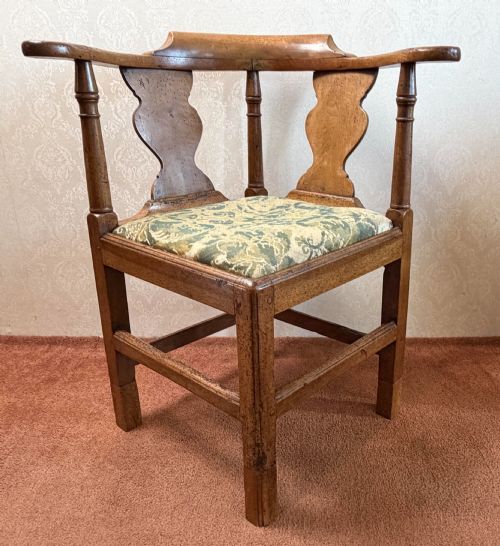
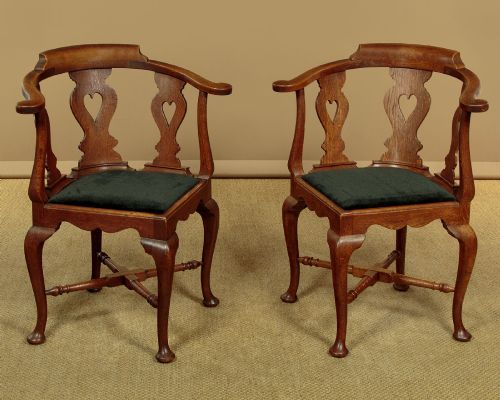
A brown oak corner chair is a distinctive seating form designed to fit neatly into the corner of a room, featuring a diagonal orientation with a backrest wrapping around two adjacent sides. These timber pieces emerge across the eighteenth, nineteenth, and early twentieth centuries, spanning periods from the Georgian era through to the Edwardian period and Arts and Crafts movement.
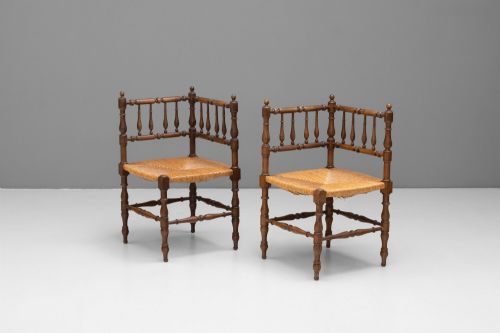
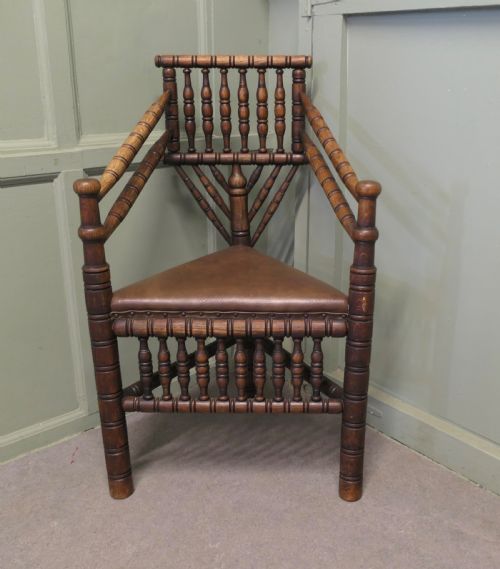
The selections on this page encompass various regional and stylistic interpretations, including English country, Welsh vernacular, and Victorian Saxon Revival expressions. Alongside traditional corner chairs, the listings include related turned chairs and spinning chairs fashioned from oak and fruitwood, often fitted with rush, cane, fabric, or leather seats.
Makers and craftsmen utilised dense hardwoods to construct these distinctive seats, resulting in robust frames intended for domestic use in parlours, studies, and hallways. The combination of turned spindles, carved woodwork, and elbow rests defines the structural character visible in these surviving examples.
Materials and construction methods
Makers relied primarily on solid oak, occasionally supplemented by fruitwood and beech, shaping the dense timber through turning, carving, and joinery. Frames incorporate sturdy corner posts and spindles that support the wraparound backrest and elbow seats.
Seating surfaces vary according to period and regional tradition, utilising woven rush, cane panels, or drop-in pads upholstered in fabric, leather, and various textiles. These materials were secured directly to wooden rails or drop-in frames to withstand daily sitting.
Listings feature oak, fruitwood, and beech, paired with rush, cane, leather, and fabric seating across Georgian, Victorian, and Arts and Crafts styles.
Distinctions in quality
Quality in these timber seats rests upon the crispness of the turning, the depth of any hand-carving on the splats or crest rails, and the tightness of the structural joints. Superior examples display thoughtful grain selection in the oak and balanced proportions across the diagonal footprint.
The integrity of the original construction and the condition of secondary materials like rush or cane seating surfaces influence the overall merit of a piece. Better specimens retain their original timber colour without excessive modern intervention or unsympathetic repairs.
The Brown Oak Corner Chair Glossary
- Corner chair
- A seating form designed with a diagonal orientation to fit directly into a room corner, featuring a semicircular or square backrest supported by turned columns. This layout maximises floor space while providing a supportive elbow seat.
- Turned chair
- A seating type constructed primarily from turned wooden spindles and members, often associated with historic vernacular designs. These pieces utilise lathe-worked components for both structural support and decorative effect.
- Fruitwood
- A dense timber obtained from fruit-bearing trees such as pear or apple, utilised by historical makers for contrasting details or secondary frames. It provides a smooth grain and warm tone that complements oak.
- Rush seating
- A traditional method of weaving dried marsh grasses tightly around seat rails to form a durable, textured platform. This technique appears frequently on country and vernacular seating forms.
- Bergère
- An enclosed upholstered armchair featuring cane panels on the sides and back, originating in French furniture design. These seats combine wooden frames with woven cane work and soft cushions.
Brown Oak Corner Chair: Frequently Asked Questions
Where do I put a corner chair?
These seats are specifically built to occupy awkward room junctions, turning dead architectural space into a functional seating area. They work effectively in hallways, studies, or corners of living rooms where standard chairs would obstruct walkways.
The diagonal footprint allows the curved backrest to follow the angle of the walls while presenting a finished profile to the room. This makes them useful for filling corners without cluttering the central floor plan.
How do I care for antique oak?
Maintenance involves keeping the timber away from direct heat sources and rapid humidity changes that can cause wood to split or joints to loosen. Applying a suitable wax polish periodically helps maintain the natural sheen of the oak.
Avoid using harsh chemical sprays or abrasive cleaners on the wood surface or on woven materials like rush and cane. Gentle dusting with a dry cloth preserves the historic finish and patina built up over centuries.
Are these seats comfortable to sit in?
The comfort level depends on the specific design, as many historic examples prioritize sturdy construction and upright posture over deep squabs. The wraparound backrest and elbow supports provide a secure, enclosed seating position well suited for reading or desk work.
Some variants feature upholstered pads or woven rush surfaces that offer a degree of give, while others rely on rigid wooden slats. Buyers seeking softer seating often add a loose cushion that fits the triangular or square base.