

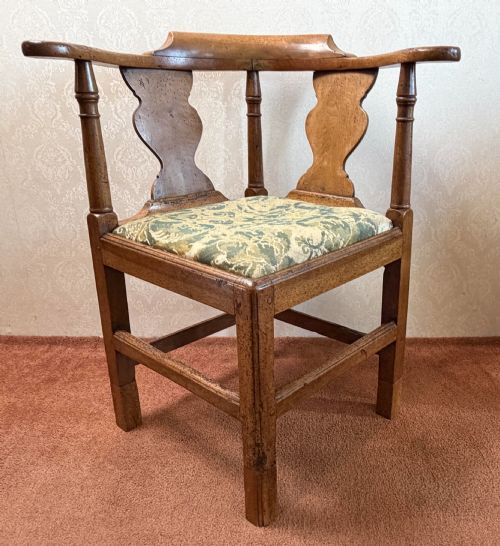


Antique Roundabout Chair
An antique roundabout chair offers a distinctive triangular footprint and curved back rail, giving any interior a clever space-saving seating option.
Antique Roundabout Chair
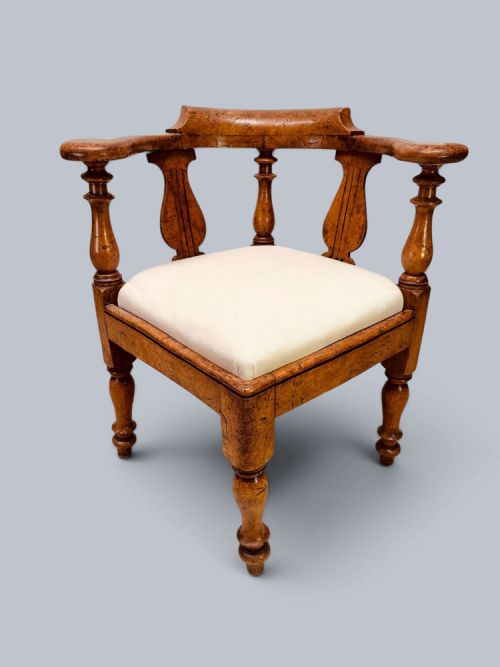
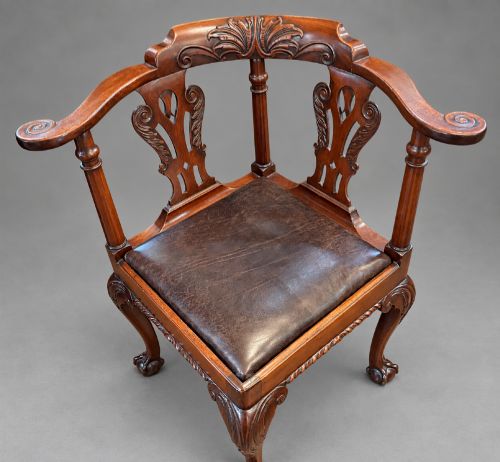
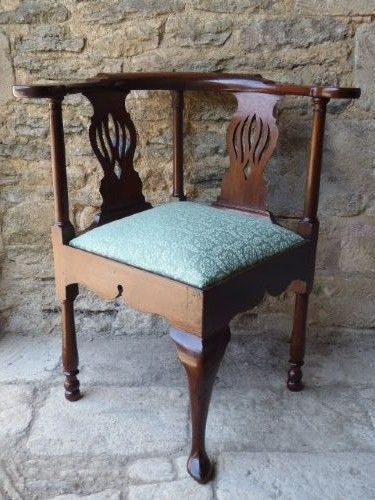
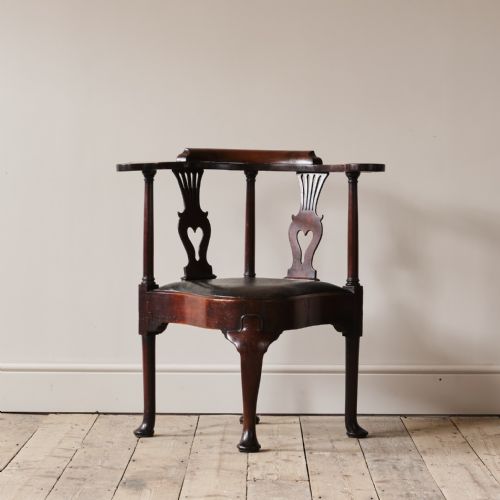
When you search for an antique roundabout chair, you encounter a specialised form of seating designed specifically to fit into room corners. These pieces feature a semi-circular back rail supported by three or four uprights above a triangular seat, with one leg pointing directly forward.
The versions you meet on this page hail from the Georgian era and the eighteenth century, spanning periods like the mid-eighteenth century and late Georgian times. Makers constructed them primarily as armchairs and corner chairs for domestic interiors.
How they were made
Craftsmen built these frames using timber species recorded in the evidence such as mahogany, oak, walnut, and fruitwood. These hardwoods provided the structural integrity required for the complex joinery of a triangular seat frame and curved back.
Upholstered elements incorporated drop-in pads covered in fabric, leather, tapestry, or needlepoint. Woodworkers shaped the corner posts and spindles to match the prevailing styles of George II and broader Georgian design.
Antique Roundabout Chair Retail Price Guide 2026
Typical asking prices for roundabout chair among the pieces listed under this phrase on Sellingantiques today, from the lower quarter to the upper quarter. They describe what is for sale here now, not the wider market.
What varies in quality
The distinction between ordinary examples and the finest pieces lies in the choice of cabinet timber and the refinement of the carved details. Superior specimens utilise richly grained mahogany or figured walnut rather than utilitarian oak or fruitwood.
Construction fidelity dictates the long-term integrity of the triangular frame, particularly where the legs and stretchers meet the seat rails. Finer examples display meticulous shaping to the crest rail and arm supports, whereas simpler pieces remain plain and functional.
The Antique Roundabout Chair Glossary
- Corner chair
- A seating form designed with a triangular seat and a curved back rail intended to fit neatly into the corner of a room.
- George II
- An English architectural and furniture style spanning the second quarter of the eighteenth century, known for robust proportions and carved ornament.
- Fruitwood
- A dense timber harvested from fruit trees such as apple or pear, utilised by period cabinetmakers for structural framing.
- Needlepoint
- A type of canvas work embroidery traditionally used for covering chair seats and upholstery inserts during the eighteenth century.
Antique Roundabout Chair: Frequently Asked Questions
What is a roundabout chair?
A roundabout chair is an eighteenth-century seating form featuring a curved back that sweeps around a triangular seat, with legs positioned at three corners.
This clever geometry allowed the chair to sit snugly into the corner of a panelled room or parlour while remaining comfortable for the sitter.
How old are these chairs?
The pieces available here date from the eighteenth century, specifically the Georgian era and around eighteen hundred.
Examples from this timeframe display traditional timber construction methods and period upholstery materials like tapestry and leather.
Which woods were used?
Cabinetmakers built these corner chairs from a variety of hardwoods including mahogany, oak, walnut, and fruitwood.
Selection depended on regional availability and the desired finish, with denser timbers reserved for finer decorative commissions.
How do I style one at home?
These armchairs find a natural home in corners, hallways, or beside desks where standard square seating proves too bulky.
Their curved backs and compact triangular footprints allow them to add period character to empty room angles without blocking pathways.