





Georgian Writing Chair
A georgian writing chair is a sturdy seat built for correspondence, and buyers seek them out for their ingenious corner designs and rich timber patination.
Georgian Writing Chair
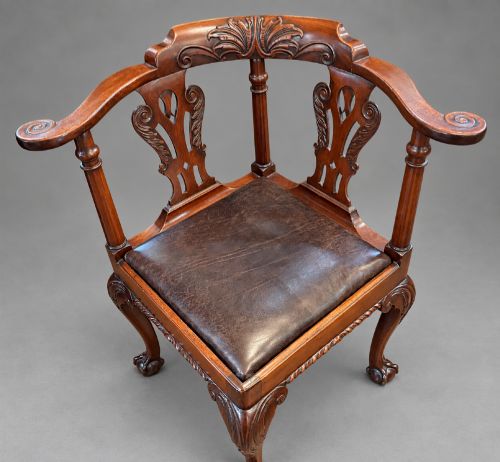
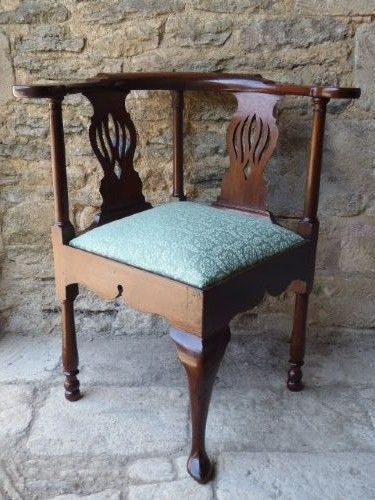
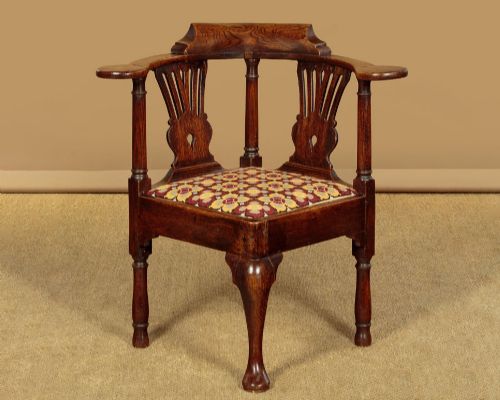
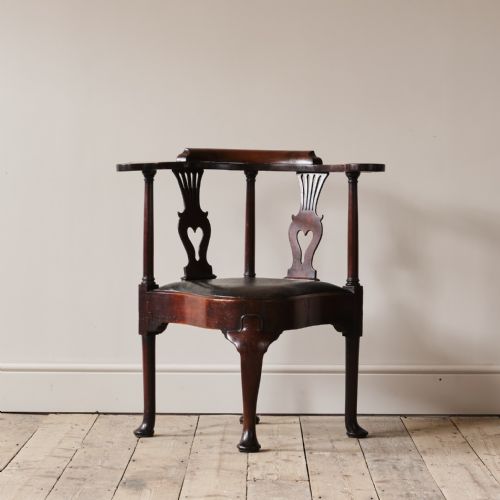
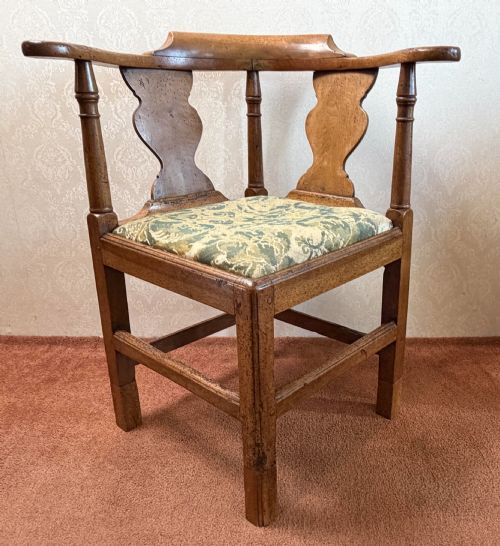
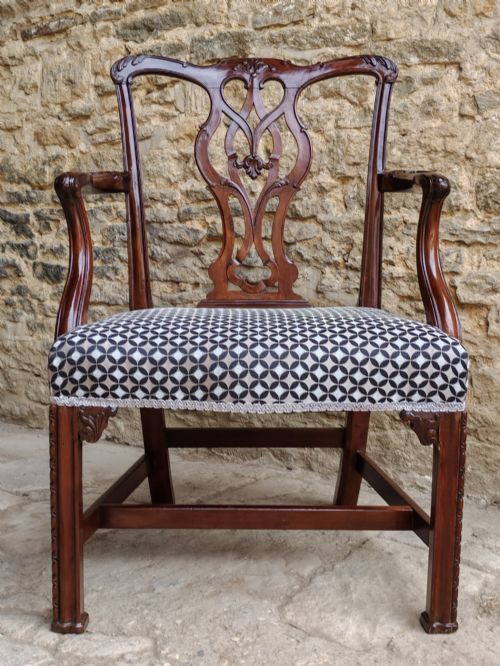
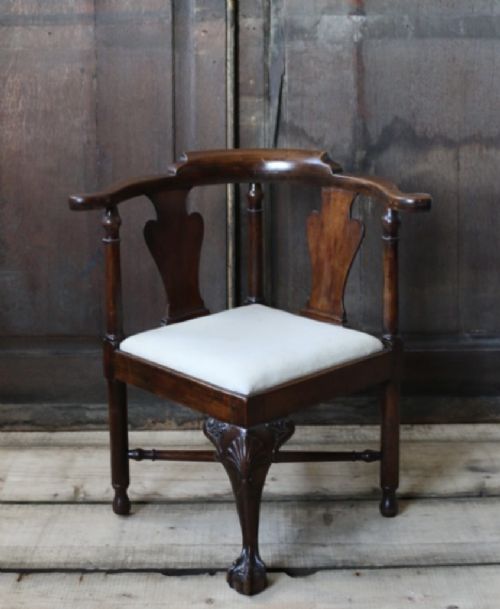
When you search for a georgian writing chair, you encounter a specialised form of seating engineered for desks and reading tables. Most examples on this page take the form of corner chairs, featuring a curved backrail supported by turned columns and a central splat above a drop-in seat. The inventory also includes standard armchairs, carvers, and library chairs designed for domestic study.
The materials span mahogany, oak, walnut, fruitwood, and elm, often paired with leather, fabric, or tapestry upholstery. Stylistic influences range across the reigns of Queen Anne, George I, George II, and George III, alongside William IV adaptations and provincial country pieces. These items bridge the gap between functional office furniture and period domestic seating.
How they were made
Cabinetmakers constructed these seats using dense hardwoods like mahogany, walnut, and oak, frequently combining secondary woods such as fruitwood or elm in regional workshops. Joinery relied on mortise and tenon frames designed to bear the torsional stress of a seated writer twisting to reach papers.
Surfaces were finished with hand-rubbed wax or polish to highlight the natural grain of the timber. Upholstered variants incorporated drop-in seat pads stuffed with traditional fibres and covered in leather, woven textile, or tapestry.
Georgian Writing Chair Retail Price Guide 2026
Typical asking prices for georgian writing chair among the pieces listed under this phrase on Sellingantiques today, from the lower quarter to the upper quarter. They describe what is for sale here now, not the wider market.
Listings feature mahogany, oak, walnut, and elm timbers across periods spanning from the reign of Queen Anne to the William IV era.
What varies in quality
The distinction between ordinary and exceptional pieces lies in the crispness of the woodcarving on the splats and the elegance of the arm scrolls. Superior examples display thoughtful timber selection with matched grain patterns across the structural members.
Proportion and structural integrity dictate the standing of a piece, as master makers balanced sturdy corner bracing with refined silhouettes. Provincial work often shows charming irregularities, whereas pieces from urban workshops exhibit rigorous symmetry and precise joinery.
The Georgian Writing Chair Glossary
- Carver
- An armchair, often matching a set of smaller dining or desk chairs, designated for the head of the table or for writing tasks. These feature prominent armrests integrated into the frame.
- Splats
- The vertical wooden strip situated in the centre of a chair back, connecting the seat rail to the top rail. In these pieces, splats often take vase or urn shapes.
- Drop-in seat
- A removable wooden frame upholstered in fabric or leather that fits snugly into the seat rails of the chair. This construction method facilitated easier reupholstery.
- Parnassian
- Pertaining to poetry and literature, describing furniture intended for intellectual pursuits such as writing and reading. These items often incorporate compact desk attachments or revolving mechanisms.
Georgian Writing Chair: Frequently Asked Questions
How do I use a corner chair at a desk?
These seats fit neatly into room corners when not in use, but their diagonal stance allows you to pull them directly up to a writing table.
The curved backrail provides side support while you write, though you should check the seat height against your specific desk clearance.
What is the difference between a desk chair and a writing chair?
While both terms describe seating intended for study, desk chairs in this inventory often feature swivelling or robust library frames.
Writing chairs frequently encompass specialised corner forms designed to accommodate inkwells or writing arms during the eighteenth century.
Are these chairs comfortable for long periods?
Period seating was built with upright posture in mind, meaning the backs tend to be supportive rather than slouching.
Many examples feature upholstered leather or tapestry pads that offer a firm surface suited to sustained correspondence.
How can I tell an 18th century piece from a 19th century revival?
Examination of the timber patination, tool marks, and construction joints reveals the age and manufacturing techniques of the frame.
Revival pieces from later periods often display standardised machine-cut components, whereas earlier examples show hand-planed surfaces and pegged joints.