
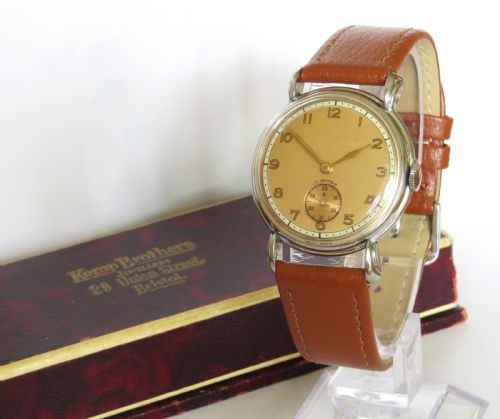
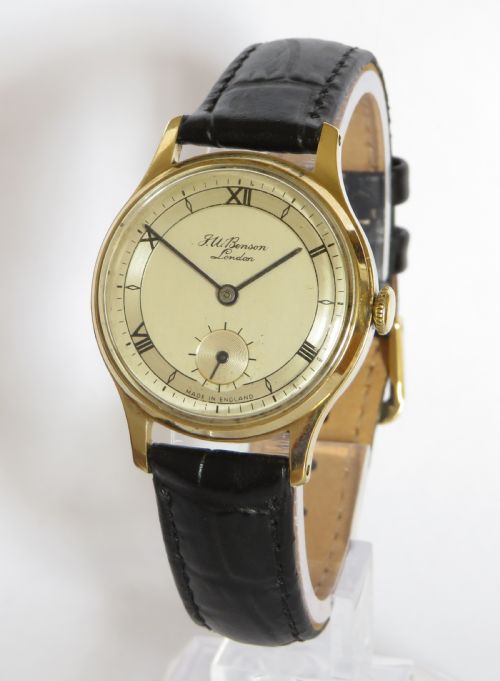
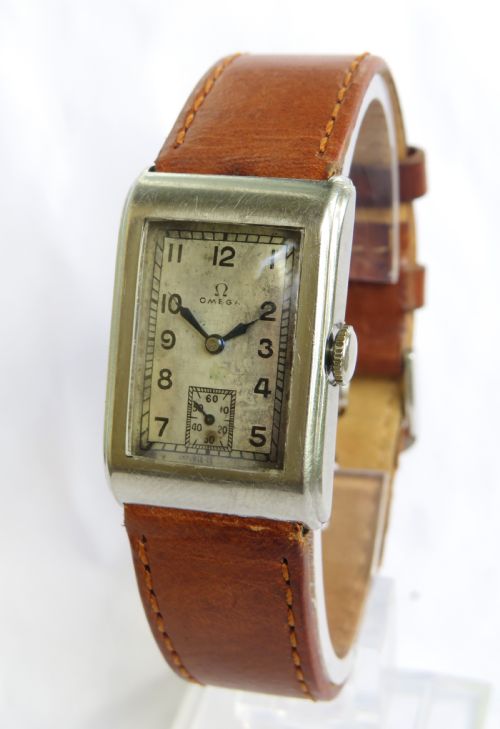
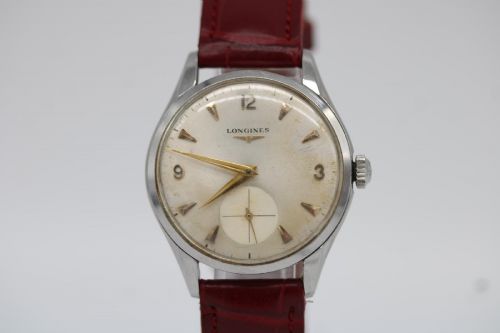
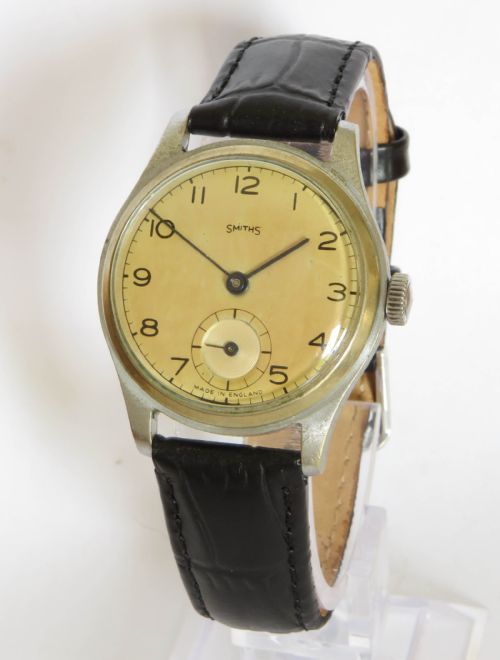
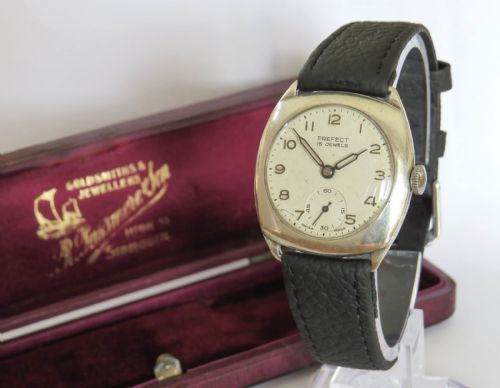
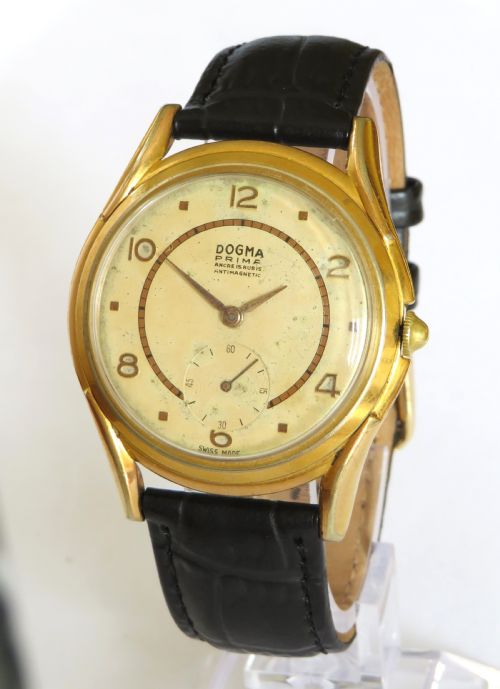
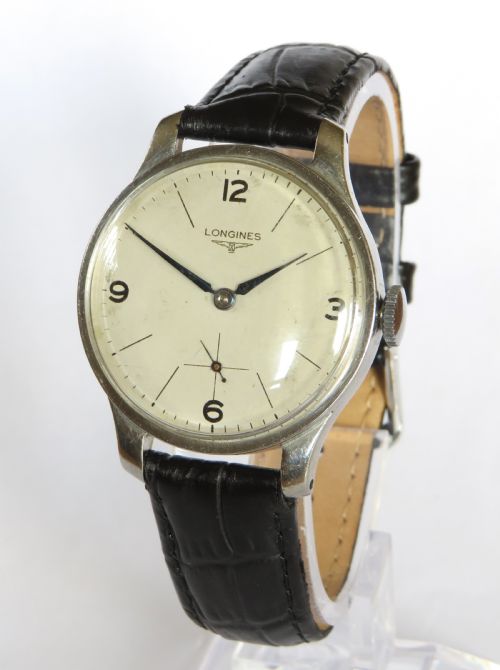

Sub Seconds Wrist Watch
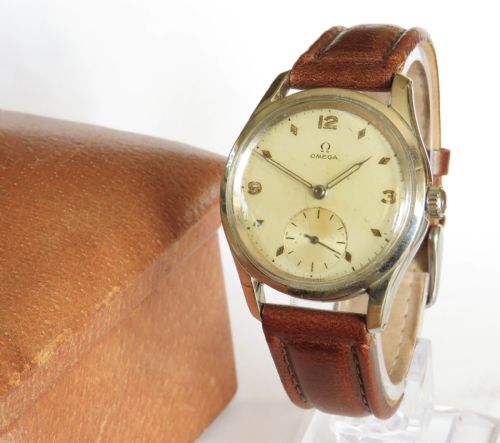
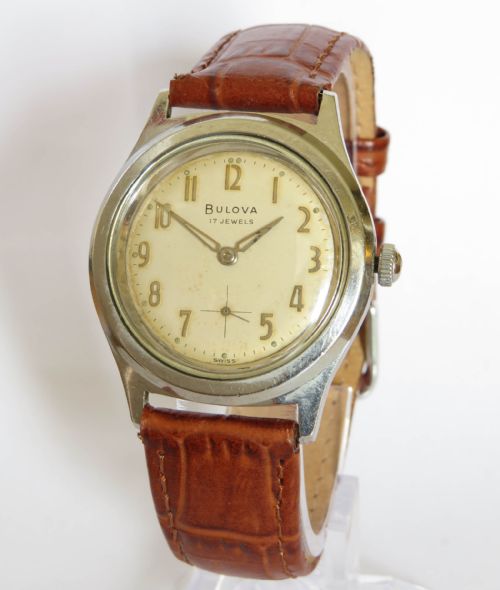
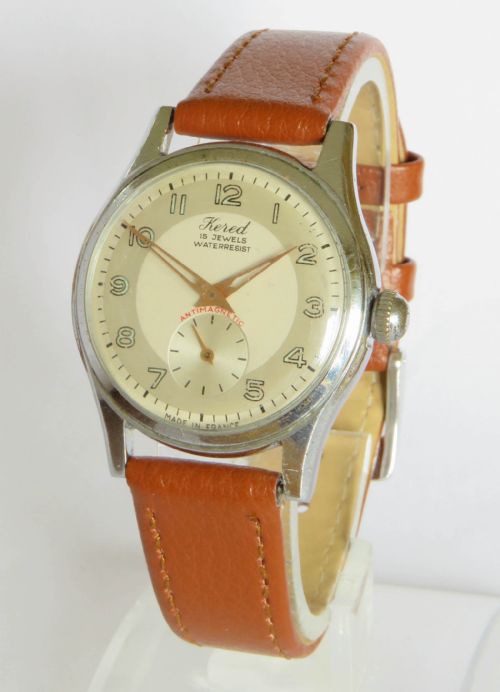
A sub seconds wrist watch places the minute and hour hands centrally while separating the seconds hand on a smaller subsidiary dial.
Sub Seconds Wrist Watch
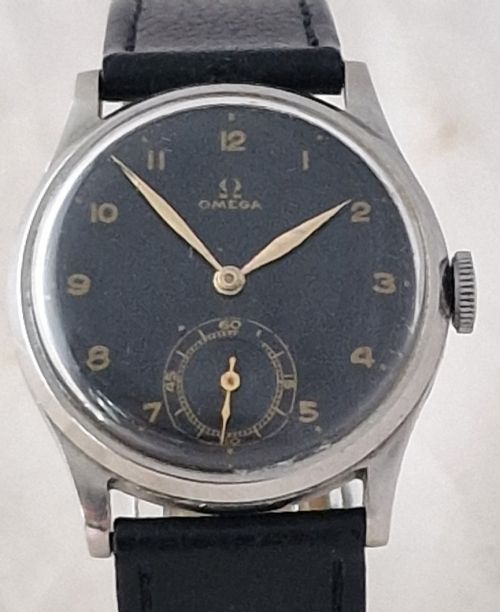
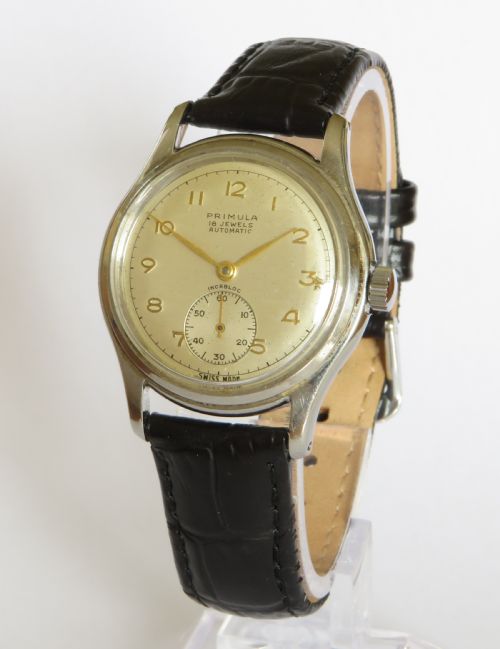
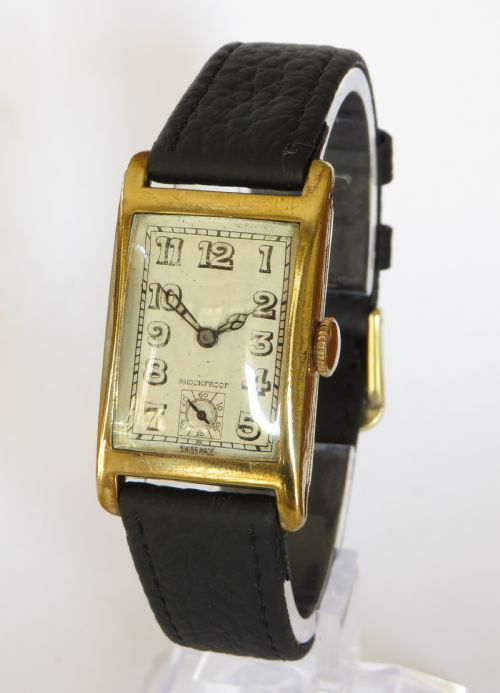
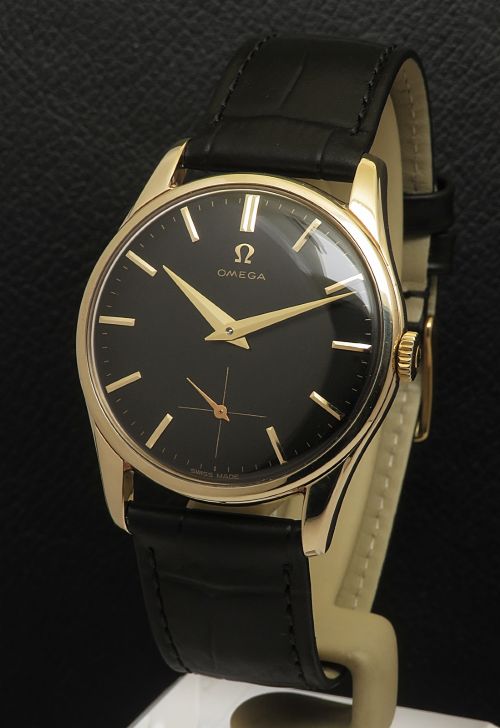
A sub seconds wrist watch centres the minute and hour hands on the main dial while relegating the seconds display to a smaller, dedicated sub-dial typically positioned at the six o'clock mark. These pieces span from the 1920s through the 1960s, encompassing military issue pieces, Art Deco rectangular tank styles, and classic round gentleman's dress models.
The pieces appearing most frequently on this page originate from the 1940s and 1950s, representing Swiss and British manufacturers such as Omega, Longines, and Smiths. Buyers encounter both robust military variants designed for organisations like the German Luftwaffe or Swedish armed forces and refined dress watches housed in gold or silver cases.
Materials and construction
Cases combine stainless steel, chrome, gold plate, solid gold, and silver, paired with glass or acrylic crystals to protect the dial. Movements rely on mechanical manual wind or automatic calibres, often driving the separate subsidiary seconds train directly from the gear train.
Straps utilise leather to secure the watch to the wrist, complementing metal cases that range from utilitarian military service builds to elegant Art Deco geometric forms.
Listings feature periods spanning from the 1920s through the 1960s, incorporating military, dress, and Art Deco styles.
Assessing quality
The hierarchy of quality rests upon the condition of the dial, the precision of the movement, and the integrity of the case materials. Solid gold or steel cases paired with signed, high-grade Swiss or British movements command greater regard than plated or chrome alternatives with generic calibres.
Originality also defines the upper tier, where dials retain their factory finish without intrusive restoration, and military issues maintain their correct case back engravings and movement specifications.
Omega·Longines·Smiths·Rotary·Bulova·Zenith·Elgin·Tissot
The Sub Seconds Wrist Watch Glossary
- Sub seconds
- A watch dial layout featuring a secondary small dial dedicated solely to tracking seconds, usually positioned at the bottom of the main dial. This arrangement was standard before central sweep seconds movements became dominant.
- Calibre
- The specific internal mechanical movement manufactured for a watch. Collectors reference calibre numbers to identify the exact mechanism powering the piece.
- Manual wind
- A mechanical movement requiring the wearer to turn the crown by hand to tension the mainspring. These movements lack rotors for self-winding.
- Tank watch
- A rectangular or square wristwatch style inspired by military tanks, characterised by vertical case sides that extend to form the lugs. These designs gained immense popularity during the Art Deco period.
- Military issue
- A timepiece commissioned by government armed forces for service personnel. These watches bear specific engravings, service marks, or dial designations denoting official procurement.
Sub Seconds Wrist Watch: Frequently Asked Questions
What is a sub seconds wrist watch?
A sub seconds wrist watch displays the hours and minutes from the centre of the dial while showing the passing seconds on a smaller auxiliary sub-dial. This layout distinguishes vintage mechanical watches from later designs with central sweep seconds.
Most examples found here date from the 1920s to the 1960s, showcasing traditional watchmaking layouts before modern centre-seconds movements took over the market.
How do I wind a manual watch?
Manual wind watches require turning the crown clockwise between your thumb and forefinger until slight resistance is felt. Care must be taken not to force the crown past the stopping point to avoid damaging the mainspring.
Establishing a daily routine for winding helps maintain consistent tension and keeps the movement running accurately throughout the day.
How do I date a vintage watch?
Dating a vintage piece involves examining movement serial numbers, case hallmarks, and stylistic cues specific to decades like the 1930s or 1950s. Manufacturers often kept records linking serial numbers to production years.
Design elements such as Art Deco case shapes, military service markings, or specific typography on the dial further narrow down the manufacturing period.
Can I wear a vintage watch daily?
Wearing a vintage watch daily is possible provided the piece has been recently serviced by a professional horologist. Regular maintenance ensures oils remain fresh and internal components function smoothly.
However, owners should remember that older pieces lack modern water resistance and require careful handling away from moisture and heavy impacts.