
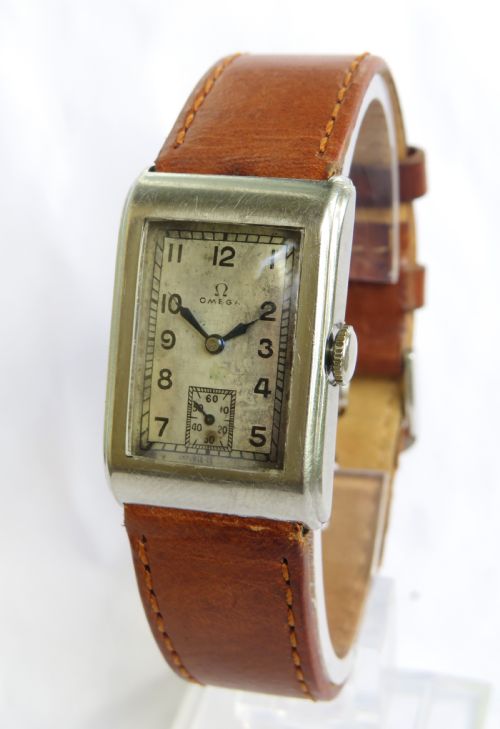
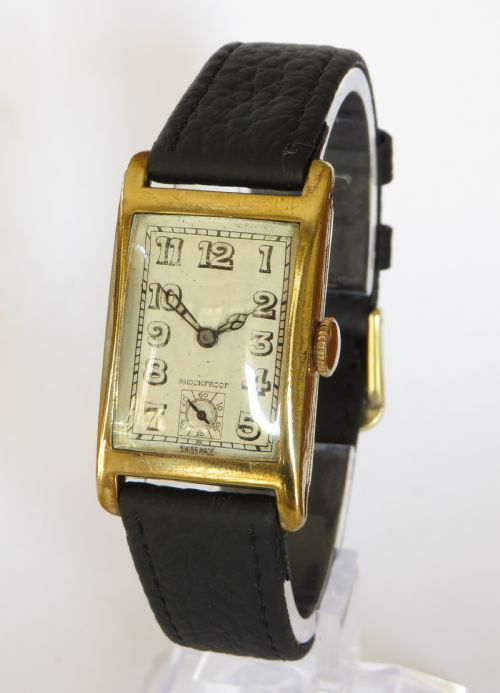


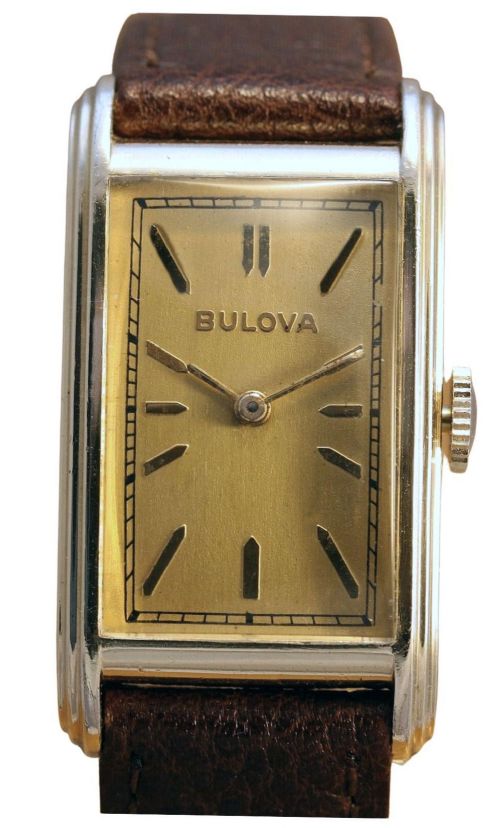


Art Deco Tank Watch
An art deco tank watch combines clean architectural geometry with mechanical timekeeping from the interwar period, offering a distinct rectangular profile that buyers prize for daily wear.
Art Deco Tank Watch
An art deco tank watch is a rectangular timepiece inspired by military tanks of the First World War, featuring parallel vertical brancards that integrate the strap lugs. These watches date predominantly from the 1930s and 1940s, capturing the modernist design ethos of the era.
The pieces appearing here are mostly gents wristwatches alongside occasional ladies models, built in Switzerland, Germany, and Britain. The forms range from strict geometric cases to curved dials intended to sit flush against the wrist.
Makers such as Bulova, Elgin, and Omega dominate the selections, alongside smaller Swiss and German workshops. Buyers encounter mechanical movements housed in cases of chrome, stainless steel, rolled gold, and solid gold.
How they were made
Makers constructed these watch cases using stamped and milled metals including chrome, stainless steel, and various grades of gold plate, rolled gold, or solid gold. Glass crystals protected the dials, cut to match the sharp linear geometries of the bezel.
Movements were manually wound mechanical calibres produced by specialised Swiss and American workshops. Leather straps completed the pieces, secured by fixed or spring-loaded metal bars between the case brancards.
Art Deco Tank Watch Retail Price Guide 2026
Typical asking prices for art deco tank watch among the pieces listed under this phrase on Sellingantiques today, from the lower quarter to the upper quarter. They describe what is for sale here now, not the wider market.
Listings feature mechanical movements housed in chrome, stainless steel, rolled gold, and solid gold cases dating across the 1930 and 1940 periods.
What varies in quality
The standard of an art deco tank watch rests heavily on the material of the case and the preservation of the dial. Solid gold and heavy rolled gold examples sit at the upper end of the scale compared to chrome-plated brass alternatives.
Originality defines the better specimens, where dials retain their factory finish and hands match the period style. Mechanical precision and the crispness of the case edges separate standard commercial production from finer workshop output.
Omega·Rotary·Zenith·Larex·Bulova·Elgin·Helvetia·Elixa·Zentra·Rubur·Arsa·Provita·Sigma
The Art Deco Tank Watch Glossary
- Brancards
- The vertical side bars of a tank watch case that run parallel to the dial and anchor the strap lugs. They define the characteristic rectangular silhouette of the style.
- Manual wind
- A mechanical movement powered by hand rotation of the crown rather than a self-winding rotor. Most period pieces rely on this traditional mechanism.
- Rolled gold
- A manufacturing method where a layer of gold is mechanically bonded to a base metal core. It offers greater durability than standard electroplating.
- Curvex
- A curved wristwatch design where both the case and the movement are arched to fit the contour of the wrist. It requires specialised curved mechanical components.
- Old stock
- Unused items preserved from period production without subsequent wear. These pieces retain their original factory condition.
Art Deco Tank Watch: Frequently Asked Questions
What is an art deco tank watch?
An art deco tank watch is a rectangular timepiece from the 1930s or 1940s characterised by parallel vertical case sides and geometric dial layouts. The design draws its name from the aerial profile of military tanks.
These watches utilise manual mechanical movements and were produced by numerous Swiss, American, and German firms in materials ranging from chrome to solid gold.
How do I wear a vintage tank watch?
Living with a vintage tank watch involves daily manual winding and protecting the case and glass crystal from moisture. Pairing the watch with a suitable leather strap completes the traditional look.
Because these pieces date from the 1930s and 1940s, they lack modern water resistance and require careful handling during daily wear.
How can I tell the 1930s pieces apart?
Distinguishing 1930s pieces relies on examining case materials, dial typography, and movement signatures. Earlier examples often feature fixed wire lugs and enamel chapter rings.
Later productions from the 1940s transition to bolder numerals and sturdier case construction using stainless steel or heavy gold plating.
Are these watches mechanical?
The wristwatches from this period rely entirely on manual mechanical movements powered by a mainspring. Owners wind the watch by hand via the crown.
Automatic self-winding mechanisms were uncommon in rectangular tank cases of this scale during the 1930s.