
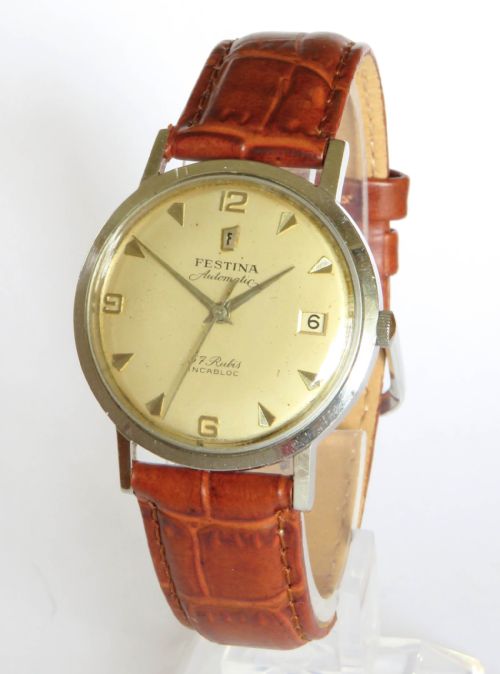
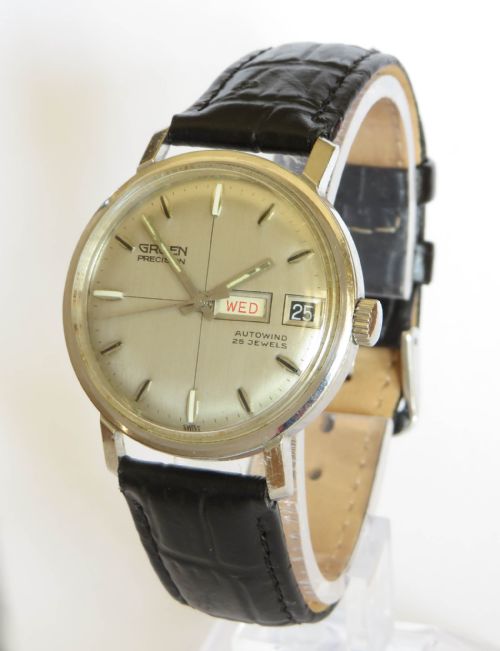
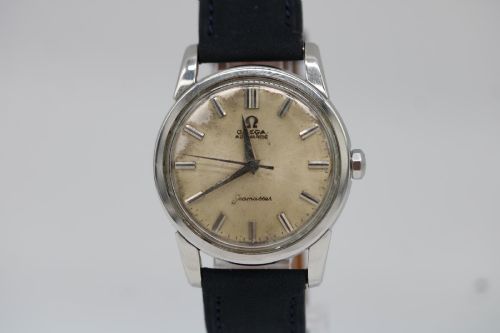
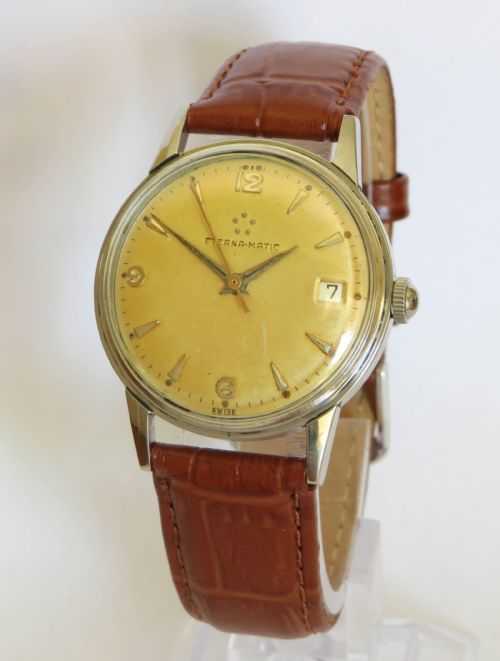
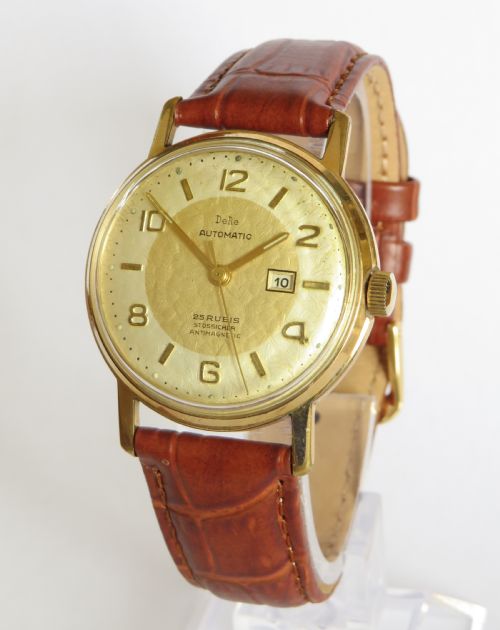
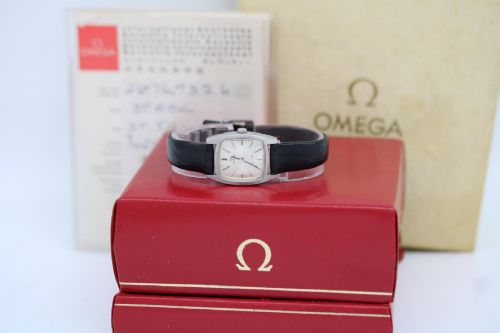
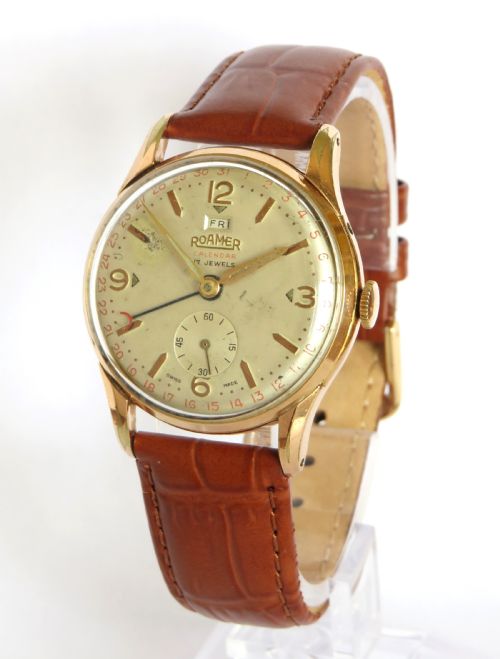
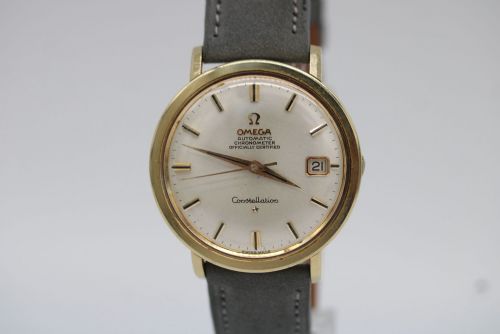
Vintage Swiss Wrist Watch
A vintage swiss wrist watch brings mechanical timekeeping from the decades between the 1920s and 1960s to the wrist.
Vintage Swiss Wrist Watch
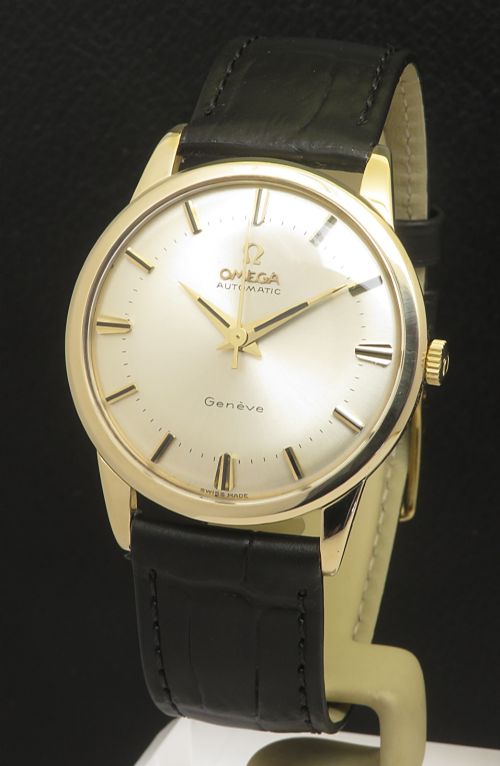
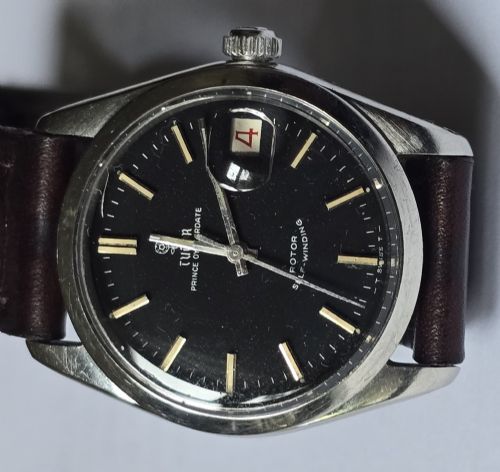
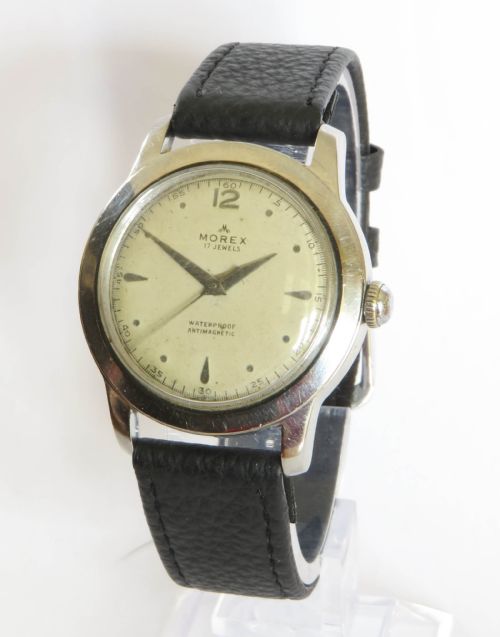
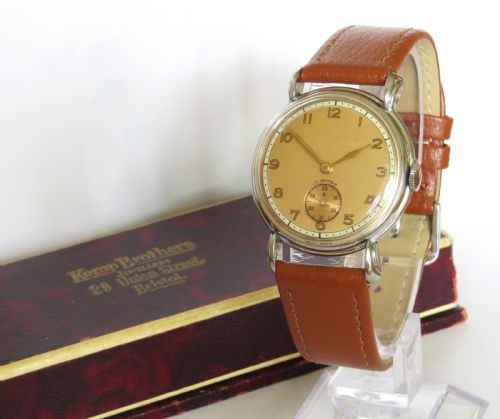
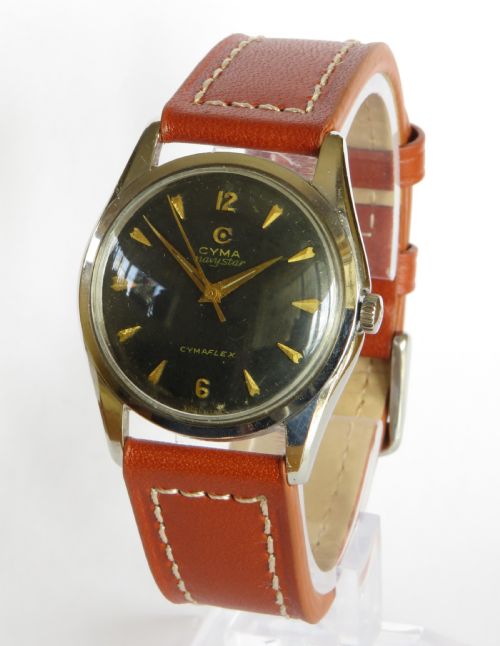
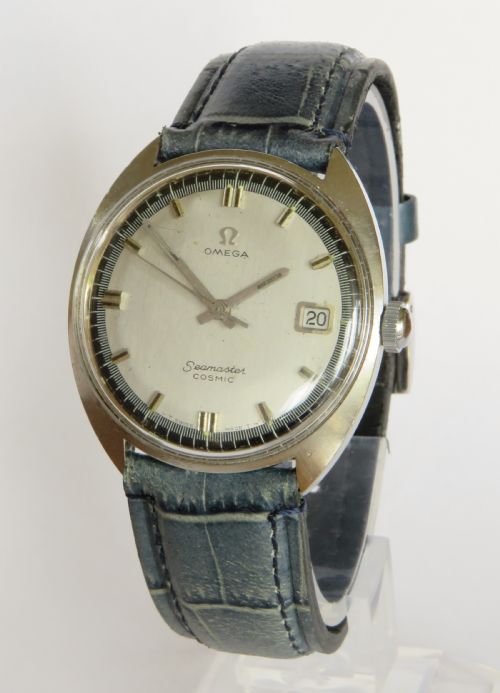
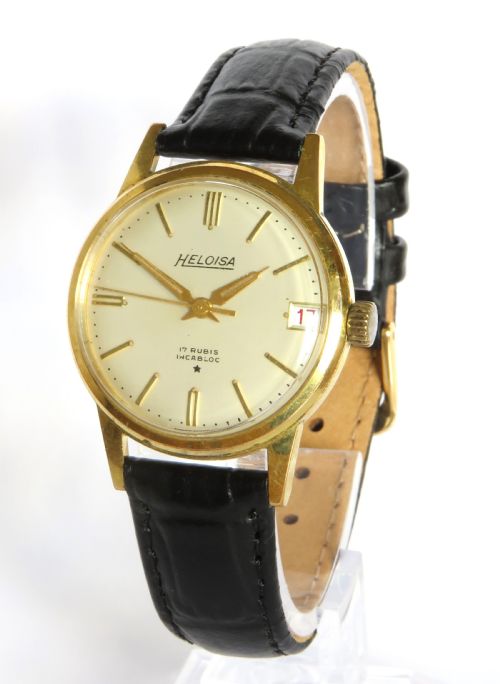
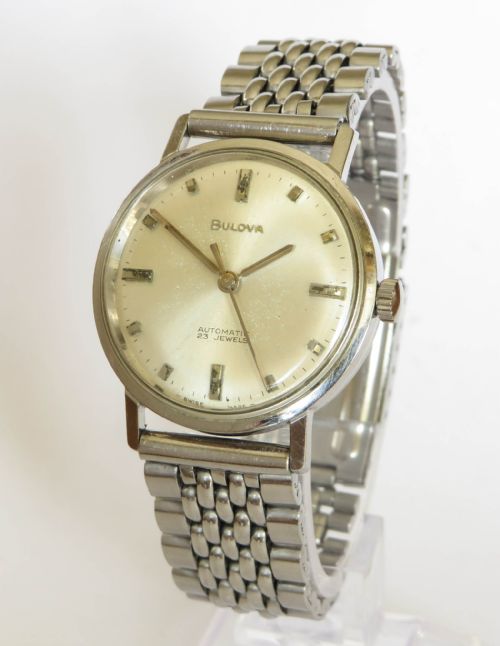
A vintage swiss wrist watch covers timepieces produced across the 1920s, 1930s, 1940s, 1950s, and 1960s by makers located in Switzerland. The selection spans straightforward manual wind pieces alongside automatic and chronograph movements housed in various case shapes.
Buyers most frequently encounter gents and ladies models from the 1950s and 1960s. These pieces often arrive as steel, gold plated, or solid gold wristwatches carrying dates, calendars, or sub-seconds dials.
How they were made
Casings utilise stainless steel, gold plate, solid 9ct gold, and 18ct white gold, paired with glass or acrylic glass crystals protecting the dials. Straps are commonly made from leather.
Movements rely on mechanical gear trains driven by mainsprings, operating through manual wind or automatic self-winding rotors developed during the mid-century period.
Vintage Swiss Wrist Watch Retail Price Guide 2026
Typical asking prices for vintage swiss wrist watch among the pieces listed under this phrase on Sellingantiques today, from the lower quarter to the upper quarter. They describe what is for sale here now, not the wider market.
Listings feature periods spanning from 1920 to 1960, utilising stainless steel, 9ct gold, 18ct white gold, leather, and acrylic glass.
What varies in quality
Quality differences emerge in the specification of the metalwork, ranging from standard stainless steel and gold plating to solid 9ct and 18ct white gold constructions. The complexity of the internal movement also dictates the tier, distinguishing standard time-only calibres from chronometer-rated mechanisms and chronographs.
The integrity of the dial and case finishing shapes the overall standing of the piece. Examples retaining original boxes, papers, signed buckles, and unpolished cases sit at the upper end of the range.
Omega·Tudor·Rolex·Bulova·Longines·Cyma·Tissot·Eterna·Baume And Mercier
The Vintage Swiss Wrist Watch Glossary
- Automatic
- A mechanical movement that winds itself utilising the natural motion of the wearer's arm via an internal oscillating weight.
- Chronograph
- A watch equipped with a stopwatch function alongside the standard time-of-day display, operated via pushers on the case side.
- Calibre
- The specific internal movement design and manufacturer designation housed within the watch case.
- Acrylic glass
- A lightweight, shatter-resistant transparent plastic material utilised for watch crystals during the mid-century period.
- Chronometer
- A high-precision mechanical watch that has passed rigorous official accuracy tests, often certified by an independent observatory.
Vintage Swiss Wrist Watch: Frequently Asked Questions
How do I wind a manual vintage watch?
Turn the crown clockwise between your thumb and forefinger until you feel slight resistance. Stop immediately at that point to avoid over-tensioning the mainspring.
Perform this action at roughly the same time each day to maintain consistent tension and accurate timekeeping.
Are these watches waterproof?
Vintage models generally lack modern rubber gaskets and screwed-down components required to guarantee moisture resistance. Exposure to water, rain, or humidity can easily cause internal condensation and rust.
Keep the watch entirely dry and remove it before washing hands, swimming, or bathing.
How accurate are mechanical vintage watches?
Mechanical movements from the mid-century period typically gain or lose a small number of seconds each day. Daily variances of up to a minute remain entirely normal for older gear-train calibres.
Regular servicing by a watchmaker helps maintain steady performance and tight tolerances.
Can I wear a vintage watch daily?
Daily wear is entirely suitable provided you account for the age of the movement and the lack of modern shock protection. Treat the piece with care during physical activities.
Remove the watch during heavy manual labour or sports to protect the internal balance staff from sharp impacts.