
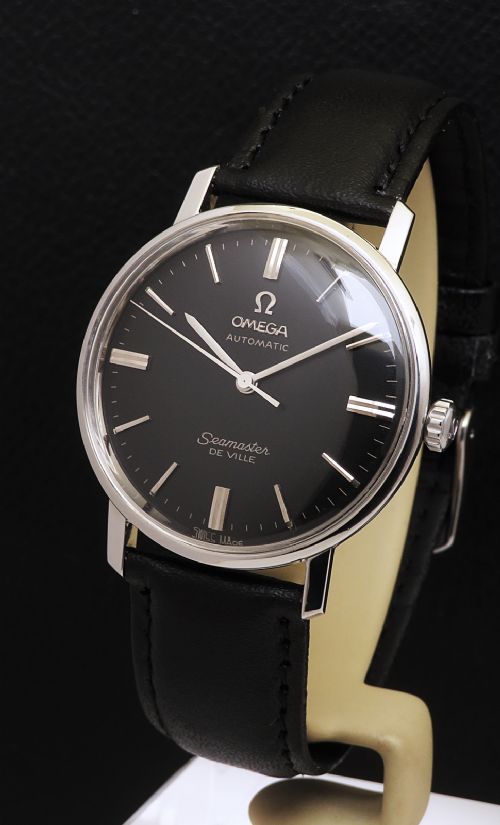
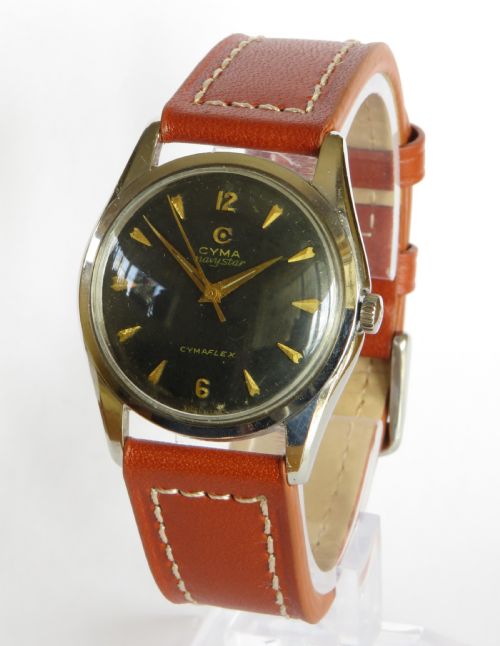
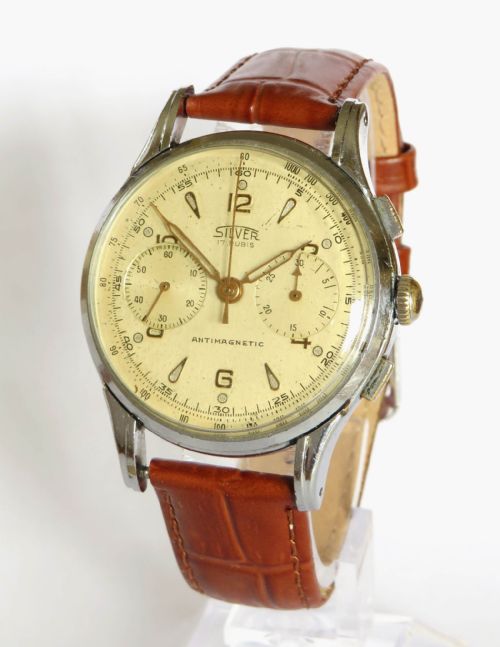
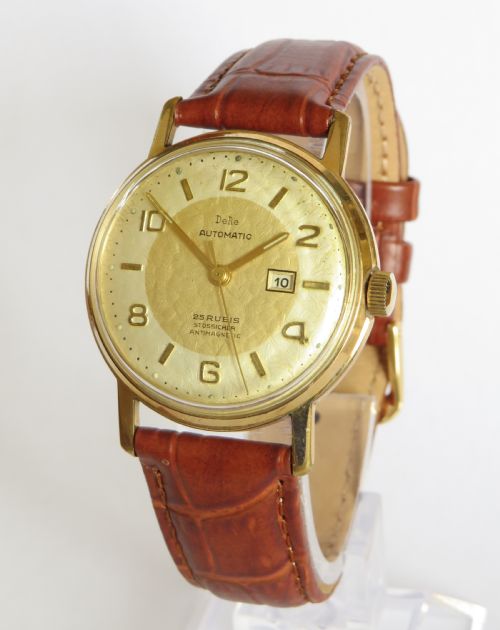


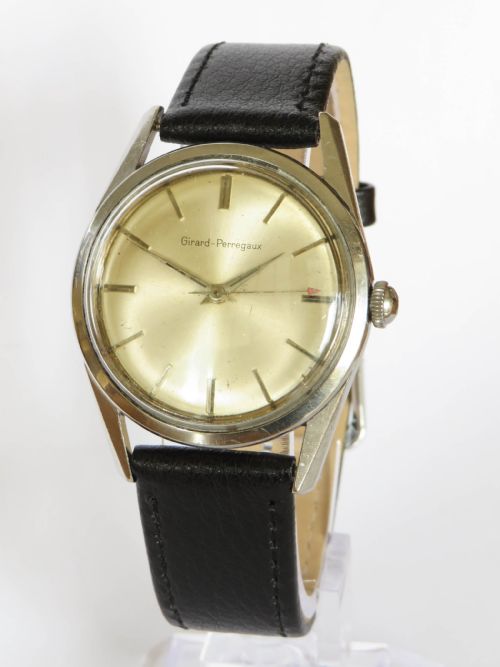

Mens Analogue Wristwatch
A mens analogue wristwatch tells time through traditional hands rather than digits, offering enduring mechanical charm on the wrist.
Mens Analogue Wristwatch
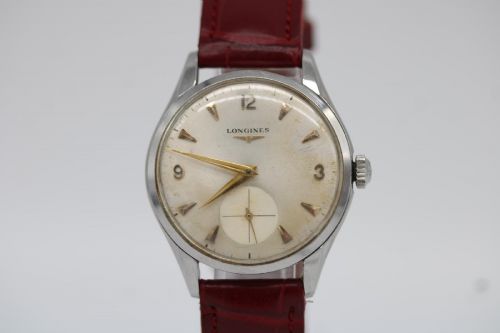
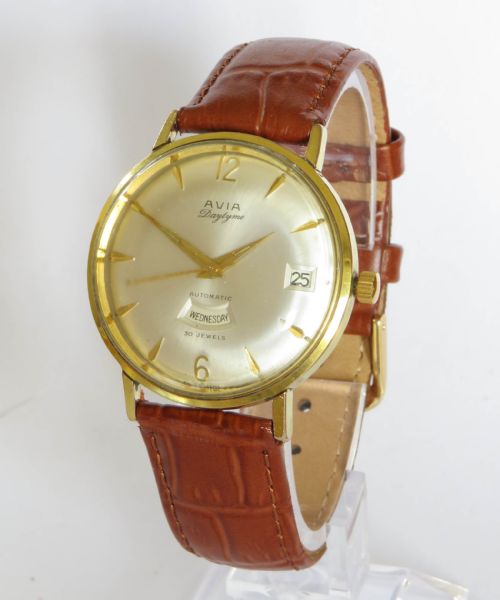
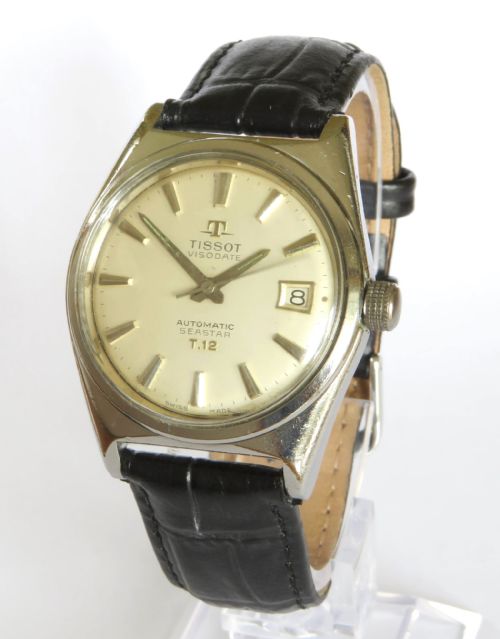
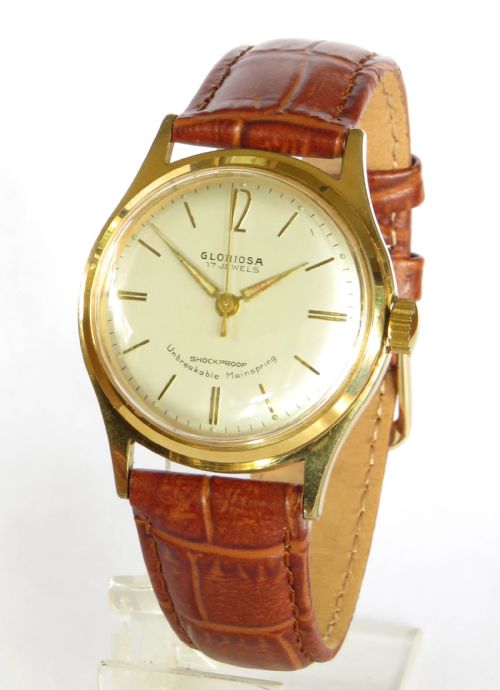
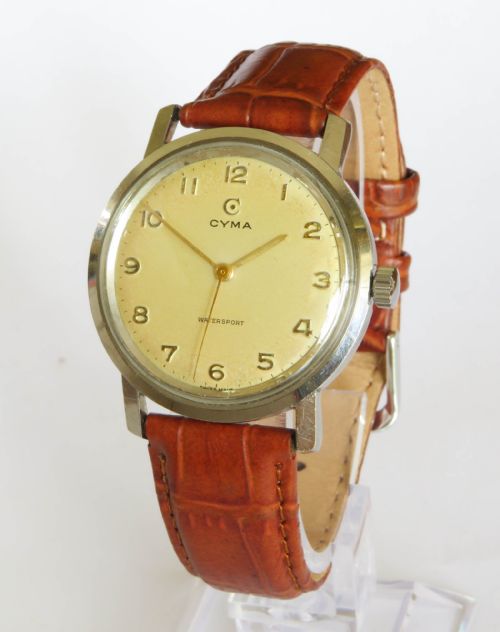
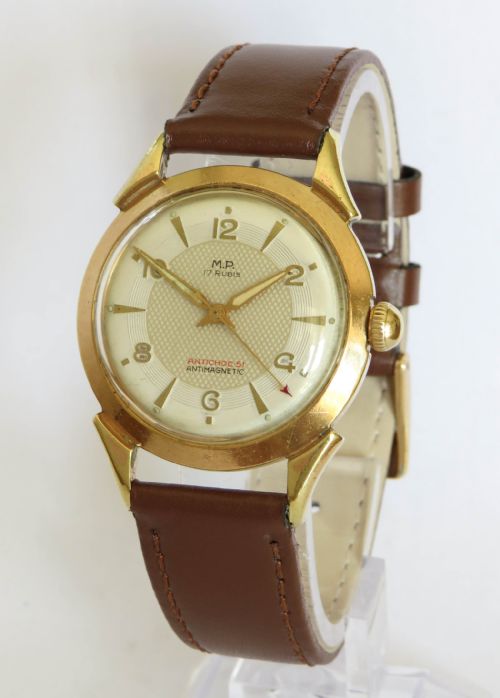
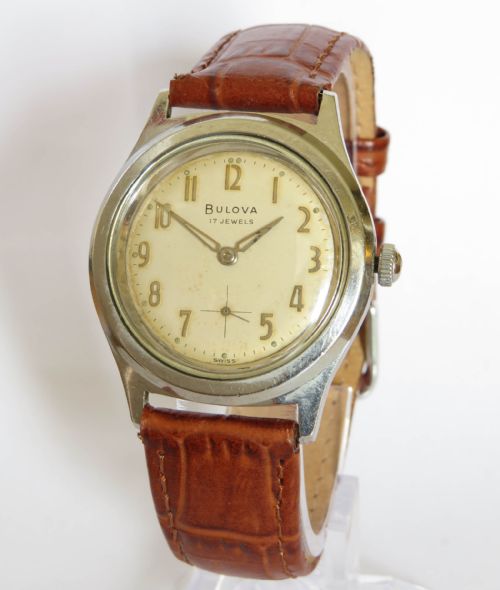
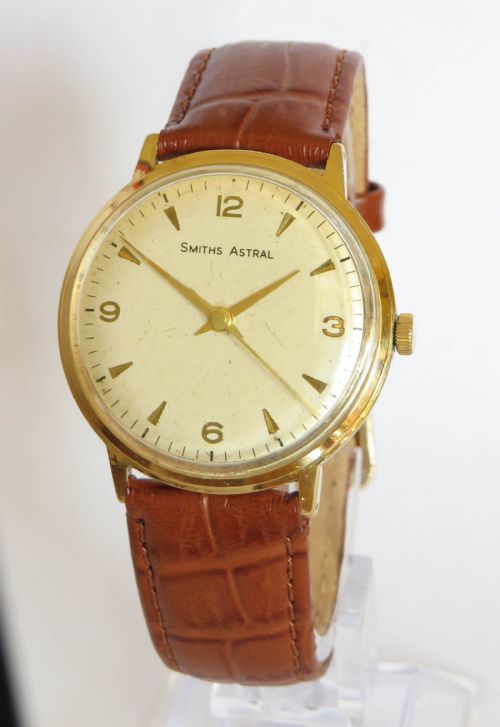
A mens analogue wristwatch represents a piece of portable horology, relying on hands moving around a dial to indicate hours, minutes and sometimes seconds. These items appear across several decades, notably the nineteenth century, nineteen-forties, nineteen-fifties and nineteen-sixties, reflecting mid-century design preferences and earlier art deco sensibilities.
The versions most commonly encountered on this page take the form of gents wristwatches powered by manual wind or automatic movements. Makers represented in the inventory include Omega, Cyma, Longines, Tissot, Bulova and Smiths, alongside pieces originating from French workshops and Swiss makers.
Cases span stainless steel, gold plate and chrome-plated steel, often paired with leather straps and glass or acrylic glass crystals. The styles lean heavily towards mid-century modern and art deco aesthetics, providing a clear window into mid-twentieth-century industrial design.
How They Were Made
Makers utilised durable metals such as stainless steel and chrome-plated steel to house delicate mechanical movements, frequently applying gold plating for a more refined appearance. Cases were precision-machined to protect the internal gears from dust and everyday wear.
Dials were protected by clear glass or acrylic glass, while straps fashioned from leather secured the object to the wrist. Internal calibres relied on intricate arrays of jewels and manual or automatic winding mechanisms to measure time accurately.
Some vintage dials include specialised functions like the Consul Dermaphile, reminding us that past generations measured more than just the passing hours.
What Varies In Quality
Quality reveals itself in the execution of the movement and the pedigree of the maker, with established names like Omega, Longines and Girard Perregaux setting a distinct standard for mechanical reliability and finishing. The precision of the dial typography and the integrity of the case metal further separate standard examples from finer productions.
The preservation of original components, such as signed crowns, hands and unpolished case lines, distinguishes superior specimens. Additionally, the standard of mechanical servicing dictates how faithfully the watch maintains its traditional function.
Antoremi·Avia·Bulova·Cyma·Dogma Prima·Ensign·Eterna·Felca·Girard Perregaux·Longines·Marvin·Omega·Smiths·Tissot
The Mens Analogue Wristwatch Glossary
- Analogue
- A watch display that uses rotating hands on a dial to show time instead of digital digits. This traditional format remains the defining characteristic of these items.
- Manual Wind
- A mechanical movement that requires the wearer to manually turn the crown to tension the mainspring. This system predates self-winding automatic technology.
- Automatic
- A self-winding mechanical movement that uses a weighted rotor, driven by the natural motion of the wearer's arm, to power the mainspring. It removes the need for daily manual winding.
- Calibre
- The specific internal movement designation used by a manufacturer to identify a particular watch mechanism. Each calibre dictates the technical layout and dimensions inside the case.
- Acrylic Glass
- A lightweight, transparent synthetic material utilised for watch crystals during the mid-century period. It offers flexibility and can be polished if scratched.
Mens Analogue Wristwatch: Frequently Asked Questions
How do I wind a manual watch?
Turn the crown gently between your thumb and forefinger in a clockwise direction until you feel firm resistance. Stop immediately to avoid over-tensioning the internal spring.
Most vintage manual pieces require daily winding to maintain accurate timekeeping throughout your routine.
Are these watches waterproof?
Vintage pieces generally lack modern waterproofing seals and should be kept away from water, swimming and heavy rain. Humidity and moisture can easily penetrate older cases and damage the delicate movement.
Treat the watch as a dry accessory to preserve the internal metal components and dial.
How do I identify the decade?
Examine the design language of the dial, numerals, case shape and style markers like art deco or mid-century modern cues. Mechanical movements and hallmarks often provide further clues to the manufacturing era.
Reference numbers inscribed on the case back can also help date the exact year of production.
How do automatic movements work?
An internal weighted rotor spins freely as your wrist moves during the day, transferring energy to wind the mainspring. This removes the need for manual winding when worn regularly.
If left off the wrist for a few days, the power reserve depletes and the watch stops until worn again.