


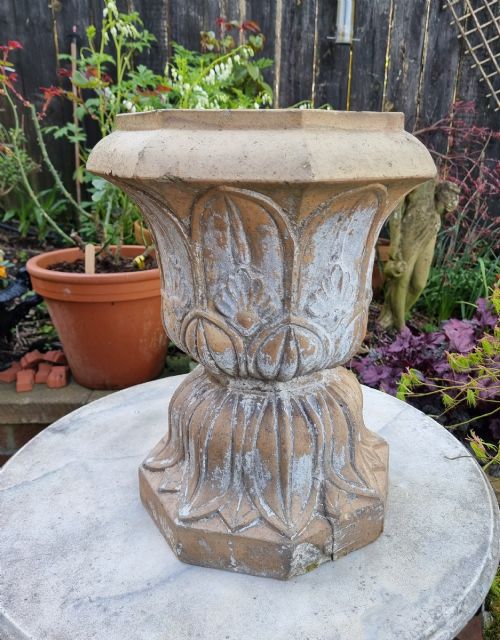


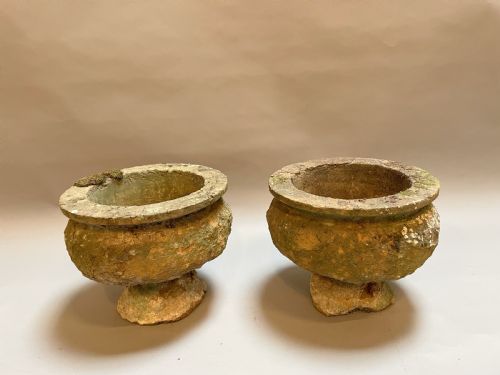


Stone Garden Urns
Stone garden urns bring classical presence to open grounds, offering enduring form and sculptural weight.
Stone Garden Urns
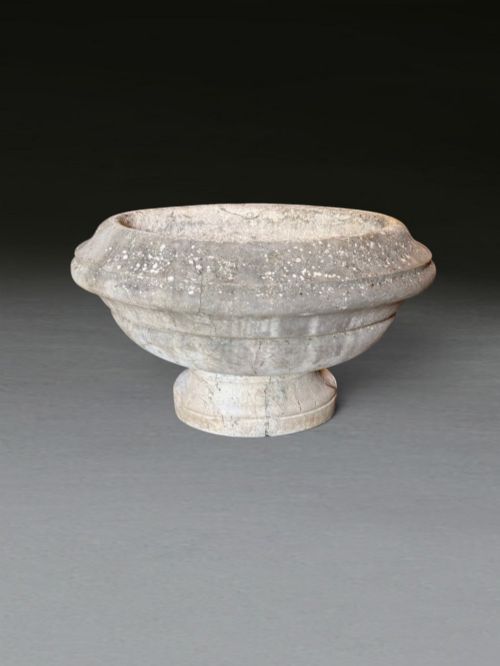
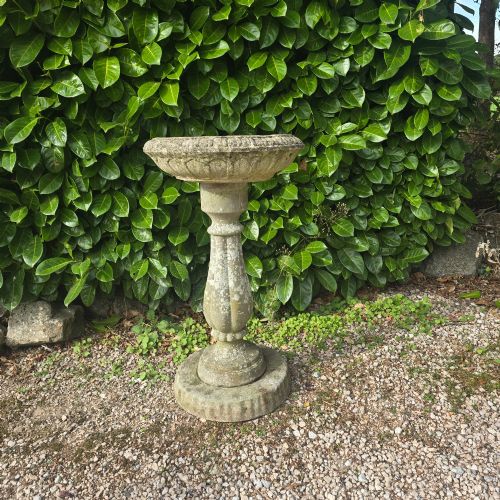
Stone garden urns represent monumental classical vessel forms adapted for open-air display, drawing on centuries of landscape tradition. When you search for stone garden urns, you encounter robust vessels designed to anchor borders, terrace edges, and formal lawns.
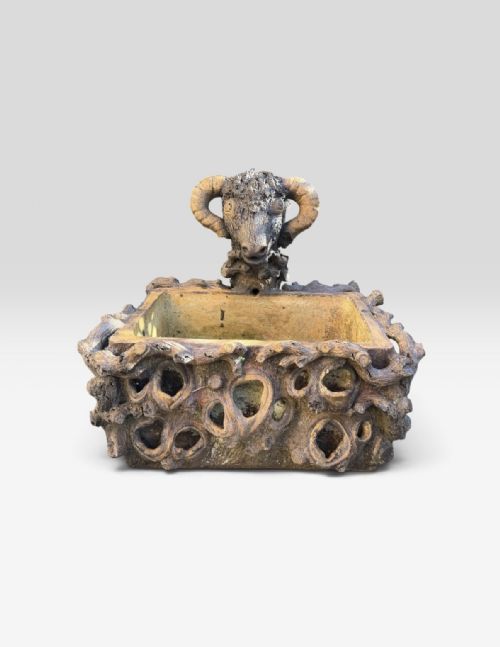
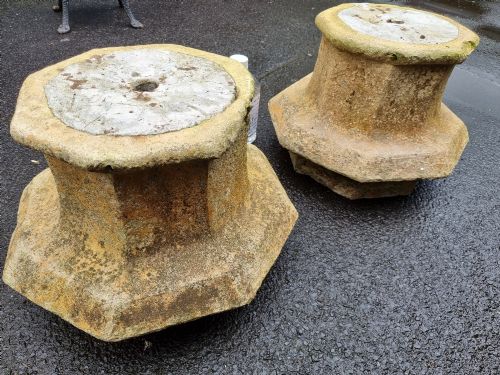
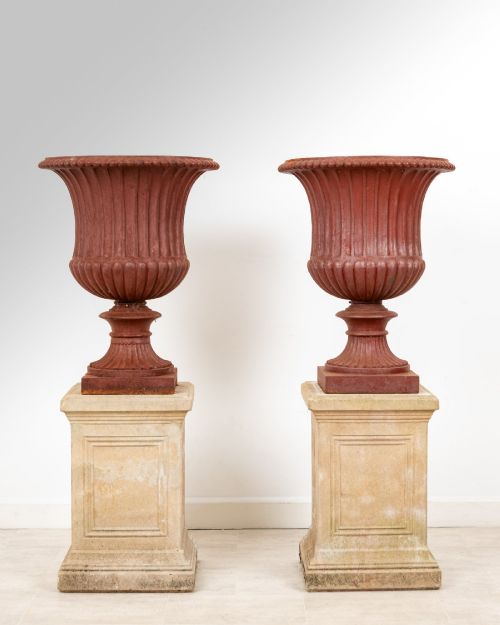
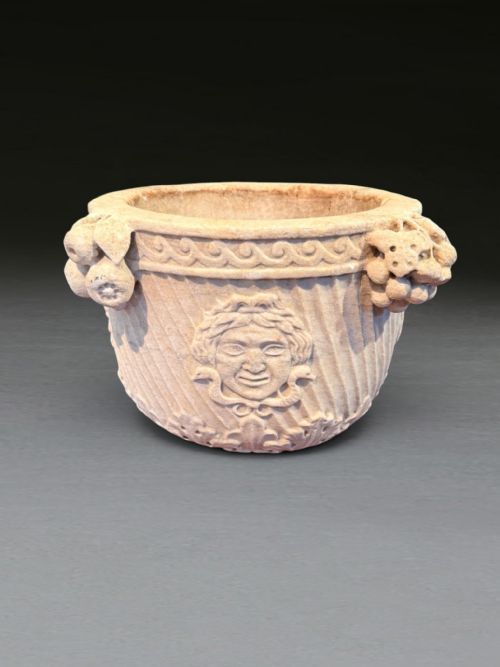
The pieces appearing on this page span the 18th century, 19th century, and the early decades of the 20th century. Forms range from low campana shapes to deep terracotta and cast stone bowls resting upon matching plinths.
Origins vary from Scottish kilns and English foundries to Italian workshops, encompassing neoclassical, Victorian, and Gothic revival aesthetics. You will frequently find pairs designed to flank pathways or frame architectural openings.
Judging Quality
Quality rests upon the crispness of the modelling and the depth of the carving, where sharp acanthus leaves and defined handles separate masterwork from standard production. The integrity of the material dictates longevity, with dense marbles and well-cured cast stone holding fine detail against frost.
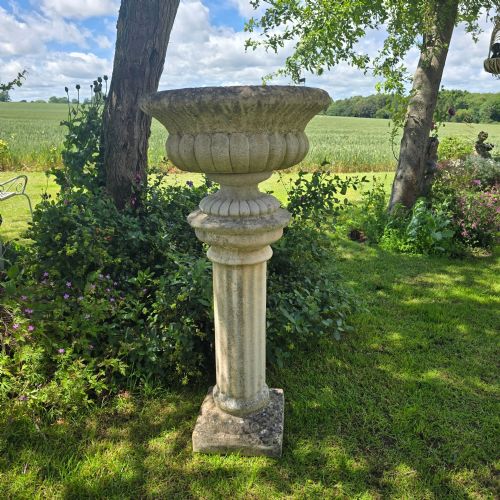
Proportion governs visual success, determining whether a bowl balances harmoniously upon its pedestal or plinth. Surface weathering contributes authenticity, showing organic lichen growth and mineral patination accumulated over decades outdoors.
Stone Garden Urns Retail Price Guide 2026
Typical asking prices for stone garden urns among the pieces listed under this phrase on Sellingantiques today, from the lower quarter to the upper quarter. They describe what is for sale here now, not the wider market.
One extraordinary planter incorporates salvaged stone originating directly from the Blitz-damaged Houses of Parliament.
Andrew Handyside
The Stone Garden Urns Glossary
- Campana
- A bell-shaped vessel with an everted rim and a footed base. This classic profile originates from ancient metal and pottery drinking vessels.
- Terracotta
- Fired unglazed clay exhibiting warm reddish-brown earthen tones. Porous by nature, it requires careful winter placement to prevent frost damage.
- Cast Stone
- A refined mixture of aggregate and cement poured into moulds to simulate natural quarried stone. It offers consistent structural strength for garden ornaments.
- Plinth
- A heavy architectural base or pedestal supporting an urn or sculpture. It elevates the vessel to improve sightlines within a garden scheme.
- Tazza
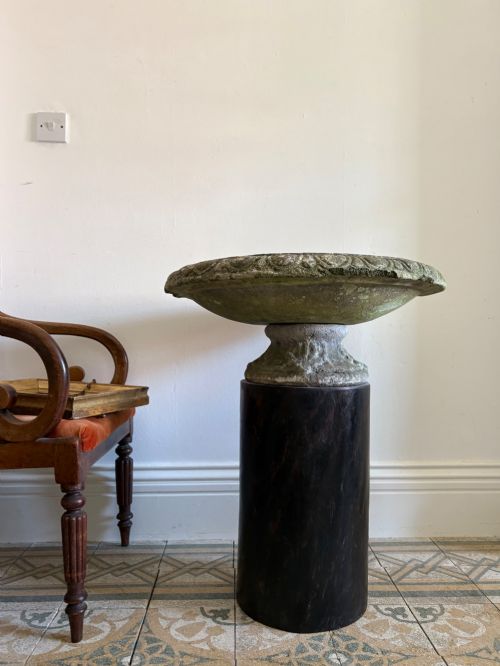
- A shallow cup or bowl mounted on a stem and foot. These pieces function as wide planters for trailing foliage.
Stone Garden Urns: Frequently Asked Questions
Are stone garden urns frost resistant?
Dense marbles and hard stones withstand sub-zero temperatures reliably without sustaining internal structural damage. Porous terracotta and certain cast composites require winter protection or drainage verification.
Elevating vessels off damp ground on stone feet prevents moisture absorption during freezing weather.
How do I clean a weathered stone urn?
Gentle washing with warm water and a soft bristle brush removes accumulated surface dirt safely. Avoid high-pressure washers that erode soft limestone and strip historic patination.
Allow organic lichens to remain, as they contribute valuable visual age and character.
Can these urns support heavy planting?
Sturdy stone and cast iron construction provides the structural mass needed for substantial root systems and damp soil. Ensure the drainage hole remains clear to prevent waterlogging and internal expansion.
Use lightweight aggregate in the base layers to reduce overall top-heaviness.