



Traditional Garden Ornaments
Traditional garden ornaments bring character to outdoor spaces, ranging from weathered staddle stones to grand campana urns.
Traditional Garden Ornaments
Traditional garden ornaments encompass architectural salvage, stone staddle stones, bird baths, sundials, and cast iron urns designed to furnish outdoor spaces. These pieces span the eighteenth, nineteenth, and early twentieth centuries, bringing historical depth to gardens.
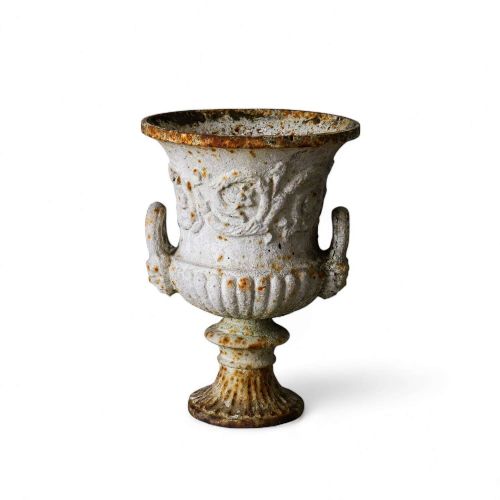
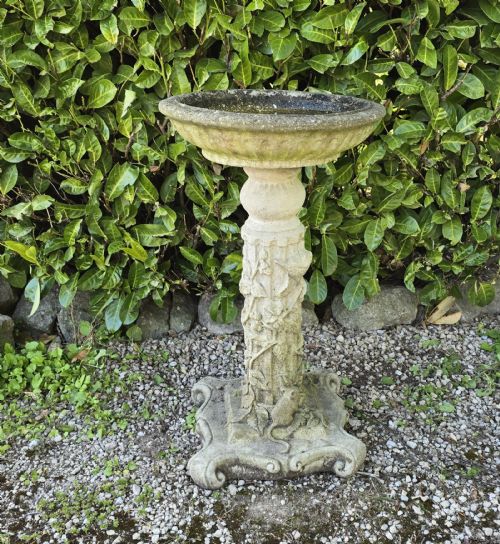
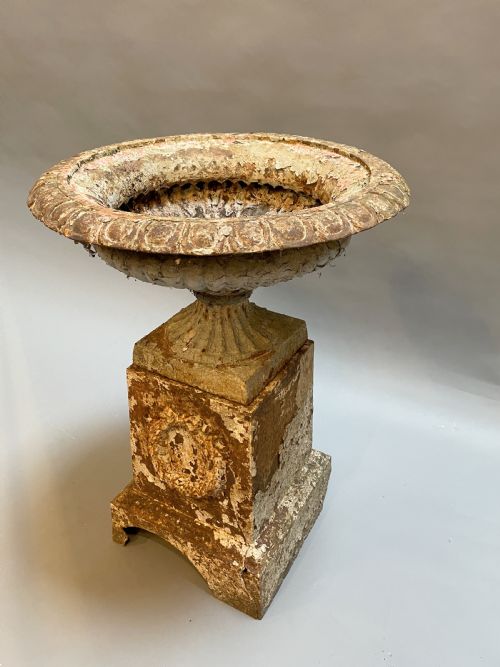
Buyers will most frequently encounter sturdy staddle stones carved from granite and sandstone, alongside robust cast iron campana urns and bird baths. These functional and decorative items reflect English country house aesthetics and classical revival styles.
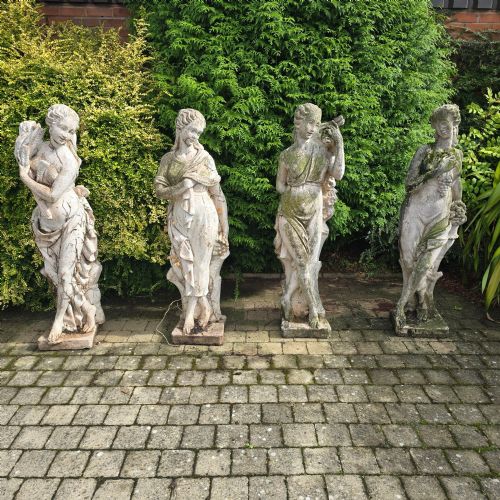
The selection includes figures such as stone lions, cherubs, and hounds, alongside practical agricultural salvage like mill stones and rhubarb forcers. Each object shows the marks of age, often covered in natural moss and lichen.
How they were made
Stone items like staddle stones and bird baths relied on manual banker masonry, carving blocks of sandstone, limestone, or Cornish granite by hand. Surface finishes included lead elements and occasional layers of paint.
Natural weathering over decades contributes heavily to the finish, allowing moss and lichen to colonise the stone and iron surfaces. This ageing process integrates the manufactured objects seamlessly into garden landscapes.
Several life-size cast lead hounds stand ready to guard the lawn, keeping a silent, motionless watch over the garden beds.
What varies in quality
Quality rests in the crispness of the original cast iron detailing or the depth of the stone hand-carving. Pieces bearing recognised foundry marks or distinct regional stone types command greater appreciation.
The degree of honest weathering and structural integrity dictates desirability. Uniform patination from decades in the elements elevates an object above one with harsh modern repairs.
Proportion and scale distinguish finer architectural salvage and statuary. Well-balanced pairs of lions or urns demonstrate superior design coherence compared to mismatched or overly weathered items.
Andrew Handyside
The Traditional Garden Ornaments Glossary
- Campana urn
- A bell-shaped garden vessel originating from classical antiquity, often cast in iron or carved from stone. These pieces sit on square bases and display fluted bodies.
- Staddle stone
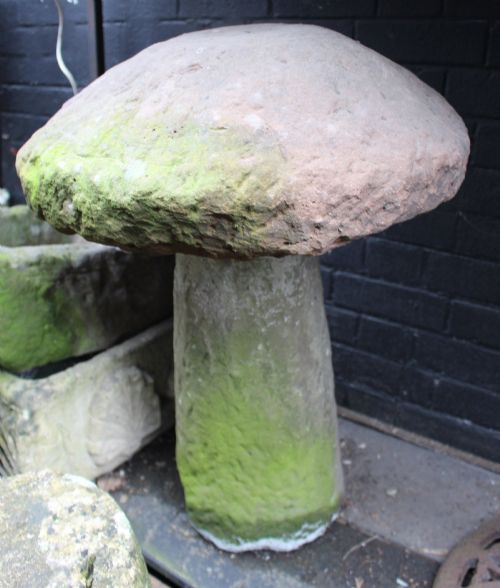
- A mushroom-shaped stone support formerly used to raise granaries and rick stands above the damp ground. They consist of a monolithic base and a separate cap.
- Rhubarb forcer
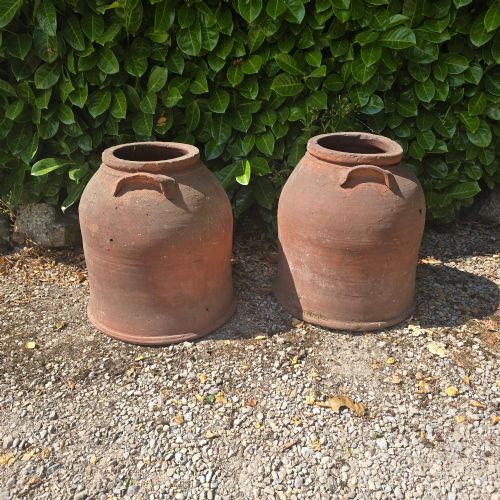
- A heavy ceramic or terracotta vessel placed over crowns to exclude light and accelerate growth. Victorian examples now serve as distinctive garden ornaments.
- Armillary sphere
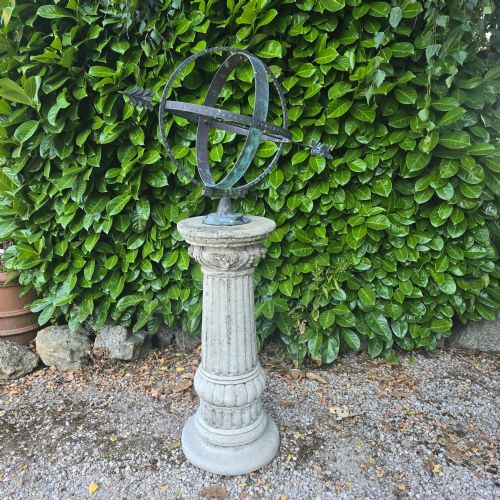
- A skeletal sphere of metal rings representing celestial circles, mounted as a garden sundial. These objects measure time through the shadow cast by an internal gnomon.
Traditional Garden Ornaments: Frequently Asked Questions
What is a staddle stone used for?
Staddle stones originally supported wooden agricultural granaries, elevating grain stores above ground level to keep out vermin and dampness. Their mushroom shape prevented rats from climbing up into the structure.
Today, gardeners use them singly as focal points or in symmetrical pairs to flank pathways and entranceways. Their weathered granite and sandstone surfaces integrate naturally into planting schemes.
Are stone bird baths frost proof?
Natural stone bird baths carved from granite, Purbeck stone, or sandstone generally withstand winter frosts well. Porous stones can absorb moisture, so draining standing water before freezing temperatures arrive is sensible.
Reconstituted stone items require similar care to prevent surface spalling during hard freezes. Placing them on stable paving rather than directly on wet soil also limits moisture uptake.
How do I date an old garden ornament?
Dating relies on material analysis, manufacturing marks, and stylistic clues from periods like the Victorian era or Georgian times. Cast iron pieces often carry foundry stamps, while hand-carved staddle stones show tool marks characteristic of eighteenth-century masonry.
Surface patination, including thick layers of moss and lichen, indicates decades of outdoor exposure. Comparing the form to established architectural salvage styles helps narrow down the decade.