





Classical Stone Planters
Classical stone planters bring sculptural form to gardens and terraces, offering solid vessels designed to display foliage with enduring architectural presence.
Classical Stone Planters
Classical stone planters encompass garden urns, tazza urns, and carved planters shaped by historical revivals from the eighteenth and nineteenth centuries. These vessels draw on architectural traditions spanning the Italian Renaissance, Georgian, Regency, and Victorian periods.
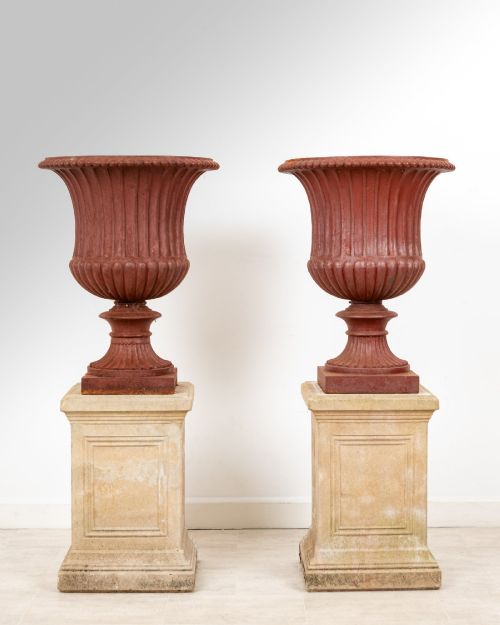
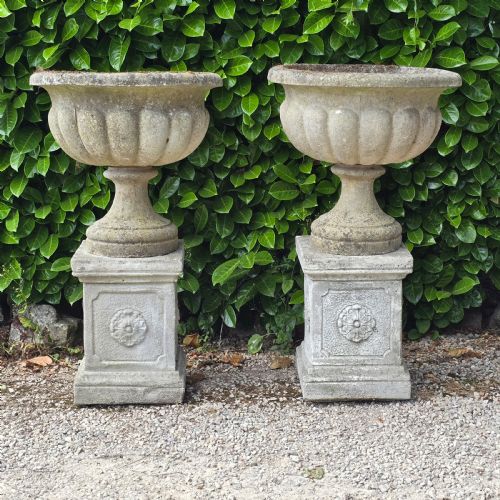
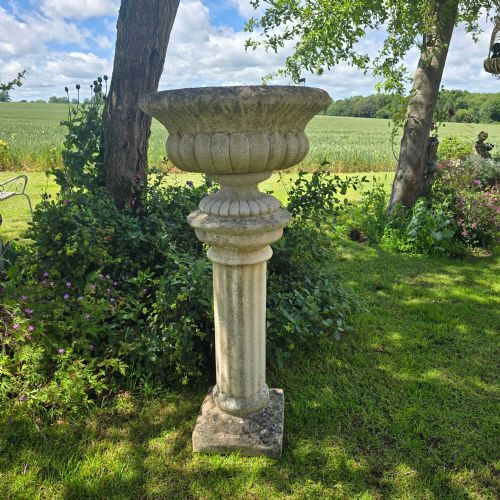
Buyers will most frequently encounter nineteenth-century examples alongside early twentieth-century pieces, often formed as campana urns on pedestals or plinths. Materials range from carved stone, limestone, and marble to cast stone, reconstituted stone, and terracotta.
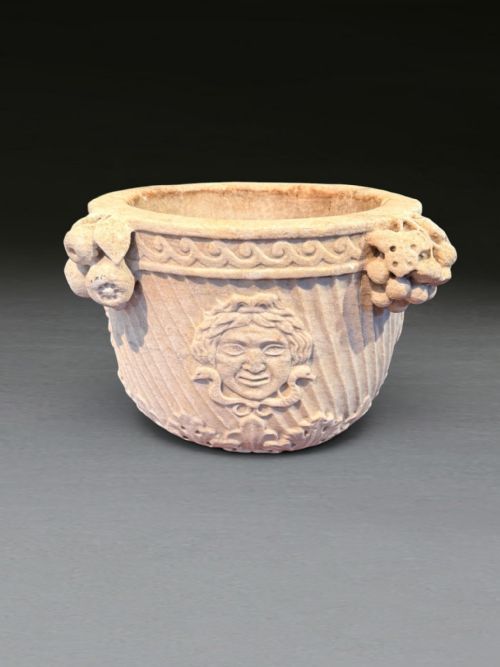
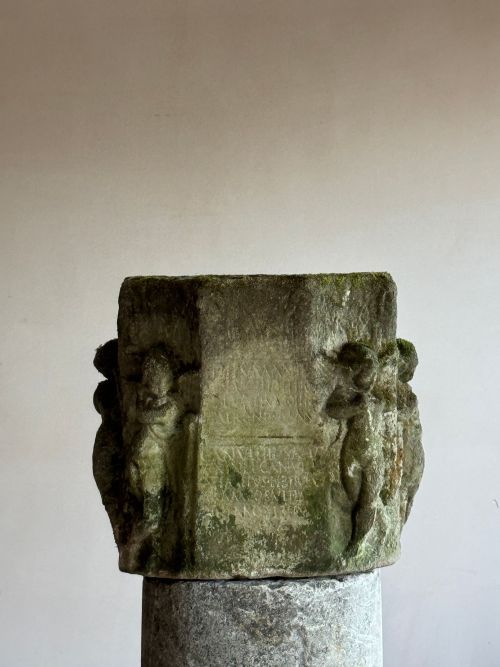
The inventory includes decorative garden cisterns, carved stone baskets, and funerary altar forms adapted for horticulture. These objects suit formal garden settings, courtyards, and terraces where classical proportions create a grounded focal point.
Materials and Construction
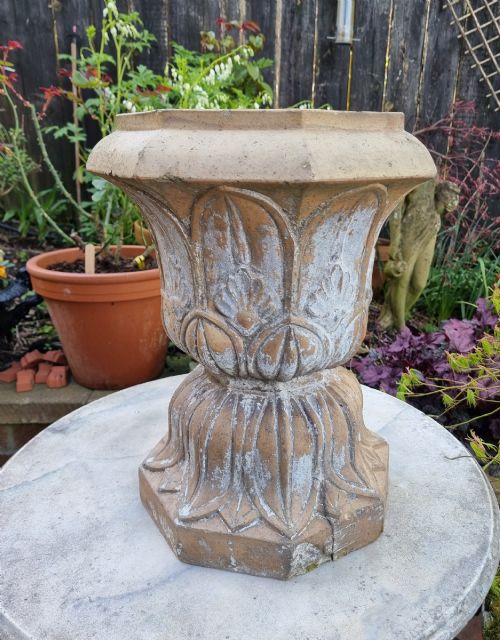
Makers shaped these planters from natural stones including marble, limestone, alabaster, and soft stone, alongside cast iron, terracotta, and reconstituted stone. Natural stone vessels typically show hand-carving techniques, while cast iron and terracotta reflect nineteenth-century foundry and moulding methods.
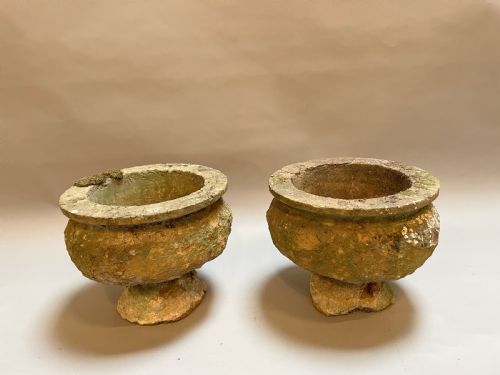
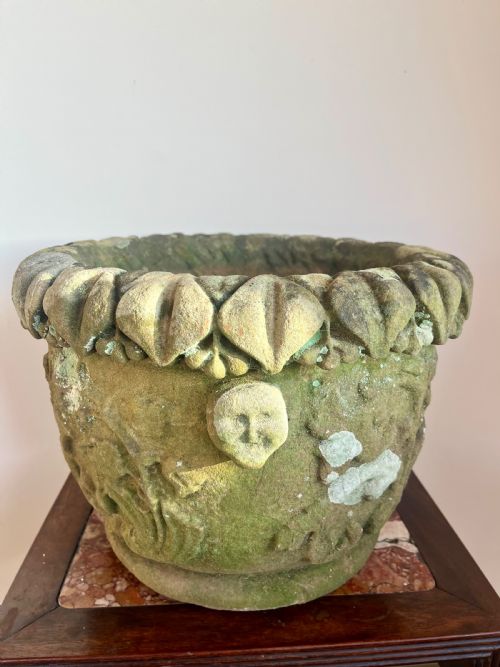
Surface treatments involve natural weathering, patination, and occasional paint layers that register decades of outdoor exposure. Handles frequently feature sculpted details such as carved heads, while bodies display neoclassical foliage like acanthus leaves.
Materials span natural stone, marble, limestone, alabaster, terracotta, cast iron, and reconstituted stone.
Assessing Quality and Execution
Quality rests in the crispness of the carving, the purity of the marble or limestone, and the correct classical proportion of the bowl to the pedestal. Superior pieces display confident handling of neoclassical motifs like acanthus leaves and campana profiles, executed by skilled hands.
The integrity of the material matters, whether a cast iron foundry piece by a maker like Andrew Handyside or a hand-carved Italian marble urn. Surface weathering that enhances the stone without compromising structural form distinguishes finer surviving examples.
Andrew Handyside
The Classical Stone Planters Glossary
- Campana urn
- A bell-shaped garden vessel with an everted rim and a footed base, popular in classical design. These forms frequently sit on stone pedestals or plinths in garden settings.
- Tazza
- A shallow cup or basin set on a pedestal, often used as an ornamental garden urn. Examples in marble or stone appear in pairs across nineteenth-century collections.
- Reconstituted stone
- A durable composite material made from aggregate stone mixed with a binder to create moulded garden ornaments. It mimics the appearance of natural carved stone.
- Neoclassical
- A style drawing on the art and architecture of classical antiquity, prevalent in eighteenth and nineteenth-century design. This aesthetic defines the proportions and ornament of these planters.
- Plinth
- A heavy flat-based block or pedestal that supports an urn, statue, or planter. These provide stability and elevate the vessel above ground level.
Classical Stone Planters: Frequently Asked Questions
How do I care for stone planters in winter?
Natural stone and reconstituted stone vessels generally withstand outdoor conditions, provided they have adequate drainage holes to prevent water accumulation and freezing expansion. Raising planters slightly off the ground on feet or blocks prevents moisture absorption from wet soil.
Terracotta and cast iron pieces benefit from being moved to sheltered positions or unheated greenhouses during severe frosts. Regular clearing of debris keeps drainage channels clear throughout the colder months.
Where should I place a campana urn?
Campana urns suit focal positions such as garden path intersections, terrace corners, or flanking steps. Their flared profiles and pedestals command attention when viewed from multiple angles.
Pair these vessels symmetrically at entrances or along formal garden walls to establish classical balance. Planting them with trailing foliage or box balls accentuates their sculptural silhouettes.
How can I tell eighteenth-century urns from nineteenth-century ones?
Eighteenth-century pieces often display hand-carved detailing in marble, limestone, or soft stone, reflecting Georgian and neo-classical architectural tastes. Tool marks and the specific geological composition of the stone offer clues to their age and origin.
Nineteenth-century examples frequently incorporate cast iron or terracotta alongside carved stone, reflecting industrial production methods like those of Andrew Handyside. Victorian revival styles also introduce distinct decorative motifs such as acanthus leaf banding.
Can these planters stay outside all year?
Most stone, cast iron, and cast stone planters endure permanent outdoor placement, developing a weathered patina over decades of exposure. Porous materials like terracotta require monitoring during freezing weather to avoid cracking.
Positioning vessels on stable stone plinths prevents direct contact with damp earth. This placement limits moisture retention and preserves the material integrity of the base.