



Cast Stone Urns
Cast stone urns bring architectural presence to a garden, offering the weight and classical outline of carved stone without the ruinous cost.
Cast Stone Urns
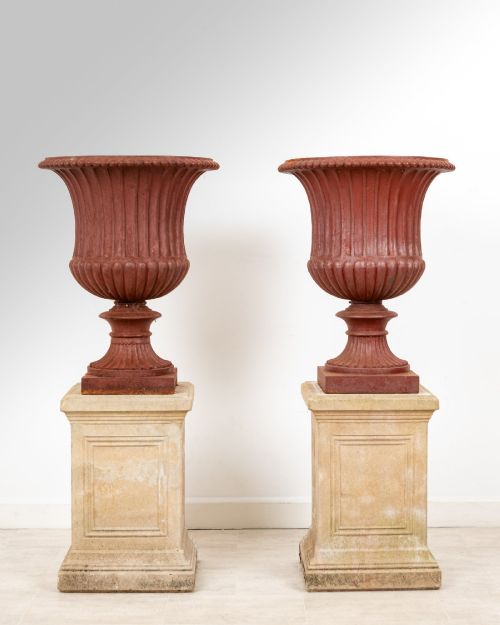
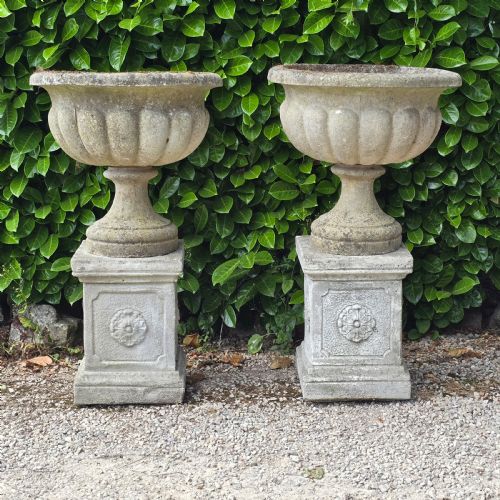
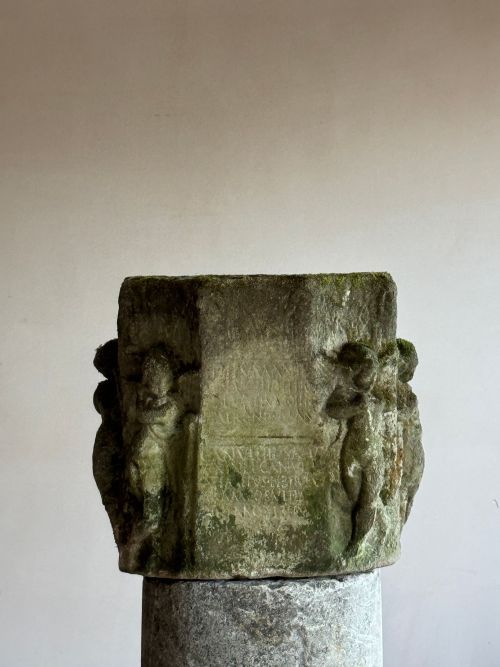
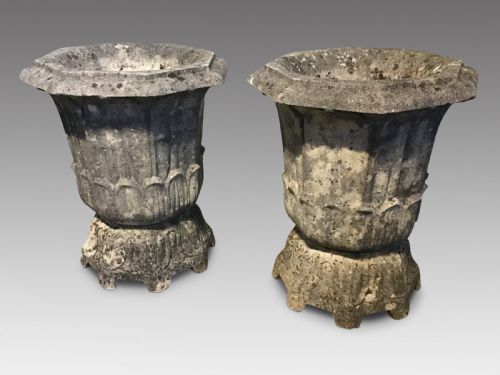
When you search for cast stone urns, you encounter robust garden vessels designed to anchor a terrace, frame a doorway or terminate a gravel path. The pieces on this page span the nineteenth and twentieth centuries, taking forms such as the classic campana shape, classical revival planters and occasional architectural fragments.
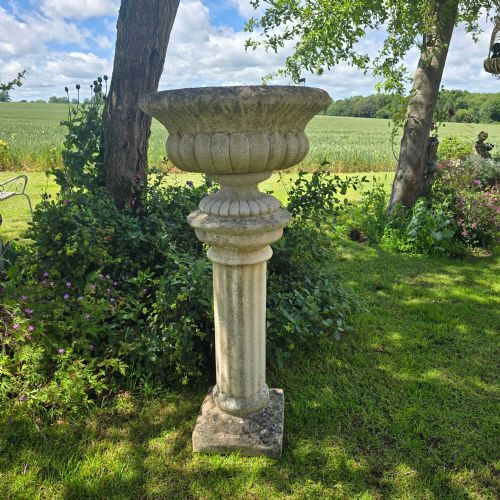
You meet examples influenced by Victorian classical, neoclassical, and gothic revival tastes, often paired with matching pedestals or plinths. Most show the beneficial effects of weather, developing soft patinas and organic weathering across their surfaces over decades outdoors.
How they were made
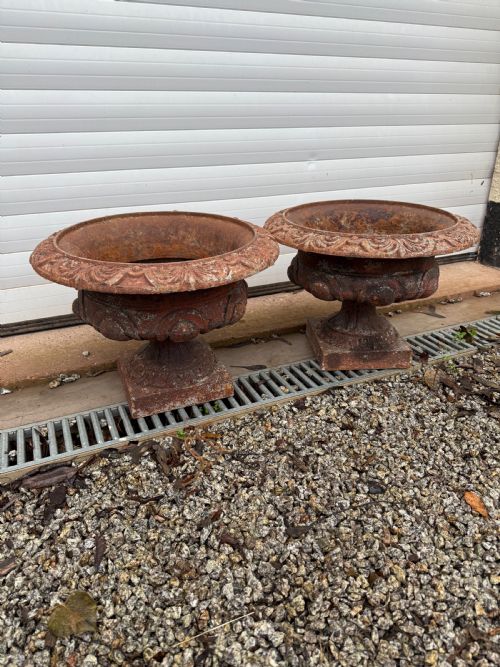
Makers produced these garden ornaments by pouring aggregates mixed with a binder into moulds, capturing crisp architectural details like acanthus leaves and lotus motifs. Cast iron versions appear alongside reconstituted stone, offering a sharper profile and greater tensile strength for slender campana bowls.
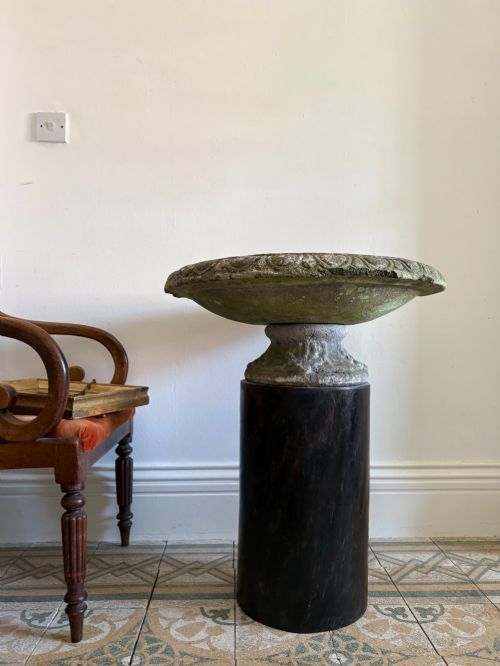
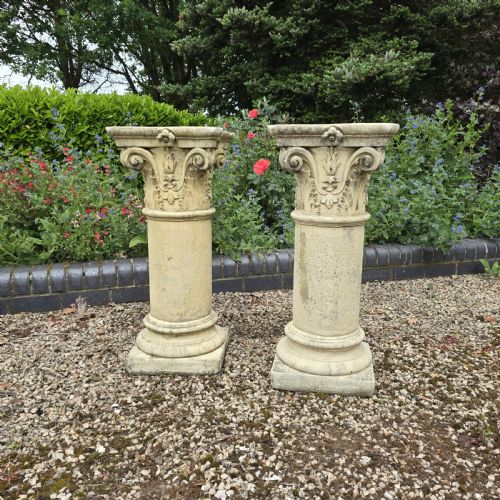
Surfaces were sometimes left bare to weather naturally in the elements, whilst other pieces received coats of paint that now flake and weather in characteristic ways. Pedestals and columns were frequently cast separately to support the heavy urns above.
Goat mask handles peer out from select Victorian urns, serving no structural purpose whatsoever except to watch the lawn.
What varies in quality
Quality in these garden ornaments rests on the sharpness of the casting and the depth of the modelled relief, where crisp acanthus leaves and well-defined mouldings separate superior examples from softer, worn castings. The proportion between the urn bowl and its accompanying plinth dictates the visual balance of the whole composition.
The degree and character of natural weathering add considerably to the visual appeal, as decades of exposure create stable, attractive patinas rather than structural degradation. Original pairs matching their pedestals hold a greater architectural coherence than assembled groupings.
Andrew Handyside
The Cast Stone Urns Glossary
- Campana urn
- A bell-shaped garden vessel with an everted rim and a pedestal foot, originating in classical antiquity and revived across the nineteenth century.
- Reconstituted stone
- A composite material made from crushed or graded stone aggregate bound with cement, moulded to imitate natural carved stone.
- Plinth
- A heavy rectangular or square block supporting an urn, pedestal or column, elevating the vessel above ground level.
- Acanthus leaf
- A classical foliate ornament carved or moulded in relief, modelled on the Mediterranean plant and widely used on capitals and urns.
- Weathering
- The natural alteration of stone or iron surfaces through exposure to rain, frost and sun, resulting in patination and colonisation by moss or lichen.
Cast Stone Urns: Frequently Asked Questions
How do I clean a weathered cast stone urn?
Gentle brushing with a soft bristle brush and plain water removes loose dirt without disturbing the aged surface patina.
Avoid high-pressure washers and harsh chemical cleaners, as these strip away the mellowed outer skin and erode the cast details.
Are cast stone urns frost proof?
Most cast stone and reconstituted stone pieces tolerate winter freezes, provided water does not collect and freeze inside the bowl.
Raising urns slightly off the ground on feet during winter prevents moisture from drawing up through the base and causing frost damage.
Can I leave cast iron urns outside all year?
Cast iron handles outdoor conditions reliably, though exposed metal will develop surface rust where paint or protective coatings wear away.
Applying a suitable metal primer and paint finish periodically prevents deep corrosion and preserves the structural integrity of the metal.
How do I choose the right size plinth?
The base of the urn should sit comfortably within the top perimeter of the plinth without overhang, ensuring a stable and visually balanced weight distribution.
Consider the surrounding garden scale, as taller pedestals work best to frame grand walkways whilst shorter plinths suit intimate planting beds.