




Carved Stone Garden Pots
These carved stone garden pots span centuries of outdoor styling, offering genuine weight and character to any garden scheme.
Carved Stone Garden Pots
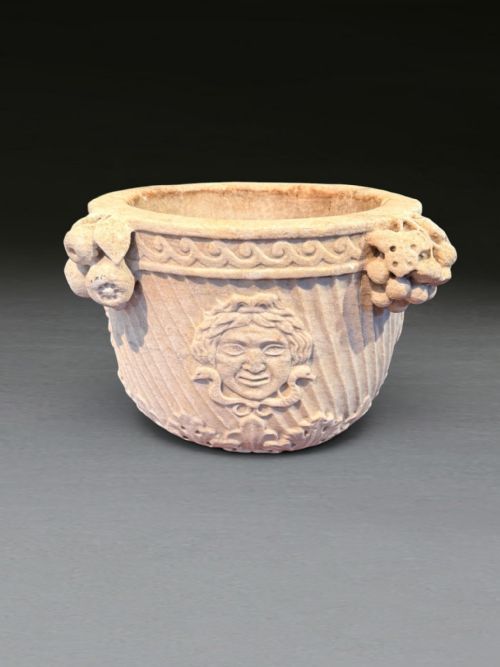
Carved stone garden pots encompass everything from grand architectural urns to sturdy troughs, designed specifically to anchor outdoor spaces. You will encounter classical campana shapes alongside rustic country planters and regional mortars.
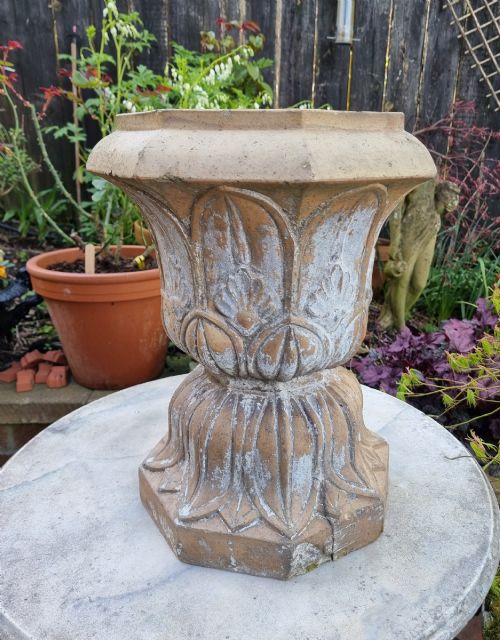
The pieces on offer stretch across a broad timeline, reaching from pre-sixteenth century fragments up to mid-twentieth century domestic gardenware. Italian Renaissance marble works sit alongside Victorian salt-glazed vessels and Indian planters from the Raj period.
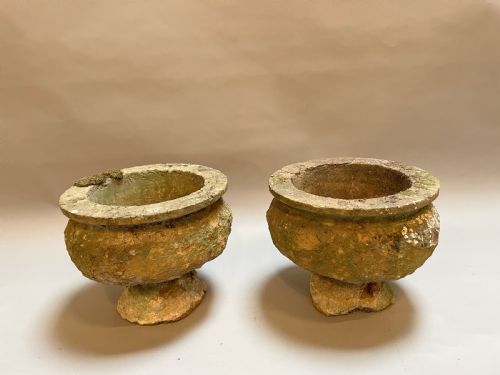
Forms vary from simple round and seven-sided planters to monumental garden urns and utilitarian stone troughs. Buyers frequently find pairs suitable for framing doorways or single statement pieces for lawn centres.
How they were made
Masons shaped these vessels from a variety of heavy minerals, utilising natural stone, sandstone, soft stone and hard marble. Some exceptional pieces employ reclaimed materials such as stone salvaged from historic buildings.
Moulded alternatives also appear through cast stone and reconstituted stone, providing durable structures for domestic landscapes. Terracotta and salt-glazed ceramics introduce fired clay surfaces alongside traditional carved mineral bodies.
Listings feature items spanning multiple centuries, from pre-sixteenth century fragments up to nineteen-fifties gardenware.
What varies in quality
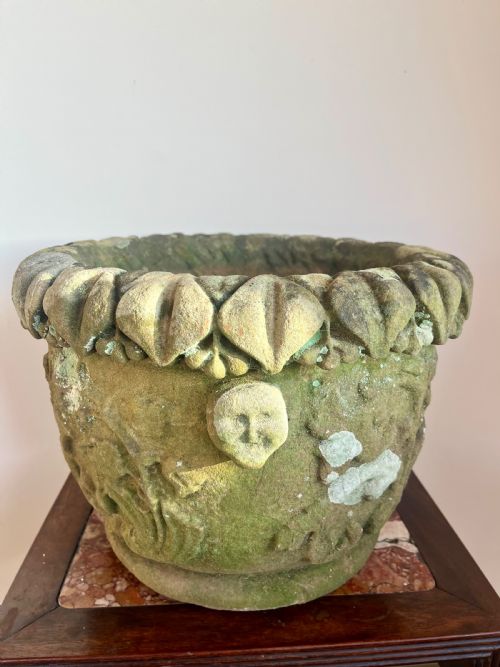
The distinction between ordinary garden containers and superior pieces lies entirely in the ambition of the carving and the quality of the mineral. Hand-carved marble and early soft stone pieces display crisp architectural detailing that mechanical moulding cannot replicate.
Surface weathering dictates visual success, where centuries of exposure create a deep, organic patina across the stone. Pieces with strong regional characteristics or traceable architectural provenances command greater attention from serious planters.
The Carved Stone Garden Pots Glossary
- Campana urn
- A bell-shaped garden vessel with an everted rim and a footed base, popular in classical and neoclassical garden design. It usually sits on a square plinth to elevate planting.
- Reconstituted stone
- A manufactured material composed of crushed natural stone and cement binder, moulded into architectural shapes. It offers the appearance of carved stone at a more accessible scale.
- Salt-glazed
- A ceramic finish achieved by throwing common salt into the kiln during high-temperature firing, producing a characteristic textured glaze. This treatment protects earthenware bodies from frost damage.
- Trough
- A long, shallow rectangular vessel historically used for feeding livestock or domestic chores, repurposed as a sturdy garden planter. Their utilitarian origins give them a heavy, rustic presence.
Carved Stone Garden Pots: Frequently Asked Questions
Can these pots stay outside in winter?
Most natural stone, cast stone and salt-glazed pieces withstand freezing temperatures without sustaining damage. Dense minerals resist frost expansion much better than porous, soft materials.
To protect delicate older surfaces, raise planters slightly off the ground on pot feet to prevent water retention and freezing at the base.
How do I clean old stone planters?
Gentle brushing with water removes loose debris while preserving the accumulated patina of decades outdoors. Avoid harsh chemical cleaners or pressure washers that strip away the weathered surface layer.
Allowing moss and lichens to remain often enhances the historic character of nineteenth-century and earlier vessels.
What is the difference between an urn and a planter?
Urns traditionally feature a footed stem and a flared bowl derived from classical antiquity, designed primarily for ornamental display. They elevate plantings above eye level.
Planters encompass a broader range of practical shapes, including straight-sided boxes, round bowls and long troughs meant to hold growing root systems.