



Antique Garden Statuary
Antique garden statuary brings architectural weight and timeless character to a terrace or lawn, offering classical forms shaped by centuries of weathering.

Antique Garden Statuary
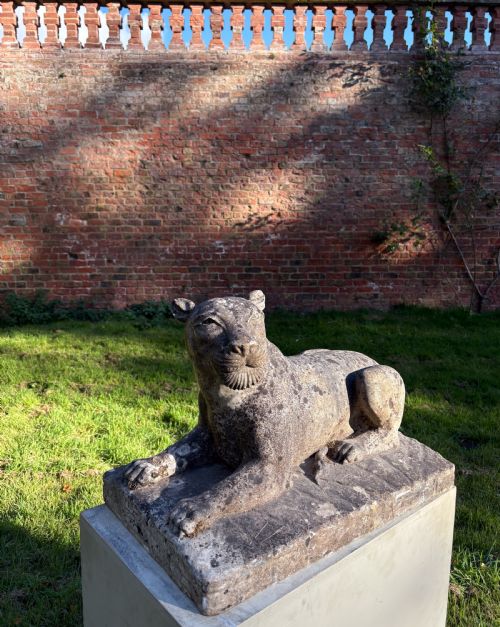
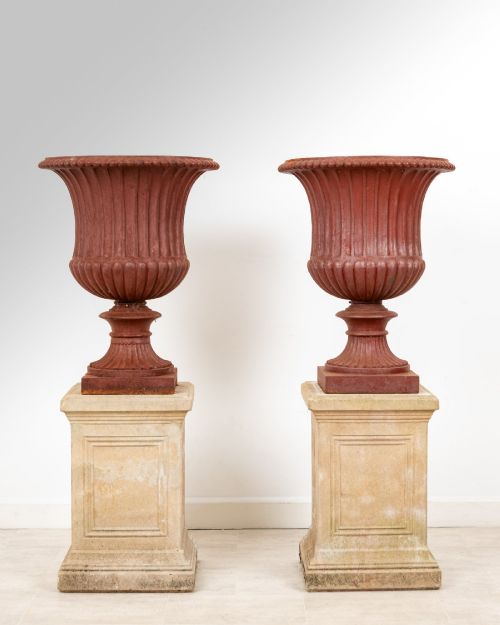
When you search for antique garden statuary, you encounter a diverse collection of sculptural objects designed to anchor outdoor spaces. The selection ranges from monumental stone and marble beasts to refined lead figures and cast iron urns.
The origin of these works spans English country house traditions alongside continental Italianate and French foundry designs. Each piece reflects the landscape tastes of its specific period, from Georgian formality to Victorian romanticism.
How they were made
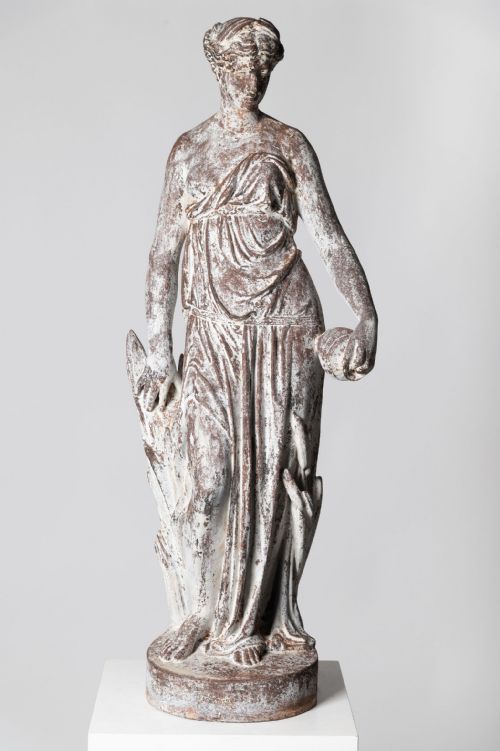
The making of these pieces relies on durable materials suited to enduring the elements outdoors. Cast metals such as iron and lead were poured into moulds or cast at specialist foundries like Val d'Osne, capturing intricate detail.
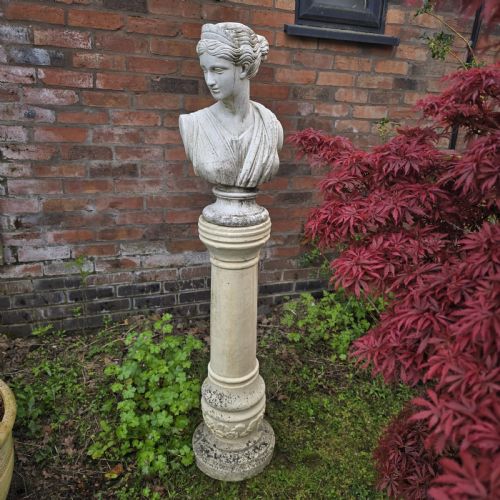
Stone, marble, and terracotta were hand sculpted or moulded from durable aggregates and natural clays before being fired or left to weather. Surface treatments like original old paint or natural patination developed over decades of exposure.
Antique Garden Statuary Retail Price Guide 2026
Typical asking prices for garden statuary among the pieces listed under this phrase on Sellingantiques today, from the lower quarter to the upper quarter. They describe what is for sale here now, not the wider market.
Victorian sculptors occasionally turned their attention to domestic wildlife, producing contemplative monkeys and musical satyrs to surprise visitors.
What varies in quality
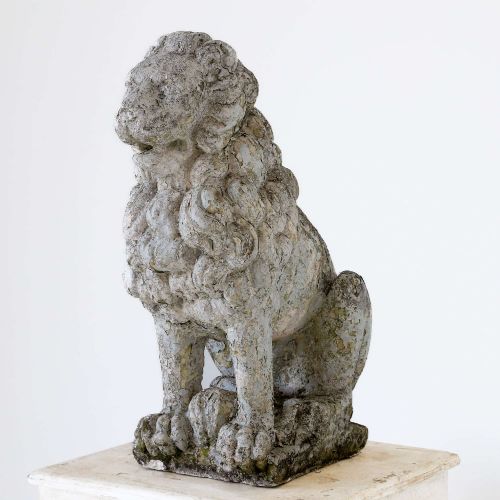
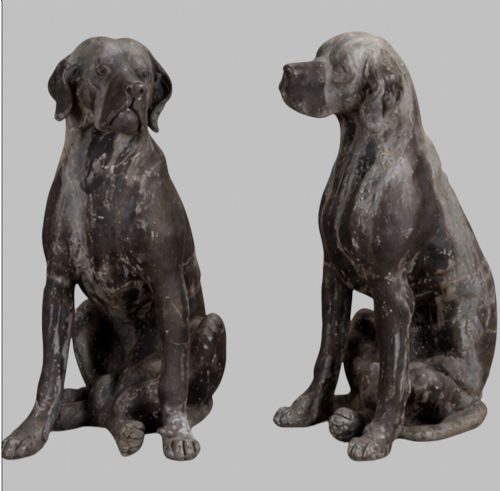
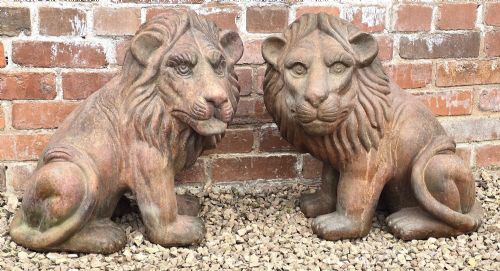
Quality rests in the crispness of the modelling and the artistic ambition of the casting or carving. Superior examples display anatomical precision in figures like lions and hounds, alongside balanced proportions in architectural urns and pedestals.
The integrity of the material and the character of the weathering also distinguish finer works. Natural patination accumulated through age enhances genuine antique examples, separating them from later reproductions.
Val d’Osne foundry
The Antique Garden Statuary Glossary
- Campana urn
- A bell-shaped garden vessel often mounted on a pedestal, traditionally styled on classical antiquity. These pieces serve as prominent focal points on terraces or flanking entrances.
- Composite stone
- A durable mixture of stone dust and binding agents moulded into architectural forms. It gained favour for replicating carved stone details with greater resilience.
- Okimono
- A Japanese term for a decorative object designed for display. In garden contexts, this refers to bronze animal sculptures placed within the landscape.
- Putto
- A representation of a chubby male child, often winged, derived from classical art. These figures frequently appear in lead or stone within garden settings.
- Terracotta
- Fired clay moulded into statues, pots, and columns. Its warm earthen tones weather distinctively in outdoor environments.
Antique Garden Statuary: Frequently Asked Questions
How do I care for lead statuary?
Lead requires minimal maintenance due to its natural resistance to corrosion. Allow the metal to retain its protective dark grey oxidation layer rather than cleaning it aggressively.
Ensure that figures with internal armatures or hollow sections do not collect standing water that could freeze and expand during winter months.
Can cast iron garden urns stay outside in winter?
Cast iron handles frost well provided water is not allowed to pool inside the vessel and freeze. Elevating pots slightly off the ground prevents moisture absorption from damp soil.
Applying a protective coat of wax or suitable paint periodically preserves the metal surface against rust formation.
What is the difference between composite stone and natural marble?
Natural marble is hand carved from quarried metamorphic rock, showing crystalline structures and unique geological veining. It represents a higher tier of sculptural artistry.
Composite stone is cast using moulded aggregates to simulate carved stone. It offers robust durability for landscape placement at a different scale of production.
Where should I position heavy garden statuary?
Massive pieces such as marble lions or iron urns require firm, level foundations like stone paving or reinforced concrete pads. Sinking ground can cause uneven settling and stress the material.
Consider sightlines from principal windows and seating areas to integrate the sculpture naturally into the garden design.