
Classical Marble Urns
Classical marble urns bring the sculptural severity of antiquity into nineteenth-century interiors through carved stone and cast metal.
Classical Marble Urns
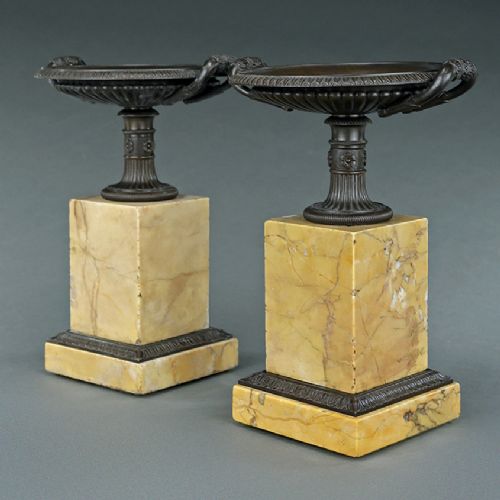
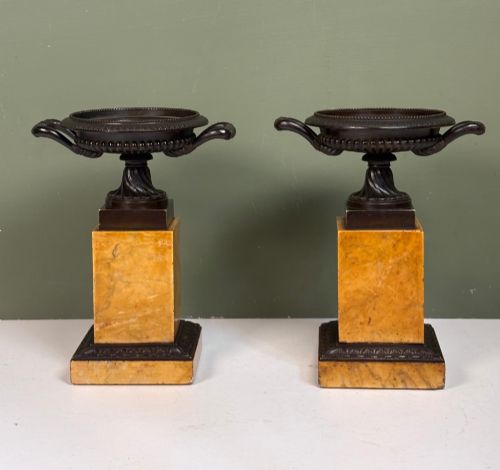
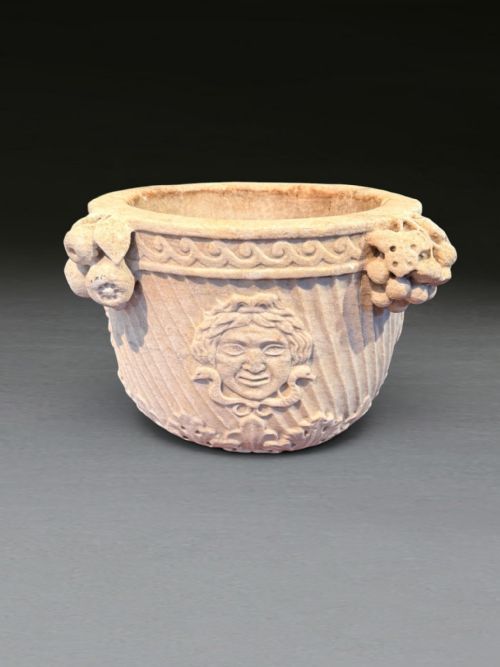
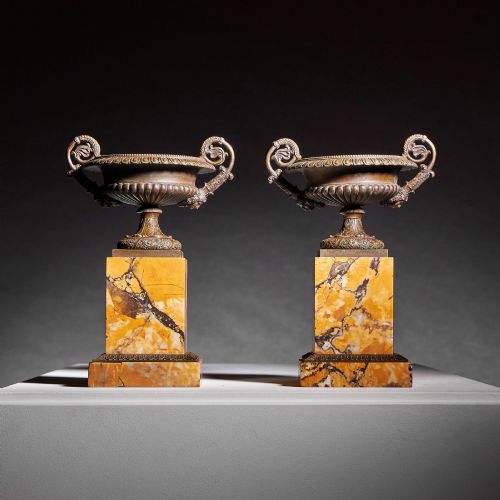
Classical marble urns take the form of decorative vessels, table lamps, and tazzas modelled after ancient prototypes from Greek and Roman civilisations. Buyers searching for classical marble urns will predominantly encounter nineteenth-century interpretations, particularly French and Italian Grand Tour pieces produced during the Regency, Victorian, and Louis XVI revival periods.
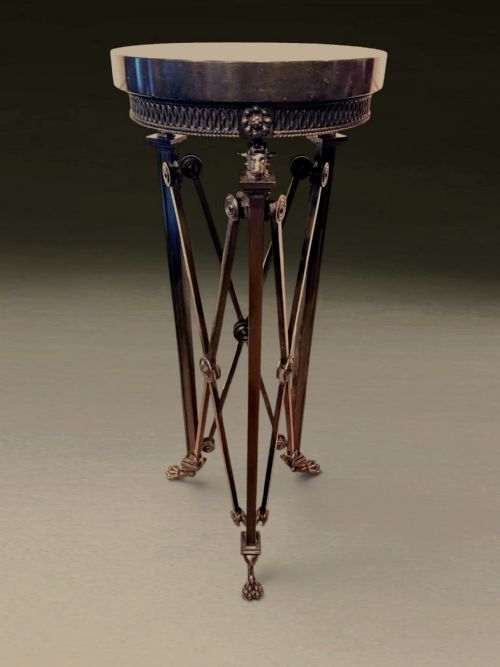
The selection ranges from miniature cabinet vases and lidded cassolettes to substantial mantel ornaments and architectural pedestals. Many pieces combine carved stone bodies with cast metal mounts, serving as decorative focal points or converted lighting fixtures.
How they were made
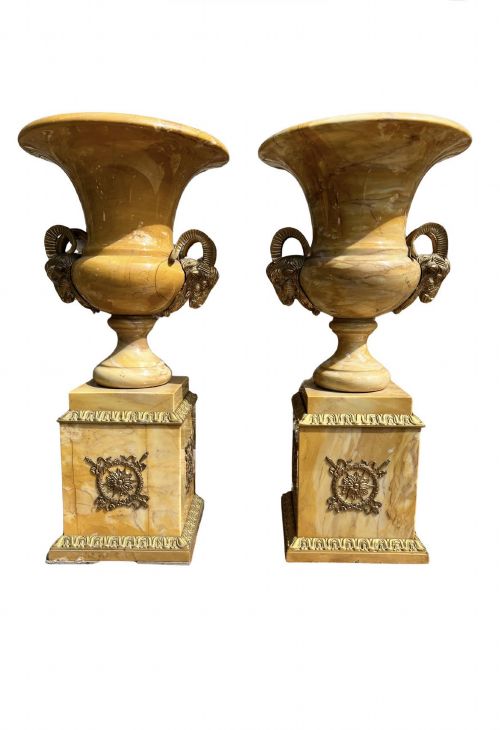
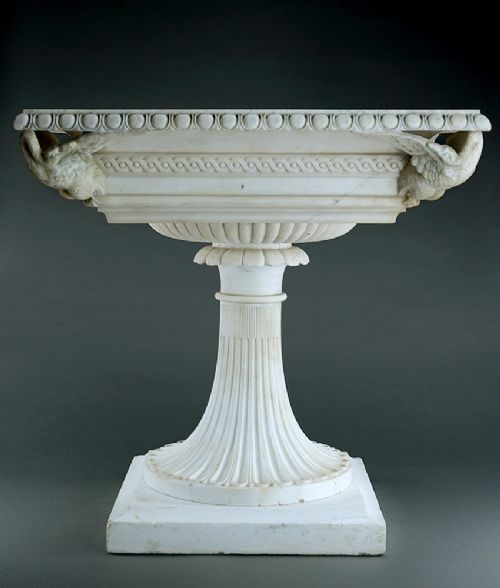
Makers fashioned the bodies of these vessels from various natural stones including white, rouge, and Siena marble, alongside alabaster and onyx. These stone elements were turned on lathes or hand-carved to precise classical proportions before receiving metal components.
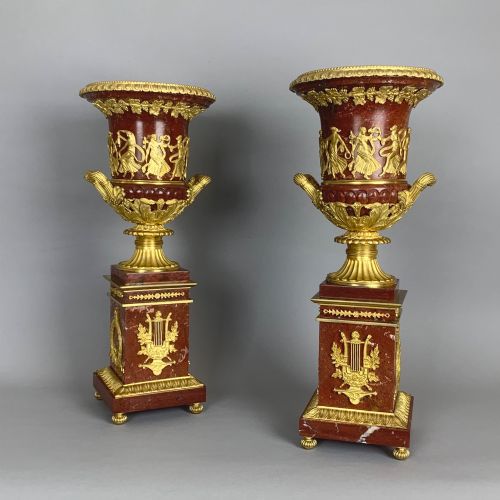
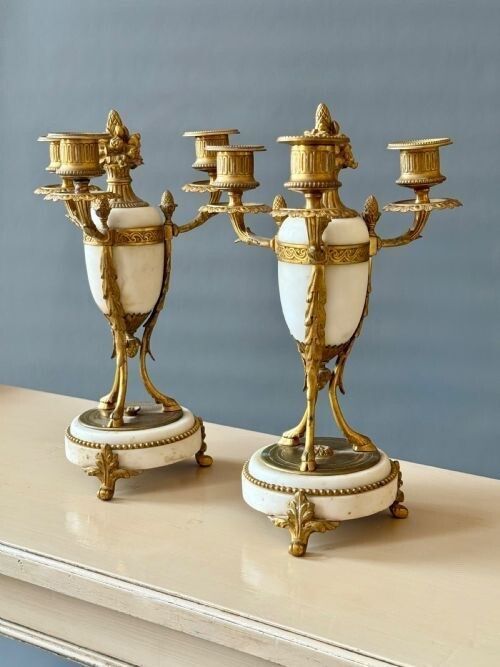
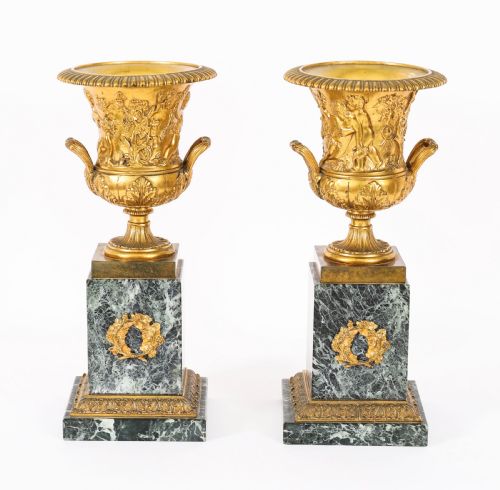
Mounts, handles, and bases utilise bronze, brass, and ormolu, often finished with gilt or patinated treatments. Cast bronze details were chased to sharpen botanical and figural reliefs, then secured to the stone bodies using threaded rods or pins.
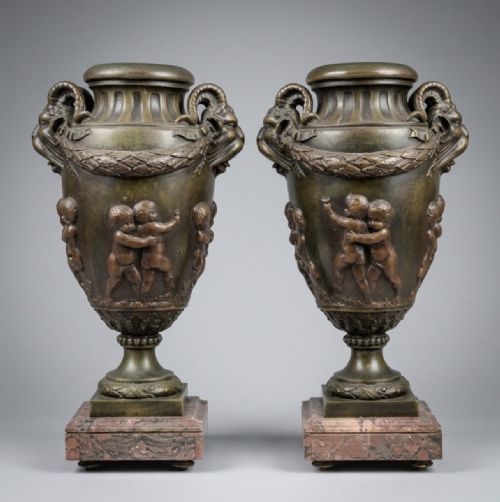
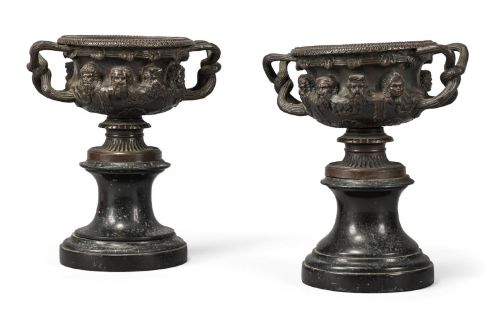
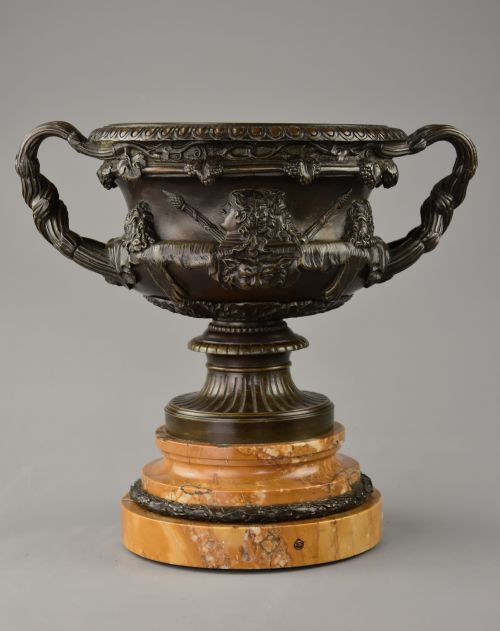
Several nineteenth-century bronze urns incorporate cheerful cast cherubs and representations of Bacchus climbing merrily around the rims.
What varies in quality
The sophistication of the bronze casting and the crispness of the chasing dictate the refinement of a piece. Superior examples exhibit finely detailed foliage, distinct figural casting, and precise hand-finishing on both metal and stone elements.
The selection of the marble itself distinguishes finer work, seen in the depth of veining in rouge or Siena varieties and the uniformity of white marble. Heavier, more substantial mounts and tightly integrated joints reflect greater care during assembly.
The Classical Marble Urns Glossary
- Grand Tour
- A nineteenth-century tradition where travellers collected classical antiquities and bronze reductions across Italy. These souvenirs heavily influenced the design of decorative urns and tazzas.
- Cassolette
- A dual-purpose decorative vessel featuring a reversible lid that functions either as an urn or a candleholder. They frequently appear with ormolu mounts on marble bases.
- Tazza
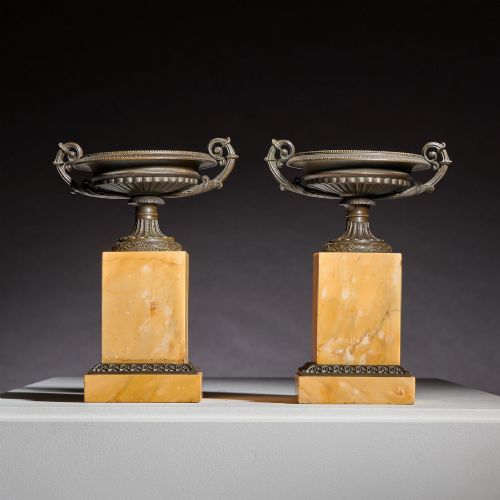
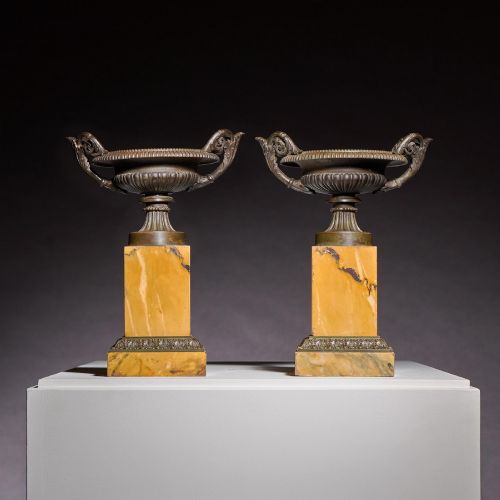
- A shallow cup or vase raised on a slender stem and foot, modelled after ancient drinking vessels. They often serve as centrepieces or decorative displays in nineteenth-century interiors.
- Ormolu
- Finely ground high-carat gold mercury-gilded onto a bronze base, creating a durable golden finish. Makers utilised this technique extensively on mounts for French decorative arts.
- Campana
- An inverted bell-shaped vessel derived from ancient Roman pottery forms. This silhouette forms the basis for many monumental garden and mantel urns.
Classical Marble Urns: Frequently Asked Questions
What periods do these urns date from?
The pieces available primarily originate from the nineteenth century, spanning Regency, Victorian, and French Empire styles. Revival aesthetics from the later decades of the eighteen-hundreds predominate.
Some examples extend into the early twentieth century, reflecting enduring interest in neoclassical forms through alabaster and marble table lamps.
How were these decorative urns used?
Nineteenth-century interiors utilised these vessels as mantel ornaments, library decorations, and architectural focal points. Many pieces functioned purely for display to demonstrate classical learning.
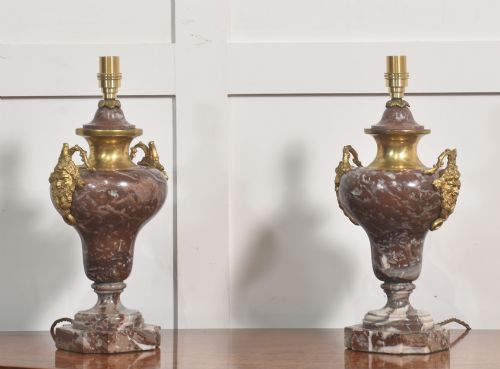
Later adaptations converted several of these stone and bronze vessels into table lamps for domestic lighting while retaining their sculptural silhouettes.
What materials make up these pieces?
Makers combined carved natural stones such as white marble, rouge marble, Siena marble, and alabaster with cast metals. Bronze, brass, and ormolu provide structural mounts, handles, and bases.
Some items incorporate fabric elements, particularly in twentieth-century table lamp configurations that pair stone bases with traditional shades.
How do you identify Grand Tour pieces?
Grand Tour items typically replicate specific ancient monuments or excavated antiquities, such as the Warwick or Albani vases, produced in miniature for travellers. They combine patinated bronze reductions with distinctive coloured Italian marbles.
These pieces reflect the neoclassical taste of nineteenth-century collectors who toured classical sites in Italy and France.