


Outdoor Lion Sculptures
Outdoor lion sculptures bring architectural authority to gardens, guarding gates, terraces, and pathways with enduring presence.
Outdoor Lion Sculptures
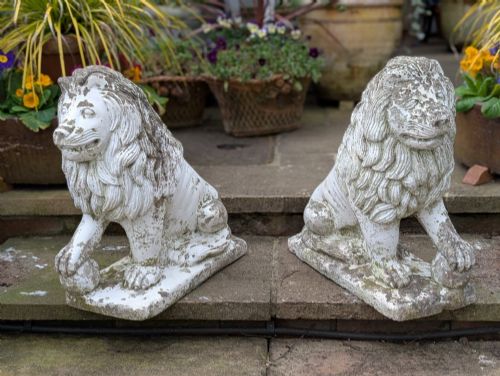
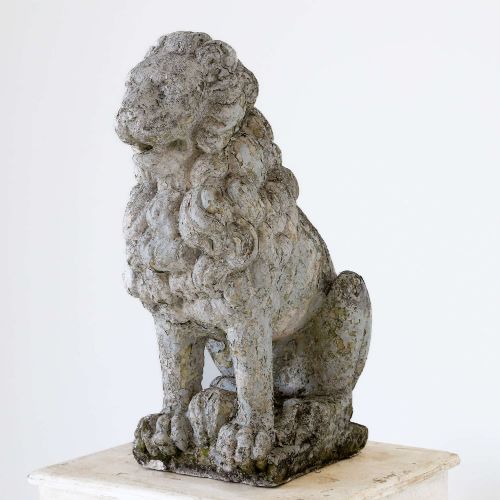
Outdoor lion sculptures encompass garden statues, statuary, and gate finials designed to anchor external spaces. When exploring outdoor lion sculptures, buyers encounter various configurations, from seated pairs on plinths to standing guardians and post finials.
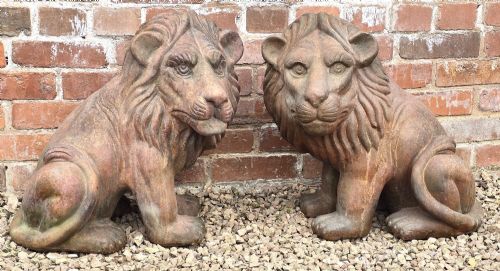
The selection ranges from nineteenth-century French Medici and Italian marble examples to twentieth-century cast and reconstituted stone pieces. Terracotta versions from Italian and British workshops also appear frequently across the inventory.
How they were made
Makers shaped these pieces from durable outdoor materials including reconstituted stone, composite stone, terracotta, and cast stone. Artisans also worked in carved solid marble and salt glazed pottery, applying original old paint to certain surfaces.
Techniques varied from hand sculpting terracotta to carving solid marble and casting stone into robust architectural forms. Salt glazed pottery methods produced dense, weather-resistant bodies suited to permanent garden placement.
Outdoor Lion Sculptures Retail Price Guide 2026
Typical asking prices for outdoor lion sculptures among the pieces listed under this phrase on Sellingantiques today, from the lower quarter to the upper quarter. They describe what is for sale here now, not the wider market.
Some nineteenth-century French lions retain traces of their original old paint, proving even fierce guardians enjoyed a touch of colour.
What varies in quality
The standard of carving and moulding defines the distinction between ordinary castings and superior sculptural works. Finer examples display anatomical precision, balanced proportions, and expressive facial detailing that withstand decades of weathering.
Material density and the integrity of the base composition dictate longevity in external settings. Pieces possessing substantial scale and high-grade marble or terracotta retain sharper architectural lines than softer composite mixtures.
Hurlford Kilmarnock
The Outdoor Lion Sculptures Glossary
- Medici Lions
- Classical sculptural models derived from the pair of marble lions guarding the Loggia dei Lanzi in Florence. These iconic beasts traditionally sit with one paw resting upon a sphere.
- Reconstituted Stone
- A durable composite material made from crushed stone or aggregate mixed with a binder. It is cast in moulds to replicate the appearance of natural carved stone.
- Terracotta
- Fired unglazed clay exhibiting warm buff or red earthen tones. This material allows for sharp modelling and develops a patinated surface outdoors.
- Gate Finials
- Ornamental architectural elements positioned on top of gate piers or gateposts. These sculptures serve as formal markers at boundary entrances.
- Salt Glazed Pottery
- Ceramics fired at high temperatures with common salt introduced into the kiln. This process creates a vitrified, moisture-resistant glaze ideal for garden use.
Outdoor Lion Sculptures: Frequently Asked Questions
Where should outdoor lion sculptures be placed?
These pieces traditionally flank formal gateways, porch steps, or garden entrances to frame the view. Position them on solid stone bases or plinths to keep them clear of damp soil.
They also anchor terrace corners and garden pathways where their commanding scale creates a strong architectural focal point.
How do I care for stone garden lions?
Wash stone and terracotta surfaces gently with water and a soft brush to remove accumulated moss and dirt. Avoid harsh chemical cleaners or pressure washers that erode the outer crust.
Allow natural weathering and lichen to develop, as these patinas enhance the historic character of older garden statuary.
Are terracotta lions frost resistant?
High-fired terracotta and salt glazed pottery withstand frost well if moisture cannot pool inside unglazed cavities. Ensure your sculptures drain freely during freezing winter months.
Placing them on raised bases prevents moisture from drawing up from the ground into the clay body.
How do I date an antique stone lion?
Examine the tooling marks, surface weathering, and material composition to understand the manufacturing period. Nineteenth-century pieces often display hand-carved details or early cast stone textures.
Twentieth-century examples frequently utilise standardised reconstituted stone formulas and mechanical moulding techniques.