


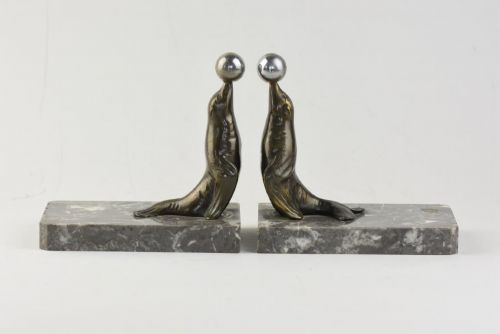


Pair of Marble Lions
A pair of marble lions brings neoclassical gravity to a room, whether carved for the grand tour or cast in miniature.
Pair of Marble Lions
When you search for a pair of marble lions, you encounter figures carved from serpentine or statuary marble, alongside bronzes mounted upon marble plinth bases. These sculptures range from diminutive desk ornaments and bookends to monumental garden statuary derived from classical prototypes.
The versions most common in these listings include nineteenth-century Grand Tour souvenirs after Canova or the Medici lions, as well as early twentieth-century interpretations in alabaster and various stones. They appear both as freestanding sculptures and as components supporting console tables or garnitures.
How they were made
The production of these pieces relies heavily on traditional stone-carving methods using serpentine, statuary marble, and alabaster, shaped with chisels and polished by hand. Many examples combine carved stone bodies with cast metals such as bronze, gilt bronze, or patinated lead.
Plinth bases frequently utilise contrasting materials like verde antico, portoro, and rouge griotte marble to anchor the figures. Details are defined through hand-chiselling, cold-painting, and surface patination rather than mechanical replication.
Listings feature periods spanning the Victorian era, the nineteenth century, and nineteen-twenty, alongside styles such as French Empire, Neoclassical, and Italian Baroque Revival.
What varies in quality
The selection of the marble itself dictates the grade of the piece, with dense serpentine and richly veined statuary marble marking superior examples. Furthermore, the integration between the lion figure and its matching marble or bronze plinth base reveals the original ambition of the maker.
The Pair of Marble Lions Glossary
- Grand Tour
- A traditional trip through Europe undertaken by upper-class travellers who collected souvenirs such as small marble lion sculptures. These items were purchased in Rome or Florence during the eighteenth and nineteenth centuries.
- Canova Lions
- Sculptures based on the monuments carved by Antonio Canova for the tomb of Pope Clement XIII in Saint Peter's Basilica. They represent vigil and mourning.
- Medici Lions
- A pair of marble sculptures of lions, one original from the classical era and its companion carved in the sixteenth century by Flaminio Vacca. They stand at the Loggia dei Lanzi in Florence.
- Serpentine
- A dark green mineral often polished and used for carving decorative objects and architectural details. It provides a mottled texture resembling snake skin.
- Plinth base
- A heavy block of stone or marble upon which a sculptural figure is mounted for display and stability.
Pair of Marble Lions: Frequently Asked Questions
What are pair of marble lions?
These pieces are symmetrical pairs of sculpted or cast lion figures incorporating marble, either as the primary body material or as a mounting base.
They originate largely from nineteenth-century Italian and French workshops, often referencing classical Roman monuments.
How were they used historically?
Historically, smaller versions served as library ornaments, desk accessories, or mantelpiece decorations for travellers returning from European tours.
Larger monumental examples stood in entrance halls, gardens, or conservatories to project authority and classical taste.
How do I style them at home?
You can place medium-sized stone lions on side tables, console surfaces, or bookshelves as sculptural focal points.
Smaller pairs function effectively as heavy bookends or desk pieces when paired with appropriate traditional furniture.
How can I tell different periods apart?
Nineteenth-century pieces often display hand-carved details in statuary or serpentine marble reflecting Grand Tour origins.
Early twentieth-century examples incorporate materials like alabaster and show stylistic influences associated with Art Deco design.