


19th Century Garden Ornaments
These 19th century garden ornaments bring enduring architectural presence and classical character to outdoor spaces.
19th Century Garden Ornaments
When you search for 19th century garden ornaments, you encounter a diverse array of architectural salvage, statuary, and functional vessels designed to structure and animate grounds. These pieces span formal urns, figurative sculptures, and utilitarian staddle stones derived from wider European design traditions.
The selection here draws heavily from Victorian and Regency aesthetics, featuring durable stones, metals, and ceramics intended to weather outdoors. Animal figures such as lions, dogs, and pigs appear frequently alongside campana urns, planters, and sundials.
Makers and foundries of the period produced both classical revival forms and rustic utilitarian items like chimney pots and mill stone bases. Buyers select these objects to anchor garden vistas or introduce historic texture into contemporary landscapes.
How they were made
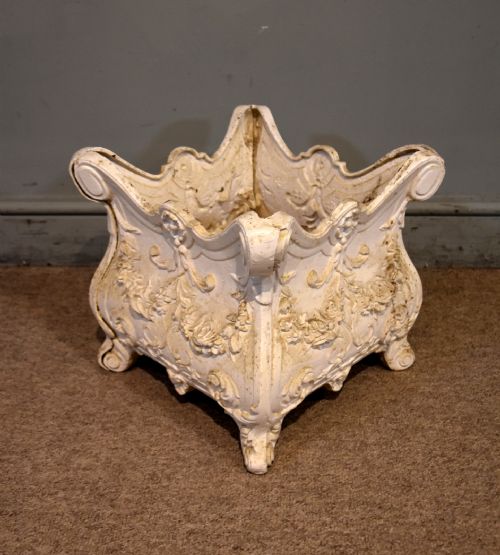
Foundries utilised cast iron for robust urns, planters, and sculptural dogs, often employing intricate moulds in the manner of established makers like Coalbrookdale or Andrew Handyside. These iron works frequently display layered remnants of historic paint or natural weathering.
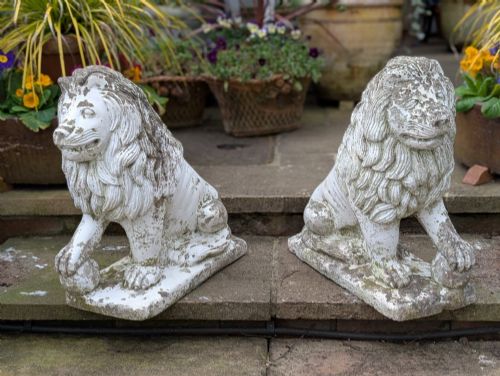
Masons and stonecutters shaped local materials including sandstone, limestone, granite, Purbeck stone, and marble into heavy structural ornaments, staddle stones, and monumental lions. Terracotta pieces were moulded and fired to create large-scale figures, busts, and chimney pots.
Metalworkers also hammered and shaped copper and zinc for weathervanes and birdcages, while lead was cast into planters and animal figures featuring claw feet or detailed cold-painted finishes.
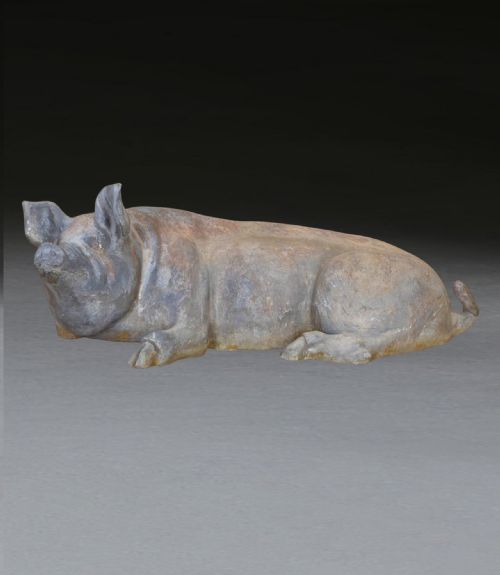
A remarkably heavy English lead pig stands ready to root permanently in the garden.
What varies in quality
The standard of modelling and crispness of detail distinguish superior sculptural pieces from simpler production items. Figures such as lions, dogs, and mythological subjects depend upon the artisan's command of anatomy and proportion to convey gravitas.
Material composition and the integrity of the casting or carving process dictate longevity and aesthetic resonance. Heavy cast iron, dense marbles, and well-fired terracotta retain structural definition far better through decades of exposure than softer sandstone or inferior composites.
Andrew Handyside·Coalbrookdale·Henri Jaquesmart
The 19th Century Garden Ornaments Glossary
- Campana urn
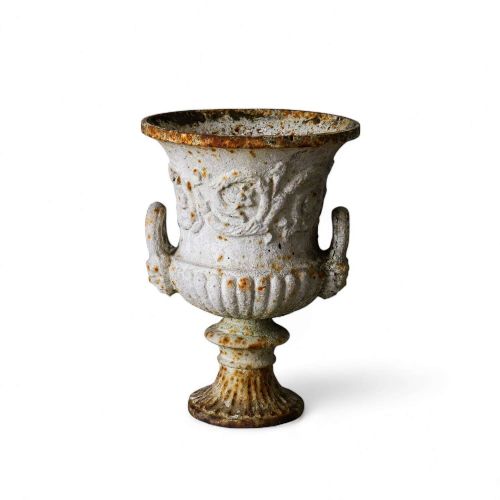
- A bell-shaped garden vessel with a flaring rim, frequently cast in iron or carved from stone during the nineteenth century.
- Staddle stone
- A mushroom-shaped stone support originally used to elevate granaries off the ground to deter vermin, now repurposed as a garden ornament.
- Chimney pot
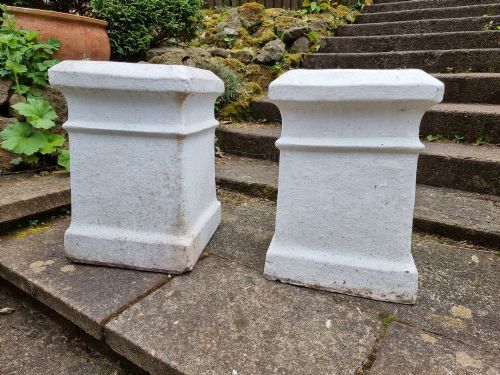
- A cylindrical ceramic or terracotta structure designed to improve fireplace draught, sometimes adapted as a garden pedestal or planter.
- Weathervane
- An architectural instrument featuring a movable pointer, often formed from copper to indicate wind direction on a roof or garden structure.
- Keystone
- The central wedge-shaped stone at the summit of an arch, which holds the other stones in position and often bears dates or decorative carvings.
19th Century Garden Ornaments: Frequently Asked Questions
How were cast iron urns used?
Gardeners placed heavy iron urns on pedestals, terrace walls, and lawn edges to display plants or define formal pathways. Their robust metal construction allowed them to remain outdoors year-round.
Foundries such as Coalbrookdale and Andrew Handyside produced these vessels in various sizes to suit different architectural scales.
How do I care for stone garden ornaments?
Stone items like sandstone, limestone, and granite require minimal intervention, allowing natural weathering and moss accumulation to enhance their historic character. Gentle washing with water helps prevent organic blockages in drainage holes.
Placing heavier pieces on firm foundations prevents shifting or sinking into damp garden soil over time.
How do I identify Regency garden pieces?
Regency items typically display clean neoclassical proportions, restraint in ornamentation, and materials such as carved stone, slate, or early cast iron. Dated stones or sundials often provide explicit chronological anchors.
Comparing the decorative vocabulary against Victorian pieces reveals the earlier focus on classical antiquity and geometric harmony.