

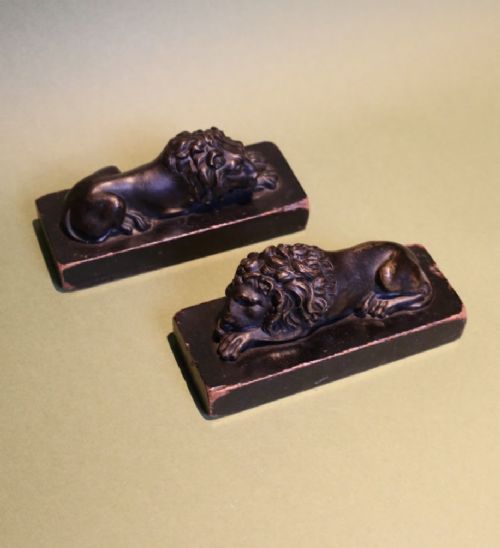


Grand Tour Lion Statues
Grand tour lion statues bring neoclassical sculpture home from historic travels, offering classical form and enduring presence for your interior.
Grand Tour Lion Statues
Grand tour lion statues span the seventeenth through the early twentieth century, capturing classical sculpture models collected by travellers in Italy. You will most frequently meet nineteenth century bronze and marble examples on this page.
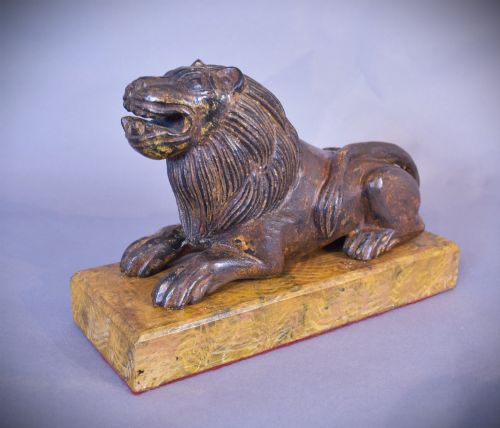
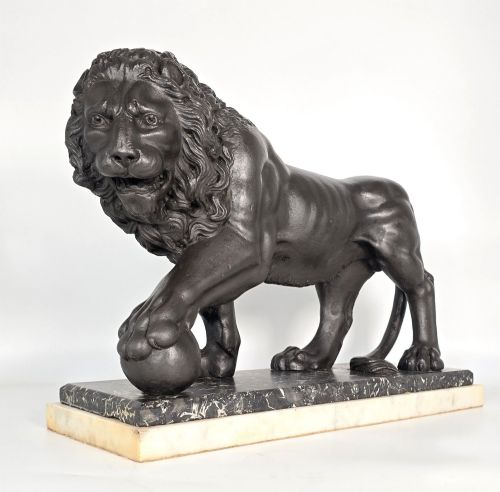
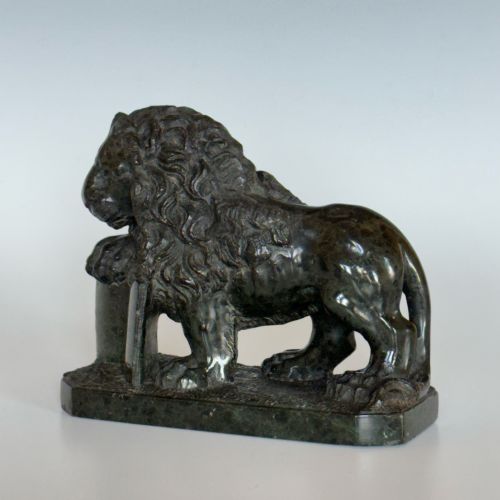
The selections include familiar forms such as the Medici lions, the Canova lions, and the winged lion of Saint Mark. These pieces appear in materials ranging from serpentine marble and green marble to patinated bronze and carved wood.
Sculptures take the form of seated pairs, recumbent figures, and plinth-mounted models. Each piece reflects the neoclassical taste that shaped European collections during the grand tour era.
Materials and construction
Makers shaped these sculptures from dense stones including serpentine marble, green marble, and standard marble, alongside carved wood and patinated metal. Bronze versions relied on careful casting techniques to achieve crisp detail on manes and paws.
Many sculptures incorporate integrated plinths or bases cut from contrasting stone to support the weight of the marble or metal. Surface finishes utilise patination on metal and polished or aged treatments on stone to simulate ancient models.
Even miniature bronze lions from the nineteenth century retain individual expressions, occasionally looking rather more domestic than fierce.
Judging quality
The Grand Tour Lion Statues Glossary
- Grand tour
- A cultural journey undertaken by European travellers to Italy from the seventeenth to the nineteenth century. It resulted in the acquisition of classical antiquities and scale models.
- Neoclassical
- A style originating in the mid-eighteenth century inspired by the art and architecture of classical antiquity. It prioritises symmetry, proportion, and classical motifs.
- Medici lions
- A pair of marble sculptures of lions, one with its paw upon a sphere, based on prototypes in Florence. They became standard subjects for grand tour souvenirs.
- Canova lions
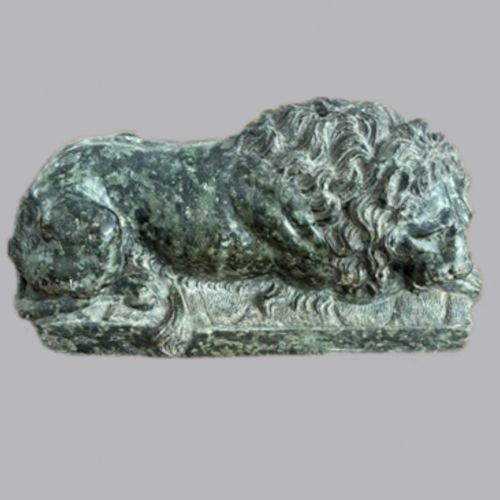
- Sculptures derived from the monumental lions carved by Antonio Canova for the tomb of Pope Clement XIII. They depict recumbent figures in contemplative poses.
- Serpentine marble
- A dark green rock rich in serpentine minerals, frequently used for decorative carvings and architectural elements during the nineteenth century.
Grand Tour Lion Statues: Frequently Asked Questions
Where did grand tour lion statues come from?
Travellers journeyed through Italy and commissioned or purchased these sculptures from local workshops and studios.
Craftsmen in cities like Rome and Florence produced scaled models of famous monuments and classical sculptures for foreign visitors.
How do I care for marble and bronze lions?
Dust marble and bronze surfaces regularly with a soft, dry cloth to prevent the accumulation of grime. Avoid chemical cleaners and commercial polishes, which can strip patinas or etch stone.
Keep pieces away from direct heat sources and drastic humidity changes to protect vulnerable stone and metal surfaces.
Are these sculptures solid bronze?
Many bronze grand tour models are cast with hollow interiors to reduce weight and metal usage while maintaining structural integrity.
Heavier pieces often incorporate dense inner cores or sit upon solid marble plinths that provide substantial counterweight.
What is the difference between Medici and Canova lions?
Medici lions appear alert and seated, typically with one paw resting upon a sphere, following the historic prototypes in Florence.
Canova lions are depicted in a recumbent, sleeping or resting posture, modelled after the sculptural tombs designed by Antonio Canova.