





Recumbent Lion Statues
Recumbent lion statues are commanding figures of strength and repose, prized for bringing classical dignity to gardens and studies.
What these pieces are
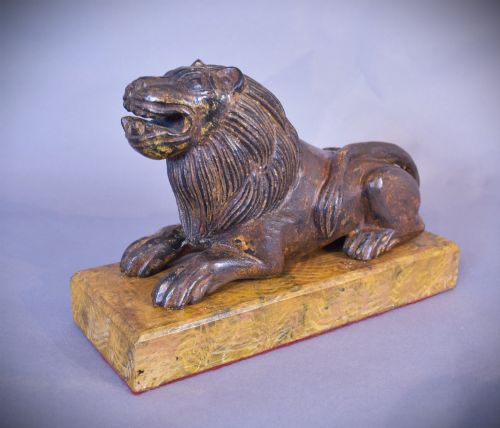
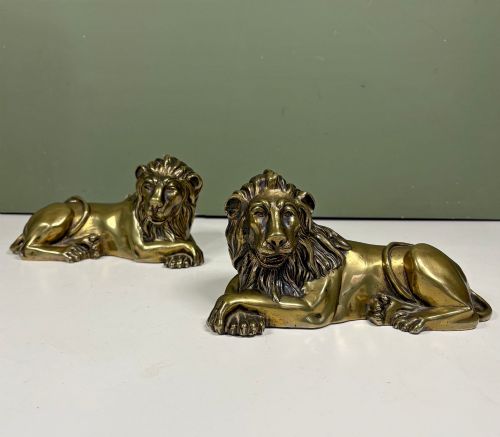
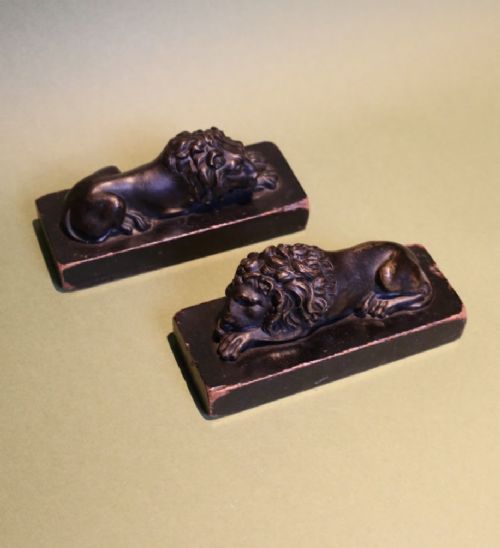
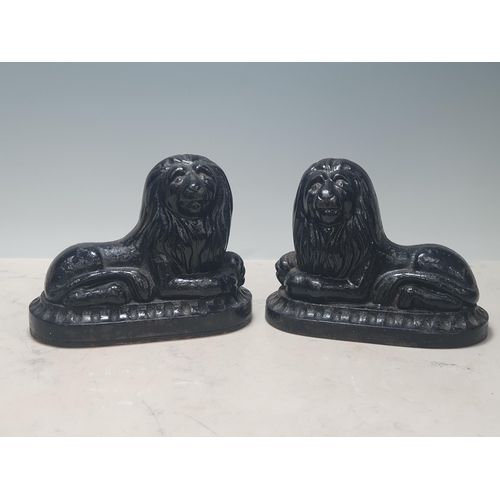
Recumbent lion statues appear across the nineteenth century in various sizes and forms, ranging from imposing garden ornaments to small library bookends. These sculptures typically depict the great cat resting with its head up or paws crossed, echoing neoclassical monuments found in European architecture and sculpture.
The versions most commonly met on this page are pairs of large terracotta or stone beasts meant for outdoor placement, alongside smaller bronze, ceramic, and serpentine table pieces. Grand Tour items also surface, reflecting the taste of Victorian travellers who brought home souvenir castings of famous Italian monuments.
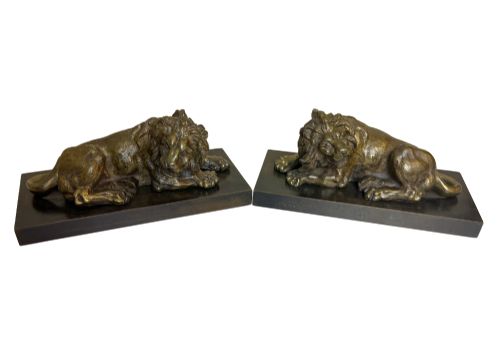
Stylistically, these pieces draw heavily on nineteenth-century revivals, including Grand Regency and Victorian interpretations of Canova's famous tomb lions. Whether rendered in buff terracotta or polished serpentine, each statue captures the muscular repose that made the motif a staple of classical sculpture.
How they were made
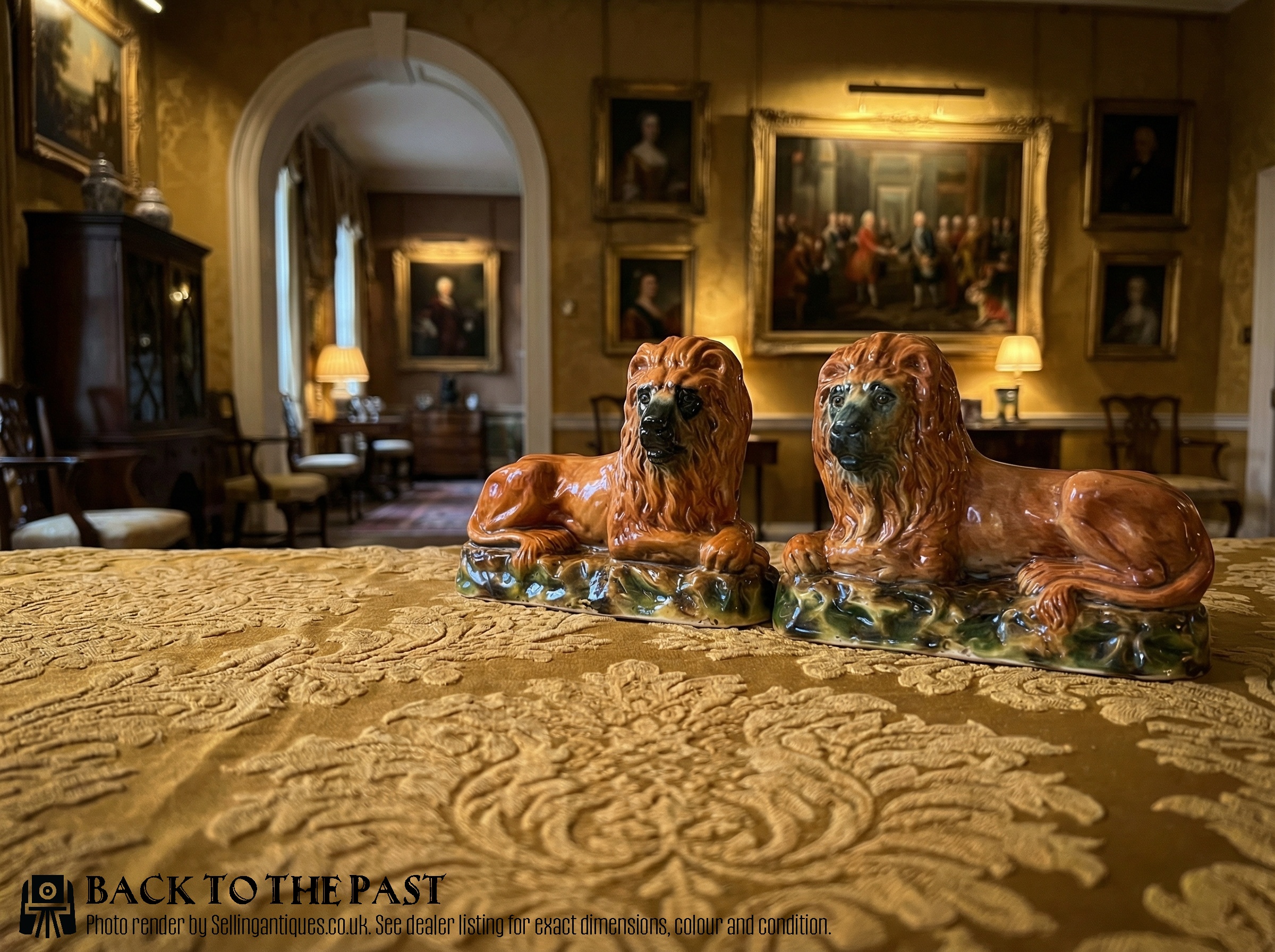
Makers utilised durable outdoor mediums such as terracotta, reconstituted stone, and earthenware, often shaping them in moulds to achieve uniform proportion across large pairs of garden lions. Buff terracotta and ceramic bodies were fired to withstand the elements, whilst earthenware versions received specialised glazes for decorative interior display.
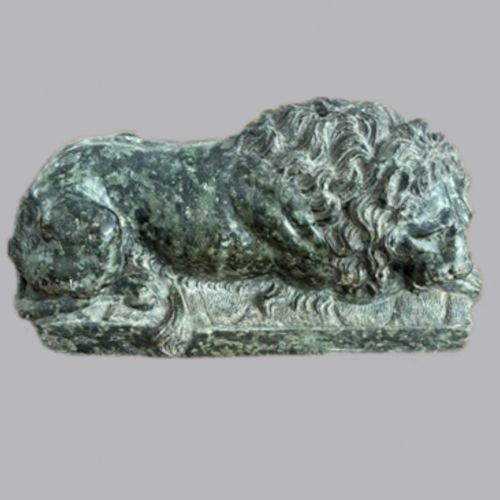
Metal and mineral works required entirely different foundry and carving techniques, utilising bronze casting for hollow figures and hand-working for dense green serpentine. Bronze pairs of Canova lions relied on traditional lost-wax or sand-casting methods before receiving hand-chased surface details and dark patination.
Retail Price Guide 2026
Typical UK retail prices for recumbent lion statues, calculated from the Sellingantiques database of over a million retail prices indexed since 2003. This retail price guide relies exclusively on Sellingantiques data; no external sources or auction records are used, so the figures do not describe the wider market.
Even cast in heavy stone or bronze, these sleeping beasts keep a watchful glass eye on the room.
What varies in quality
The integrity of the material also dictates value, with heavy serpentine and dense nineteenth-century terracotta demonstrating greater permanence than lesser composition mixtures. Scale and proportion further separate impressive architectural pairs from domestic decorative statuettes.
The Recumbent Lion Statues Glossary
- Recumbent
- Lying down whilst remaining alert or resting upon the forepaws. This posture defines the traditional stance of these protective feline sculptures.
- Canova Lions
- Sculptures modelled after the famous lions guarding the monument of Pope Clement XIII in Rome, designed by Antonio Canova. These classical beasts became immensely popular subjects for nineteenth-century Grand Tour souvenirs.
- Serpentine
- A compact green mineral resembling jade, often polished smooth and carved into decorative objects. It was a favourite material for Grand Tour Italian artisans.
- Terracotta
- Fired unglazed clay of a brownish-red or buff colour. It is widely utilised for architectural ornaments and large garden statues due to its workability.
- Grand Tour
- The traditional travel of Europe undertaken by upper-class Europeans in the eighteenth and nineteenth centuries. Travellers frequently purchased small bronzes and stone carvings as mementos.
Frequently Asked Questions
What are recumbent lion statues?
Recumbent lion statues are sculptural representations of resting lions, usually shown lying down with their heads up.
They appear in materials such as bronze, terracotta, stone, and ceramic, spanning the nineteenth century.
Where were these lion statues placed?
Large terracotta and stone versions were typically positioned outside on gateposts, terraces, or garden paths to project strength and stability.
Smaller ceramic, glass, and bronze pieces served indoors as bookends, mantel ornaments, or desk decorations.
How do I care for terracotta lions?
Terracotta garden statues require protection from severe frost if moisture can penetrate the porous clay body.
Keeping them on stable stone bases away from standing water helps preserve the fired material over time.
How do I identify nineteenth-century pieces?
Nineteenth-century examples often display the characteristic weight, patination, and material composition typical of Victorian and Grand Tour production.
Stylistic nods to Canova and classical antiquity also point directly to this period of revivalism.