
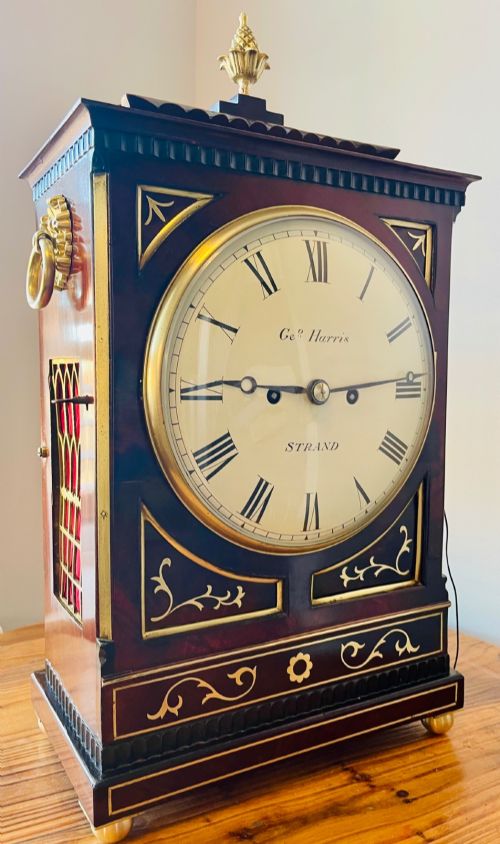
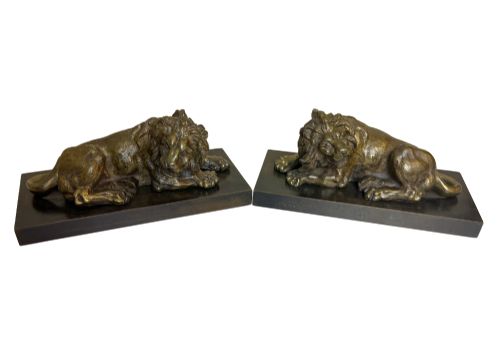
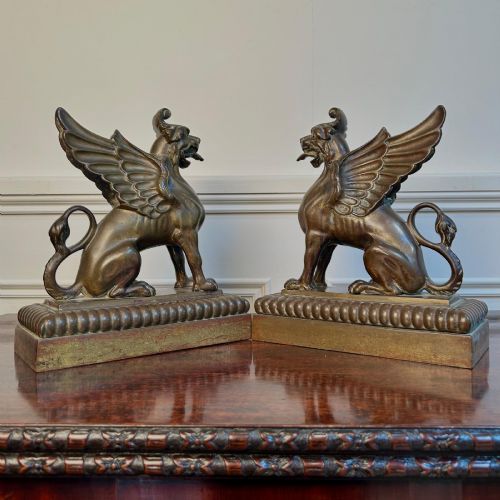


Antique Mantelpiece Lions
Antique mantelpiece lions bring fierce heraldic presence to a hearth, rendered in glazed earthenware, warm bronze and cast brass.
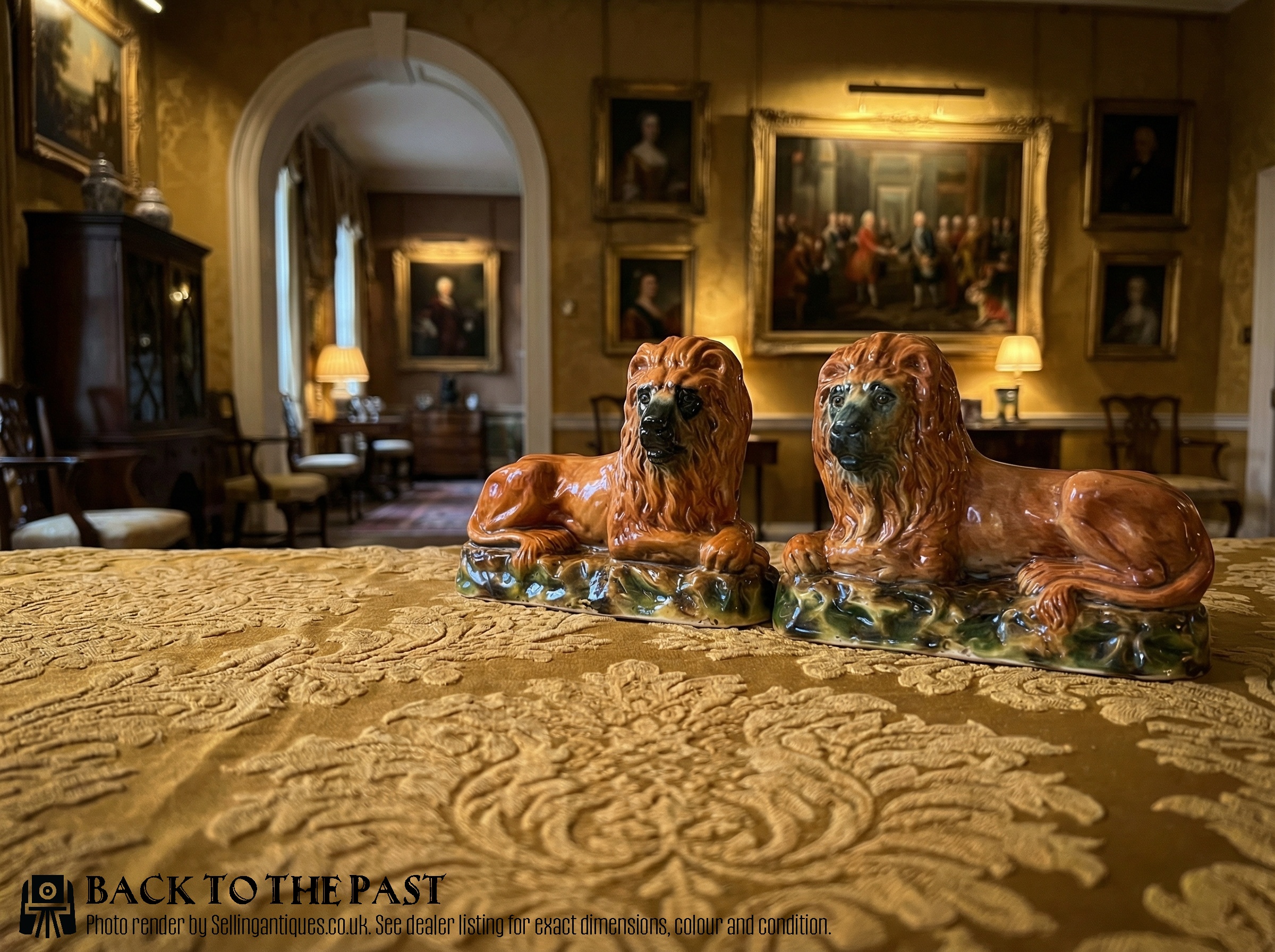
Antique Mantelpiece Lions
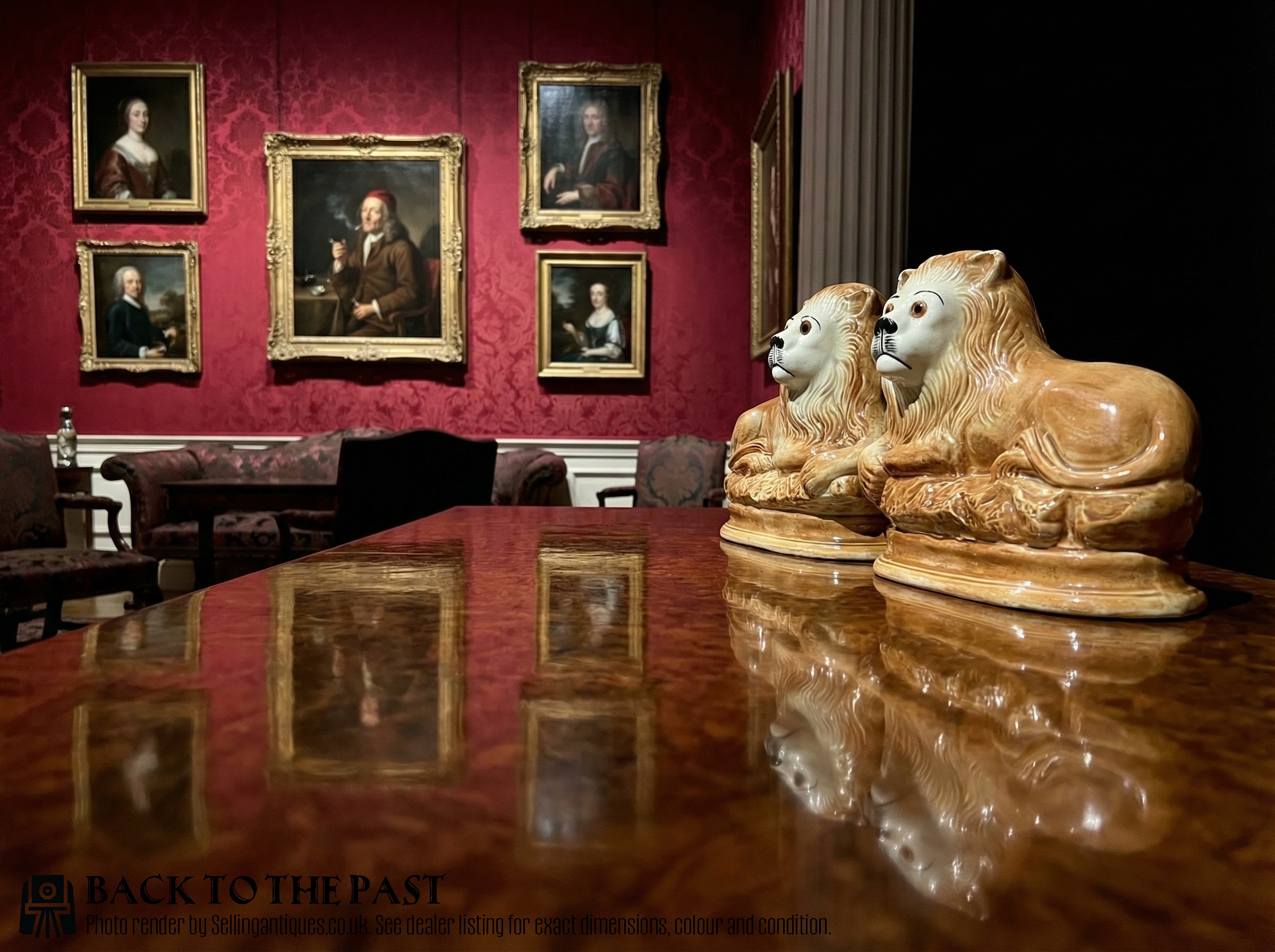
When buyers search for antique mantelpiece lions, they encounter sculptural pairs and decorative figures designed to anchor a fireplace. The examples appearing here span the nineteenth century, including Victorian Staffordshire earthenwares alongside cast bronze and brass castings.
Most pieces take the form of symmetrical pairs meant to flank a clock or central ornament on a mantel shelf. Makers across the Victorian era and the Regency period adopted this regal motif for both domestic display and heavy formal rooms.
The assortment extends from earthenware Staffordshire pottery coated in treacle glaze to cast metals finished in bronze or copper lustre. These hearth ornaments draw upon neoclassical, Gothic revival, and French empire styles to project authority and strength.
How they were made
Potters shaped ceramic versions using local earthenware clays, applying rich lead glazes, treacle glazes, or copper lustre before kiln firing. These Staffordshire figures often emerge from stacked moulds, leaving hollow interiors beneath heavy bases.
Metalcasters worked in bronze, brass, and lead, employing traditional foundry methods to produce solid or hollow animal figures. Patination and gilt gesso finishes completed the surface treatment on many Regency and Victorian metalwork pieces.
Staffordshire potters rarely studied live lions, giving many nineteenth-century mantel beasts surprisingly human, worried expressions.
What varies in quality
Surface finish dictates visual depth, where even application of a copper lustre or deep lead glaze preserves underlying detail. Original patination on bronzes and clean glaze saturation on earthenwares signal higher grade manufacture.
The Antique Mantelpiece Lions Glossary
- Staffordshire
- Earthenware pottery produced in the numerous kilns of the Staffordshire potteries. These factories created prolific quantities of mantel figures and animal sculptures.
- Treacle glaze
- A dark, translucent brown lead glaze that pools richly in the recesses of ceramic figures. It gives nineteenth-century earthenware a deep, glossy finish.
- Regency
- The British design period spanning the early nineteenth century, known for classical restraint and heavy classical influence. Pieces from this era often utilise rich brass and mahogany.
- Copper lustre
- A metallic pottery glaze containing copper that creates a reflective, iridescent surface sheen. It was widely used on nineteenth-century decorative sculptures.
- Gesso
- A plaster-based mixture applied to wood or metal surfaces before gilding or painting. It provides a smooth ground for decorative mouldings.
Antique Mantelpiece Lions: Frequently Asked Questions
Where do these lions sit?
These figures typically rest upon a mantel shelf above a fireplace, often arranged in matching pairs on either side of a clock or urn. Their weighted bases allow them to stand securely on slate, marble, or timber fireplace surrounds.
Collectors also place them on console tables or bookcases where their heraldic stance commands attention. Their traditional function was to project strength and stability within the main reception rooms of a home.
How do I clean ceramic lions?
Ceramic mantel lions glazed in lead or copper lustre require only gentle dusting with a soft, dry brush. Moisture can penetrate old earthenware bodies through microscopic crazing lines in the glaze.
Harsh chemical cleaners will strip metallic lustres and damage historic surfaces permanently. Keeping them away from direct heat sources prevents thermal stress to the underlying clay.
What metals were used?
Foundries cast these mantel ornaments in bronze, brass, and occasionally lead or copper. Bronze versions display natural patination developed over decades of exposure to room air.
Brass castings offer a brighter golden tone that was often polished or chemically aged by nineteenth-century makers. Each metal requires distinct care to preserve its original surface integrity.