

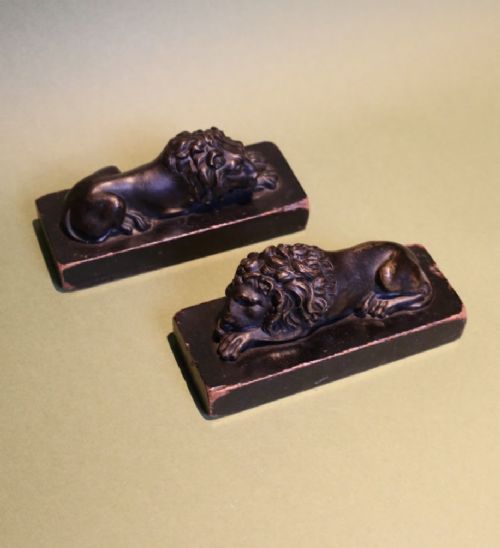


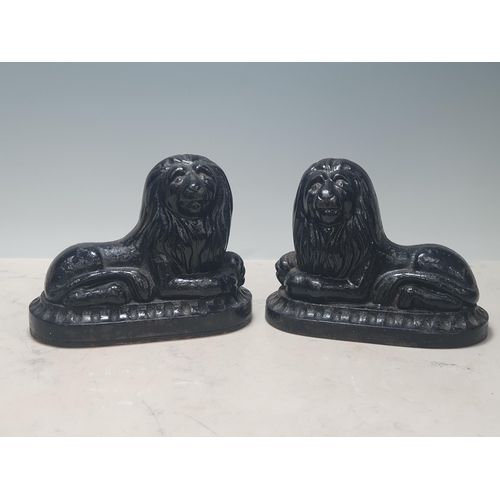


Recumbent Lion Ornaments
These recumbent lion ornaments bring a commanding presence to a mantelpiece, garden wall or library shelf.
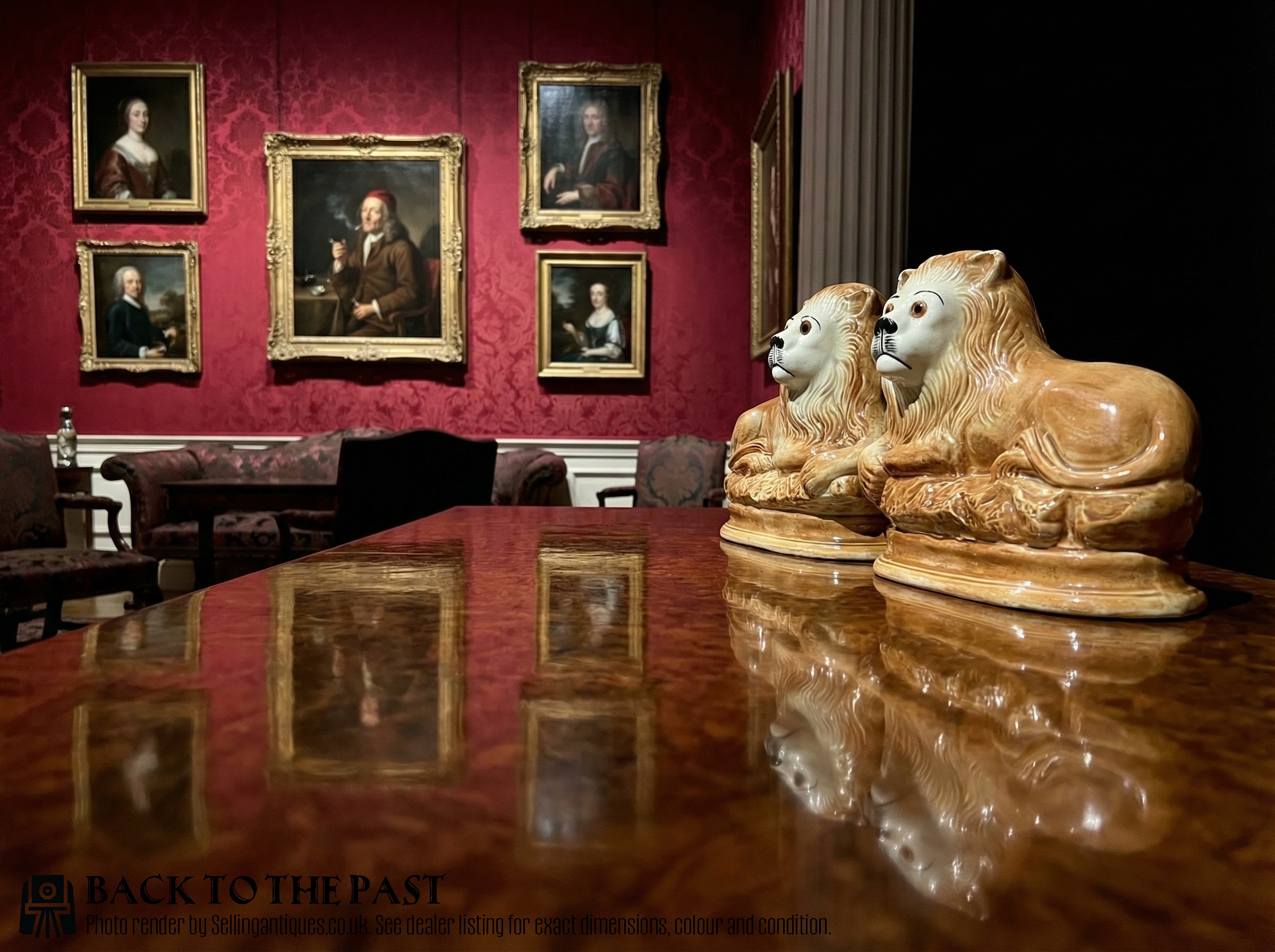
Recumbent Lion Ornaments
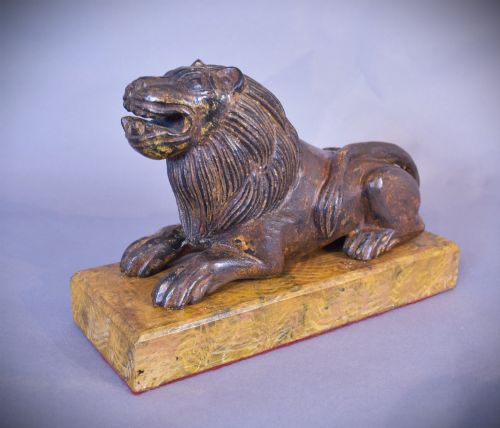
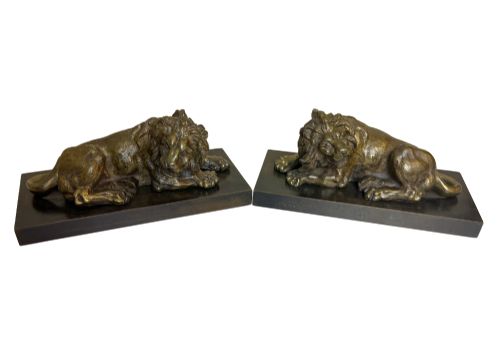
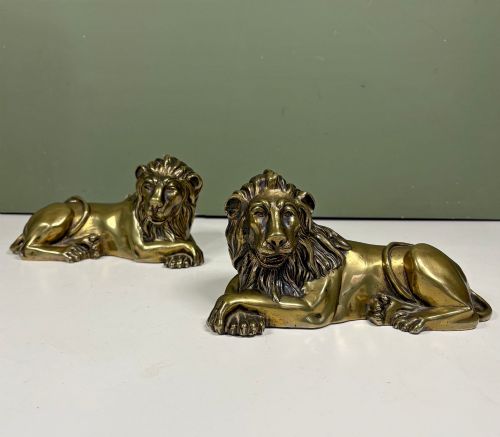
Recumbent lion ornaments appear in diverse forms across this selection, ranging from miniature bookends and mantel sculptures to large garden statues and gate keepers. Buyers encounter pairs cast in brass or bronze, moulded in ceramic and earthenware with glazes, or carved in marble and terracotta.
The majority of these pieces originate from the nineteenth century, including Victorian Staffordshire pottery and Grand Tour bronze models. Examples stretch from seventeenth-century carved figures up to early twentieth-century reconstituted stone and terracotta garden ornaments.
Materials and construction
Metal versions utilise casting techniques in bronze, brass, cast iron, and copper lustre, capturing fine muscular detail and resting postures. Founders produced these pieces as individual sculptures or matched pairs designed for heavy functional use as doorstops and bookends.
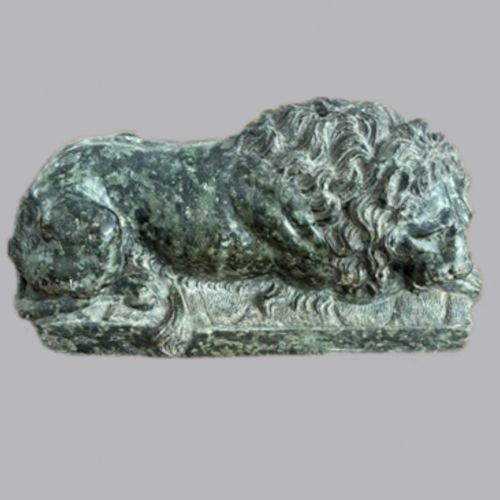
Ceramic and earthenware pieces rely on moulded pottery bodies finished with glazes such as treacle or salt glaze, alongside terracotta and reconstituted stone formed for exterior garden settings. Carved items employ materials like Hualien green marble and stone mounted on integral plinths.
Some Victorian gate lions double as heavy-duty door keepers, ensuring even the draftiest country hallway stays firmly put.
Factors of quality
Scale and presence dictate the hierarchy among pairs, with exceptionally large terracotta or bronze examples commanding more architectural weight. The integrity of the original surface, whether patinated bronze, painted cast iron, or historical glaze, preserves the character of the object.
Paul-Édouard Delabrièrre·Al Barye·Barbedienne
The Recumbent Lion Ornaments Glossary
- Animalier
- A nineteenth-century artistic movement focused on the realistic portrayal of animals, particularly predators in repose or action. Sculptors in this tradition utilised bronze to capture anatomical precision.
- Canova Lions
- Recumbent lion sculptures modelled after the monumental originals carved by Antonio Canova for the tomb of Pope Clement XIII in Rome. These neoclassical figures became popular subjects for Grand Tour bronze reproductions.
- Treacle glaze
- A dark, translucent brown lead glaze applied to earthenware and pottery during the nineteenth century. This finish yields a glossy, reflective surface that accentuates moulded fur and paws.
- Grand Tour
- A traditional trip through Europe undertaken by upper-class travellers during the eighteenth and nineteenth centuries to collect art and cultural artefacts. Travellers frequently purchased small bronze models of classical monuments and sculptures.
- Salt glaze
- A vitreous coating formed by throwing common salt into the kiln during high-temperature firing, producing a durable, textured finish resembling orange peel. This technique protected utilitarian and decorative pottery intended for exterior use.
Recumbent Lion Ornaments: Frequently Asked Questions
Where should I place a pair of recumbent lions?
Smaller ceramic and brass versions function effectively as bookends on a library shelf or as decorative objects upon a mantelpiece. Cast iron and bronze examples serve well as heavy doorstops or interior focal points.
Larger terracotta, stone, and copper lustre pieces suit outdoor placement on garden walls, gate piers, or flanking entrance steps. Their robust materials withstand exterior conditions while providing architectural structure to a garden layout.
Are these lions always sold as pairs?
Many listings feature matching pairs designed to sit symmetrically on either side of a gate, fireplace, or bookshelf. Sculptors and potteries frequently produced these ornamental figures as left-facing and right-facing counterparts.
Single figures do appear, particularly among antique doorstops, bookends, and larger garden statues that survived separately over time. Checking the stance helps determine if an individual piece was originally part of a matched pair.
How do I care for nineteenth-century terracotta ornaments?
Nineteenth-century terracotta requires protection from severe frost expansion, which can cause unglazed earthenware and porous clay to crack or spall. Keeping these garden ornaments in a sheltered position during freezing winter months preserves the material.
Cleaning should remain gentle, avoiding harsh chemical detergents or wire brushes that strip historical surfaces and patinas. Soft dusting or occasional washing with low-pressure water maintains the ceramic body safely.