


Antique Pottery Lion Pair
These antique pottery lion pair groupings bring character and history into a room, spanning British hearth ornaments and Asian ceramic figures.
Antique Pottery Lion Pair
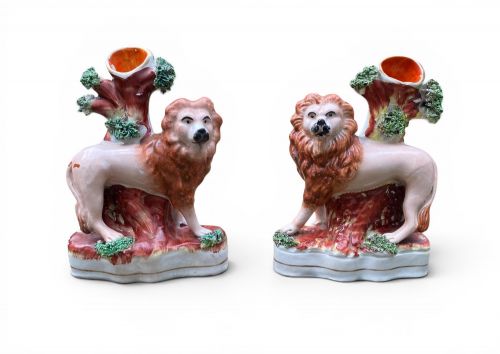
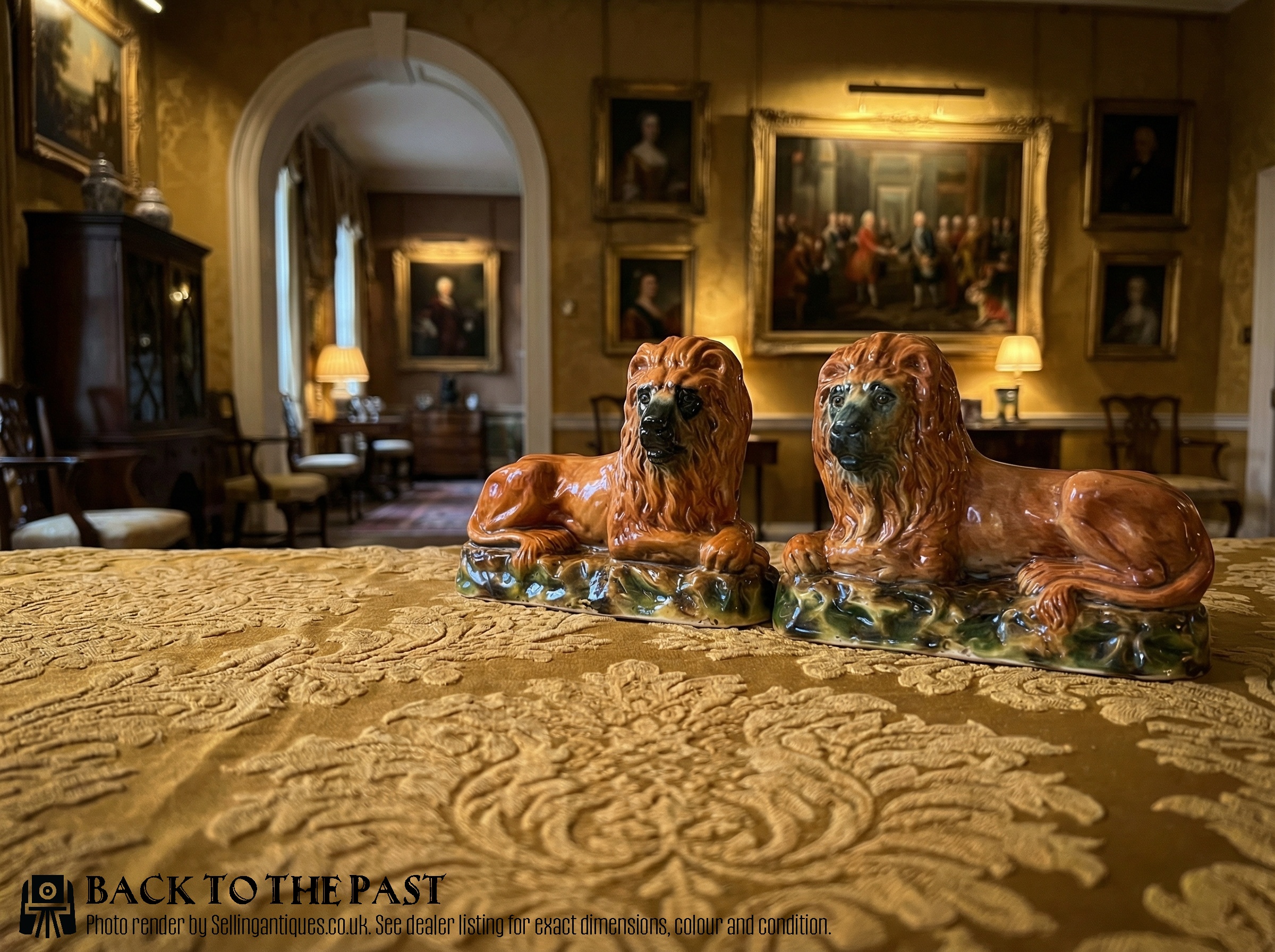
When searching for an antique pottery lion pair, you encounter a mix of domestic Victorian mantelpiece figures and various Asian ceramic interpretations. The British examples often take the form of Staffordshire spill vases or recumbent bookends, modelled to sit symmetrically on either side of a fireplace or shelf. Other variations include garden statues and decorative figurines created across the nineteenth and early twentieth centuries.
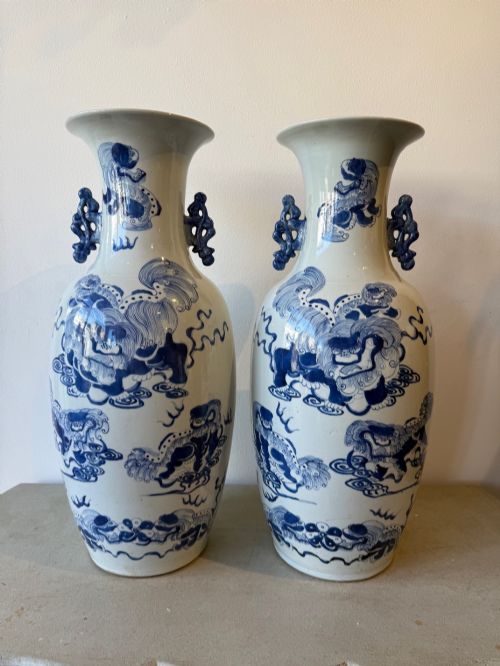
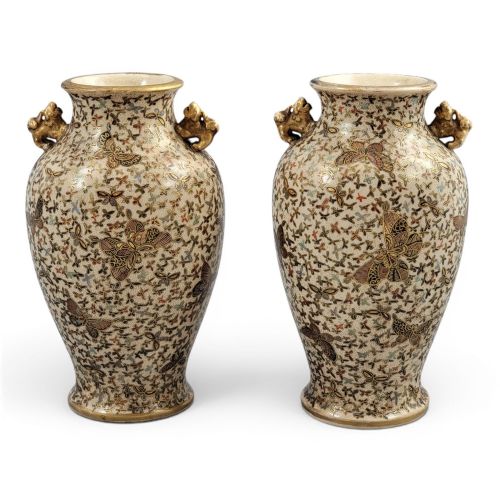
The regional diversity within these listings ranges from Staffordshire earthenware creations to Chinese Shiwan Buddhist lion dogs and Japanese Satsuma vases. While Staffordshire potters favoured domestic models with cobalt glaze or treacle glaze finishes, Asian workshops produced intricate Buddhist lions and Foo dogs utilising enamel and gold leaf. Each tradition offers a distinct sculptural interpretation of the lion motif, shaped by local materials and period aesthetics.
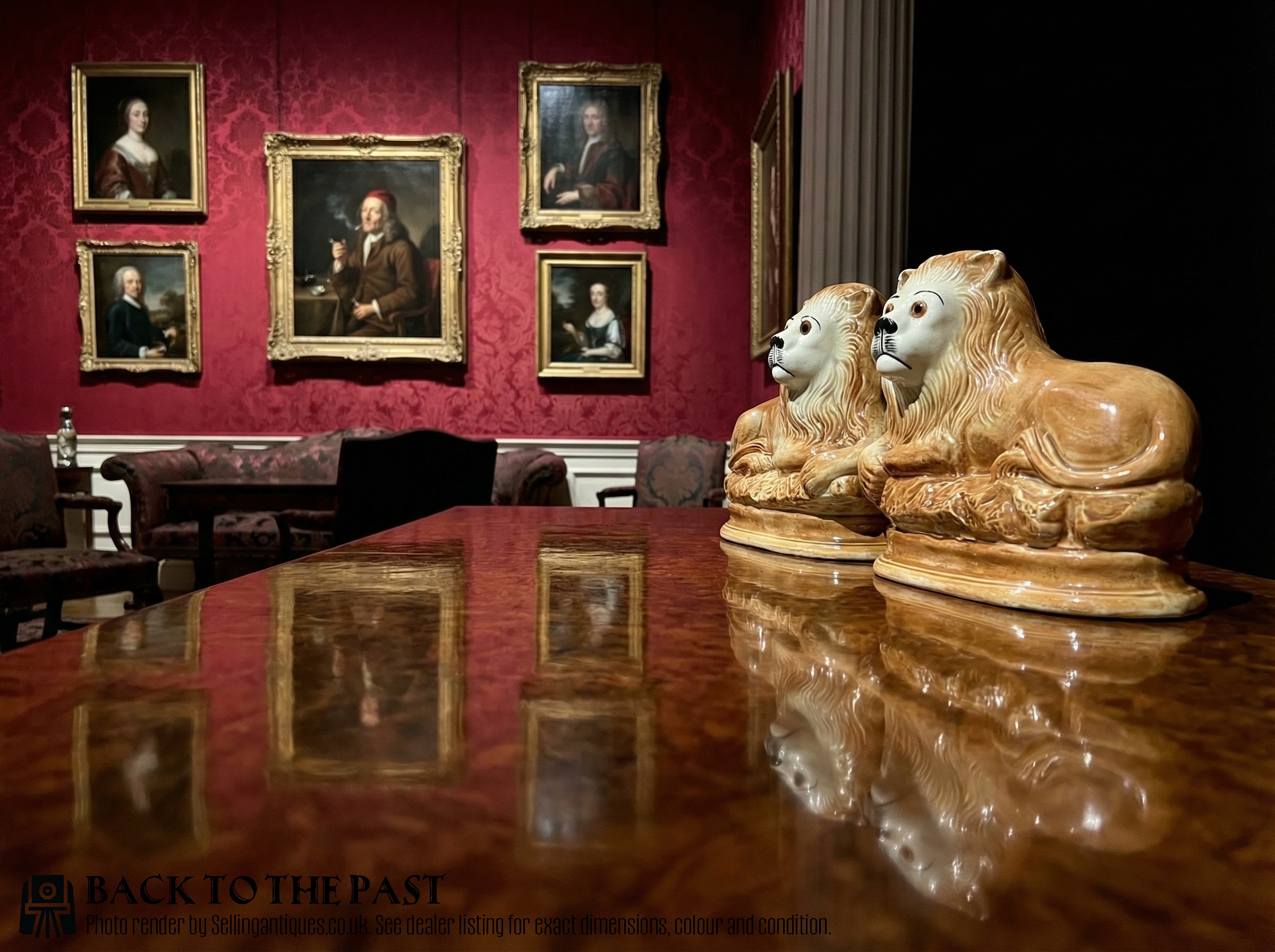
Materials and construction methods
These figures rely heavily on earthenware and ceramic bases shaped through traditional moulding techniques before firing. Potters then applied surface decoration using glazes such as cobalt, salt glaze, or rich treacle finishes to achieve varied coloration.
Detailing often involved hand-painted enamel and gold leaf applied over the fired ceramic body, particularly on pieces originating from Chinese and Japanese kilns. British Staffordshire works frequently depended on the glaze itself for definition, alongside applied confetti details in certain Victorian iterations.
The listings on this site feature earthenware, porcelain, and ceramic materials shaped into everything from bookends to garden statues.
Distinctions in craftsmanship
The application and richness of the glaze or enamel finish also dictate quality, with carefully controlled firings producing superior depth of colour. Surface decoration that retains its original brilliance without excessive wear indicates a higher grade of manufacture.
Lancaster and Sons of Hanley·Hurlford Kilmarnock·Kinzan
The Antique Pottery Lion Pair Glossary
- Spill vase
- A hollow vessel designed to hold wooden spills for lighting fires or pipes. These often double as sculptural figures in Staffordshire pottery pairs.
- Treacle glaze
- A dark, translucent brown lead glaze popular on nineteenth-century British ceramics. It gives pottery a glossy, treacle-like appearance.
- Shiwan ware
- A type of Chinese ceramic known for expressive modelling and thick, colourful glazes. Kilns in the Shiwan area produced various Buddhist lion figures.
- Staffordshire pottery
- Earthenware figures and domestic wares produced in the English county of Staffordshire. This region dominated British ceramic output during the Victorian era.
- Foo dog
- A traditional Chinese guardian lion, also known as a Buddhist lion. These mythical creatures frequently appear in pairs guarding entrances or sacred spaces.
Antique Pottery Lion Pair: Frequently Asked Questions
How were Staffordshire lion pairs displayed?
Victorian households traditionally placed these pottery lions symmetrically on mantelpieces, flanking the fireplace opening or a central clock. They served as decorative focal points in the parlour.
Larger pairs occasionally sat on hearths or supported books on shelves, functioning as both ornamental and practical objects within the domestic interior.
Are these ceramic lions waterproof for gardens?
Certain pieces, such as salt glazed pottery garden lions on bases, were constructed specifically for outdoor display. Their dense material resists weathering.
Interior earthenware figures lack this durability and require indoor placement to prevent moisture damage and glaze deterioration over time.
How do I identify the period of a pottery lion?
Dating relies on stylistic markers, glazing techniques, and known maker output from periods like the Victorian era or the late Qing dynasty. Earthenware composition provides further clues.
Comparative study of regional manufacturing traits helps distinguish mid-nineteenth-century British works from early twentieth-century Asian imports.