

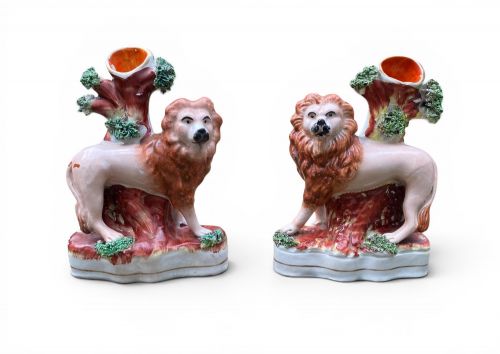


19th Century Pottery Lions
These 19th century pottery lions bring fierce character to a room, ranging from Staffordshire pairs to Chinese and Japanese temple guardians.
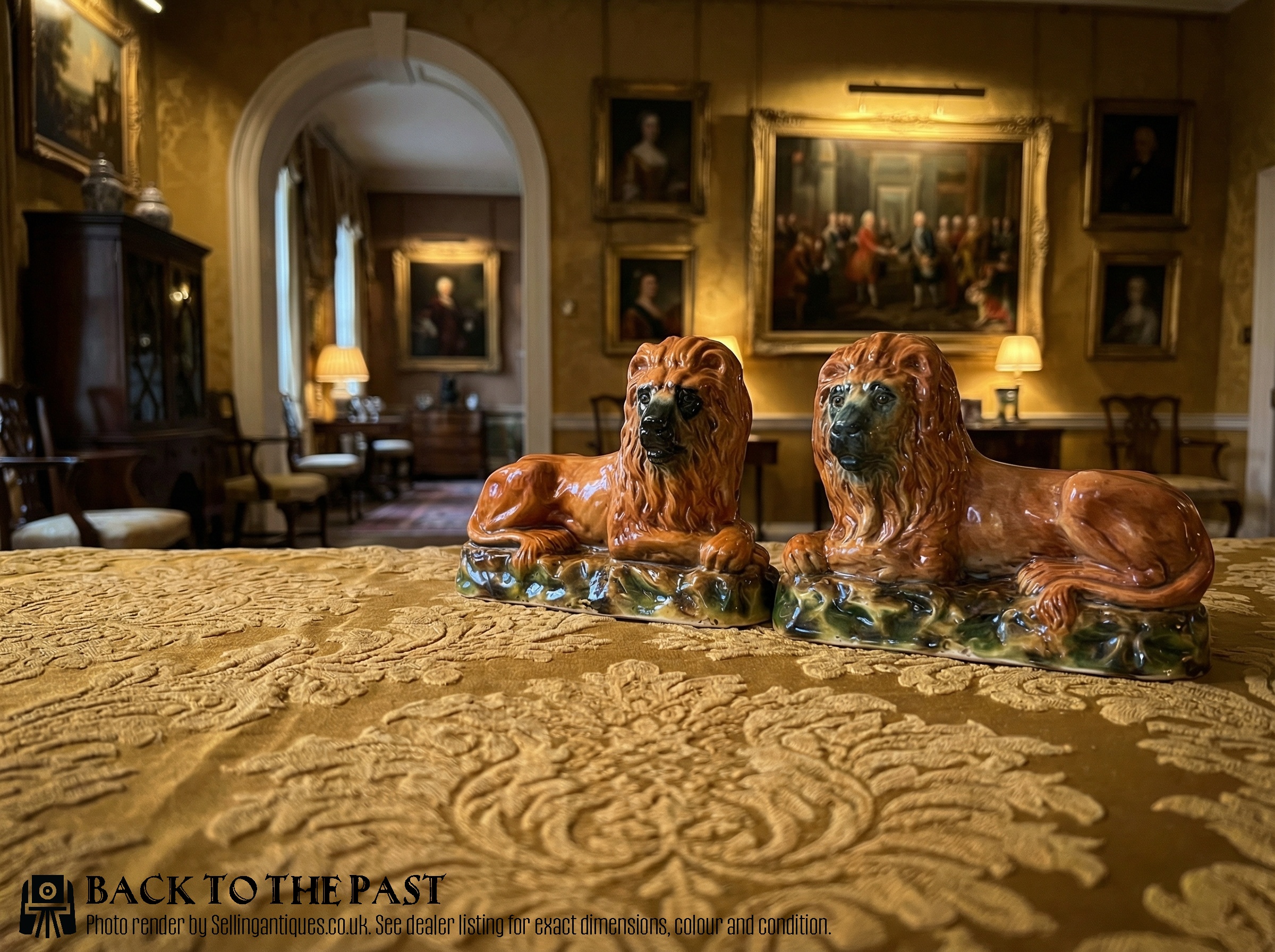
19th Century Pottery Lions
When buyers search for 19th century pottery lions, they encounter a diverse menagerie spanning English earthenware figures, Chinese Buddhistic lion dogs, and Japanese porcelain vessels with moulded handles. The most common forms on this page are pairs of Staffordshire pottery lions and spill vases modelled in the Victorian era, often seated with glazed coats.
Beyond English earthenware, the selection includes Chinese Shiwan and Sancai figures alongside Japanese Kutani vases featuring lion handles and mask motifs. These objects served variously as mantelpiece ornaments, spill vases for matches, and symbolic temple guardians brought into domestic interiors.
How they were made
Potters shaped these figures primarily using earthenware, pearlware, and stoneware, frequently finishing them with lead glazes, treacle glazes, or polychrome sancai colours. Some pieces utilise moulded details enhanced with moriage relief work or applied mask handles.
English Staffordshire works typically rely on earthenware bodies finished with rich glazes, whereas Asian counterparts employ stoneware, porcelain, and specialised kiln techniques like the vibrant sancai glaze or Shiwan ceramics.
Several lions double as spill holders, ready to light a Victorian cigar or hearth fire.
What varies in quality
The distinction between ordinary and superior pieces rests on the crispness of the moulding and the expressive detail in the modelling of the face and mane. Master modellers captured posture and intensity with conviction, while lesser examples appear stiff and generalized.
Glazing application further dictates quality, with deep, even lead or treacle coats enhancing the sculptural form without obscuring the underlying ceramic definition. Pairs that retain matching proportions and balanced glaze distribution command greater appreciation.
The 19th Century Pottery Lions Glossary
- Pearlware
- A refined earthenware developed in the late eighteenth century with a bluish glaze that pools in recesses. It bridges the gap between creamware and later white earthenware.
- Spill vase
- A hollow ceramic vessel designed to hold slender wooden spills used for lighting candles and fires. They often flank decorative figures on a mantelpiece.
- Treacle glaze
- A dark, lustrous brown lead glaze that yields a rich, glossy finish resembling molasses. It was widely utilised on nineteenth-century earthenware figures.
- Sancai
- A traditional Chinese three-colour glaze technique typically combining amber, green, and cream tones. It creates dynamic surface patterns on ceramic figures.
- Moriage
- A Japanese decorative technique featuring slip applied in raised dots or lines to create textured patterns. It frequently appears on Kutani ceramics.
19th Century Pottery Lions: Frequently Asked Questions
How were Staffordshire lions used?
Victorian households displayed these pottery lions in pairs upon mantelpieces, sideboards, and drawing-room tables. Their bold presence brought colour and a sense of majesty to domestic interiors.
Some variants included hollow backs or attached cylinders designed specifically to hold wooden spills for lighting hearth fires and candles.
How do I tell English and Asian lions apart?
English Staffordshire figures present distinct earthenware bodies with lead or treacle glazes, typically modelled as domestic or heraldic lions. They often sit in matching pairs with glazed eyes and moulded manes.
Asian counterparts, such as Chinese Foo Dogs and Japanese Kutani vessels, utilise stoneware or porcelain with sancai glazes or intricate moriage work, reflecting Eastern temple guardian iconography.
How do I care for antique pottery lions?
Keep these ceramic figures out of direct sunlight to protect surface glazes and painted details from fading over time. Dust them gently with a soft, dry cloth.
Avoid using liquid cleaners or abrasive materials, as nineteenth-century lead and treacle glazes can be sensitive to harsh chemical treatments.