


Victorian Staffordshire Pottery Lions
Victorian Staffordshire pottery lions are enduring shelf figures of fierce dignity, bringing robust nineteenth-century character and distinctive hand-painted details directly into your home.
Victorian Staffordshire Pottery Lions
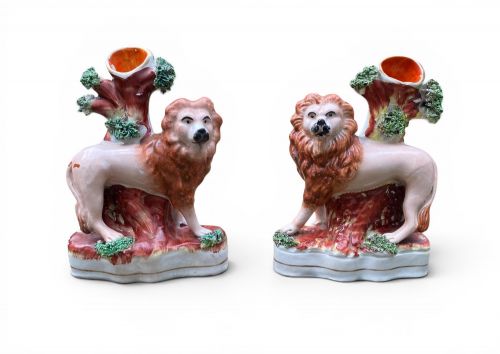
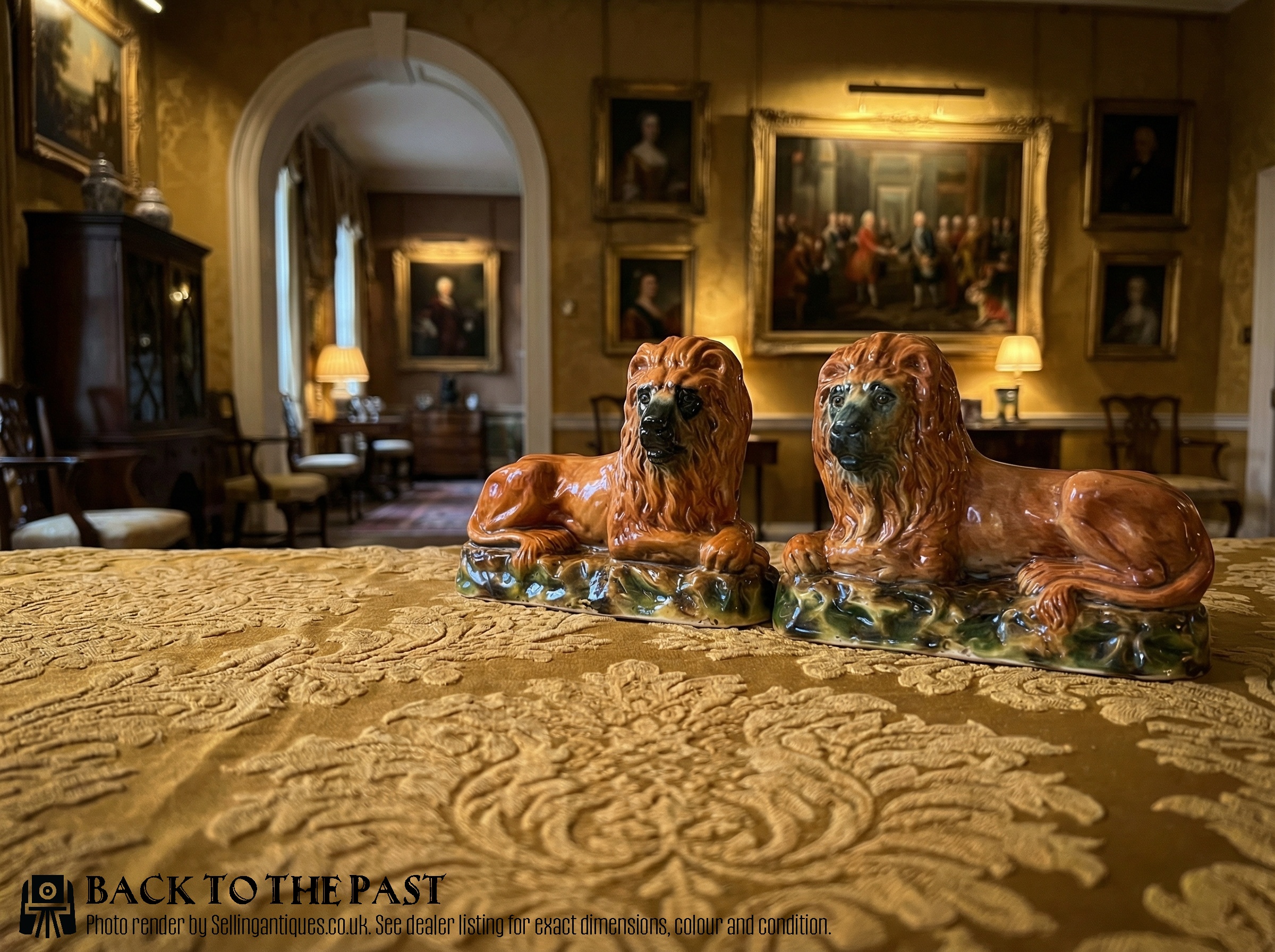
Victorian Staffordshire pottery lions appear in various sculptural forms, ranging from traditional pair figures and recumbent bookends to spill vases and jelly moulds. You will most frequently encounter pairs of standing or seated beasts, often styled after the famous Medici lions.
These ceramic figures span the nineteenth century, with specific examples dated around eighteen-forty, eighteen-fifty, and eighteen-eighty. Makers such as Lancaster and Sons of Hanley also contributed to this enduring sculptural tradition.
Beyond standard decorative figurines, the form extends to functional tableware and accessories featuring feline motifs, including sugar bowls with lion mask handles and figural groups like the death of the lion queen.
Materials and methods
Potters built these figures using earthenware and creamware bodies, shaped through moulding techniques suited to mass production for domestic mantelpieces. The raw ceramic forms were then finished with lead glazes or treacle and mulberry glazes to achieve rich surface sheens.
Some fierce ceramic lions stare out with surprisingly mild human-like expressions painted by factory workers.
Distinctions in quality
The standard of modelling largely determines the visual success of a figure, separating crisp, lifelike anatomical definition from softer, worn impressions. Well-defined paws, expressive faces, and balanced proportions elevate certain pairs above simpler mass-produced counterparts.
The application of glaze and enamel dictates the visual depth of the finish, with rich treacle glazes or carefully brushed enamels creating superior surface texture. Consistency in the firing process and the crispness of gilded highlights also distinguish finer decorative statuettes.
Rockingham Pottery·Lancaster and Sons of Hanley
The Victorian Staffordshire Pottery Lions Glossary
- Earthenware
- A porous pottery body fired at lower temperatures than stoneware or porcelain. It requires a glaze to become impermeable to liquids.
- Treacle Glaze
- A dark, translucent brown lead glaze that pools richly in recessed areas. It creates a lustrous, molasses-like finish popular on nineteenth-century figures.
- Spill Vases
- Hollow ceramic figures incorporating a small cylindrical holder at the back. These vessels held wooden spills used for lighting fires and candles.
- Creamware
- A refined, pale yellow-hued earthenware developed in Staffordshire during the eighteenth century. It provides a smooth ground for subsequent glaze and enamel applications.
Victorian Staffordshire Pottery Lions: Frequently Asked Questions
What are victorian staffordshire pottery lions?
Victorian Staffordshire pottery lions are ceramic mantelpiece ornaments modelled after real and classical lions, often produced in pairs during the nineteenth century. They include standing figures, recumbent bookends, and spill vases.
These pieces reflect popular nineteenth-century tastes for domestic display and exotic animals. Potters utilised local earthenware and distinctive glazes to make them accessible to middle-class homes.
How were these lion figures used?
Owners typically placed these ceramic lions on mantelpieces, sideboards, and shelves as decorative ornaments to project status and taste. Certain variations served practical household functions.
For instance, spill holders provided a convenient place for wooden fire-lighters near the hearth, while specialised ceramic moulds shaped jellies in the kitchen.
How do you style them at home?
You can display pairs of Staffordshire lions symmetrically on mantelpieces, bookshelves, or side tables where their strong silhouettes anchor a room. Their earthenware textures complement both traditional and eclectic interiors.
Allow the glaze colours, whether treacle brown or cream, to pick up tones from surrounding wood furniture and textiles. Position them securely on flat surfaces to protect their antique ceramic bodies.
How do you date a staffordshire lion?
Dating relies on examining the ceramic body, glaze characteristics, modelling style, and any base markings or associated historical events. Pieces from the mid-nineteenth century often display characteristic lead glazes and hand-painted enamel details.
Comparing the potting technique and weight with documented examples helps place figures within broader Victorian production eras. Variations in style range from simple early forms to later twentieth-century interpretations.