


Victorian Earthenware Lions
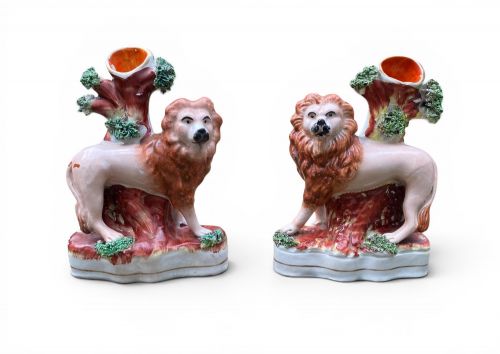
These victorian earthenware lions are robust Staffordshire figures and functional vessels that bring undeniable character to any mantelpiece.
Victorian Earthenware Lions
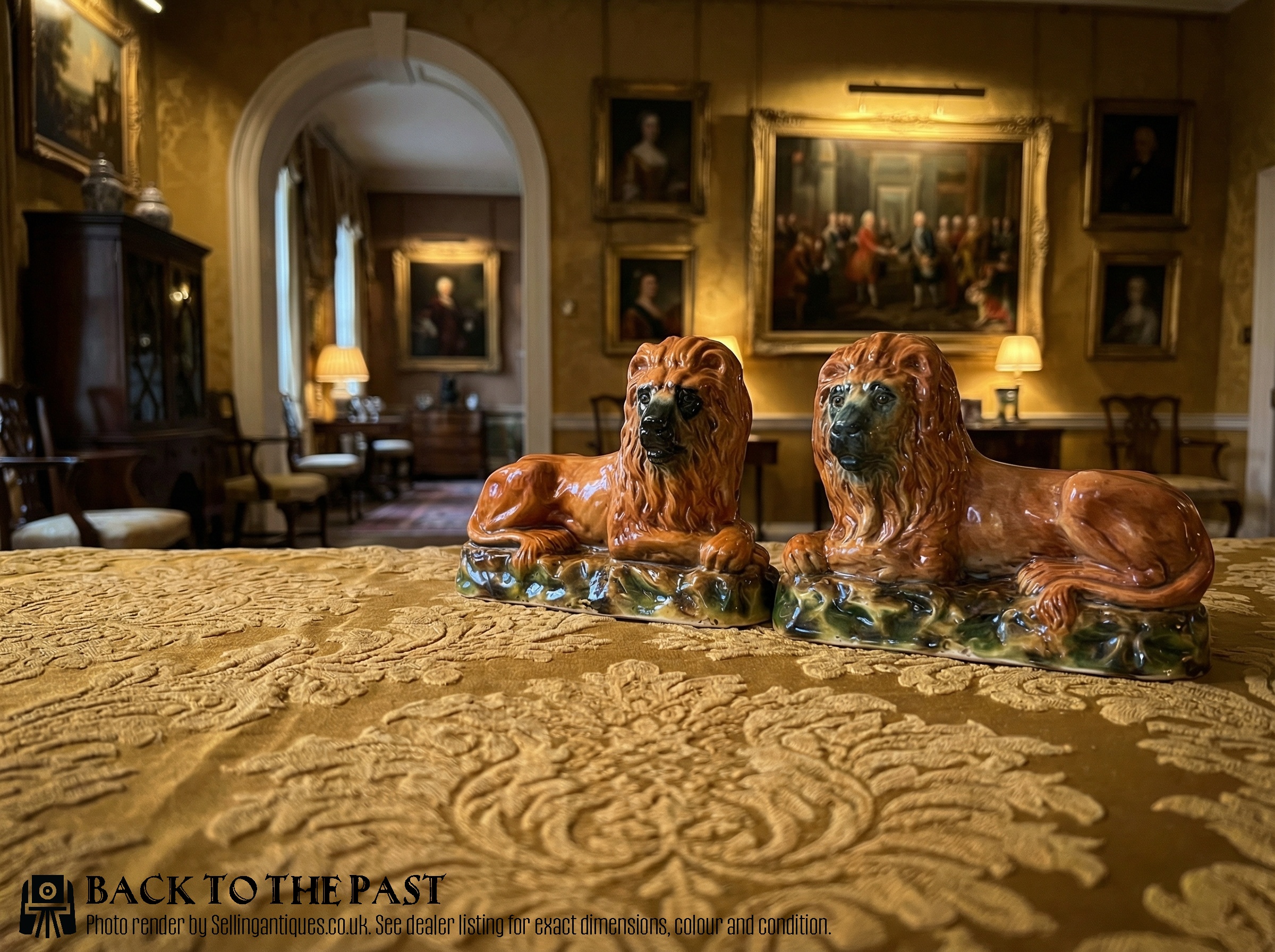
When you search for victorian earthenware lions, you encounter a range of nineteenth-century ceramic figures and utilitarian vessels shaped into powerful feline forms. These pieces include decorative statuettes, spill vases, bookends, jelly moulds, and sugar bowls featuring lion mask handles.
The majority of these objects originate from Staffordshire potteries during the Victorian period, spanning the mid to late nineteenth century. You also find specialised forms such as Medici lions and commemorative figures depicting scenes like the death of the lion queen.
How they were made
Potters shaped these earthenware objects using ceramic moulds before applying various surface treatments, including lead glaze, cream glaze, and treacle glaze. Artisans occasionally added gilding to highlight specific details on the figures and vessels.
Factories utilised specialised clay bodies such as creamware and standard earthenware, followed by firing in kilns to set the glaze. Makers like Rockingham and Lancaster and Sons produced these robust wares using traditional nineteenth-century ceramic techniques.
Some nineteenth-century potters gave their earthenware lions surprisingly human expressions that sit somewhere between fierce guardians and sleepy house cats.
What varies in quality
The distinction between standard examples and superior pieces rests largely on the crispness of the moulding and the depth of the glaze. Rich treacle glazes and carefully applied gilding separate finer decorative objects from simpler utilitarian vessels.
Rockingham Pottery·Lancaster and Sons
The Victorian Earthenware Lions Glossary
- Earthenware
- Porous pottery fired at lower temperatures, commonly used for nineteenth-century figures and kitchen vessels. It requires a glaze to become watertight.
- Treacle glaze
- A dark, translucent brown lead glaze that pools richly in the recesses of nineteenth-century ceramics. It gives Staffordshire lions a glossy, mottled appearance.
- Spill vase
- A hollow ceramic figure incorporating a small cylindrical holder designed to store taper spills for lighting fires and candles. Pairs of these often flanked fireplace mantels.
- Medici lion
- A classical sculptural representation of a lion resting its paw on a sphere, copied from the famous marble pair in Florence. Staffordshire potters frequently adapted this motif.
- Jelly mould
- A kitchen vessel featuring an internal raised design that transfers onto set aspics or jellies. Lion motifs made these moulds decorative enough to display on shelves.
Victorian Earthenware Lions: Frequently Asked Questions
What are victorian earthenware lions?
These pieces are nineteenth-century ceramic figures, spill vases, bookends, and kitchen vessels shaped to resemble lions. They were produced primarily in Staffordshire using traditional earthenware and various coloured glazes.
Collectors prize them for their robust folk art charm and the distinct character each handmade figure displays. They capture the Victorian fascination with exotic animals and classical sculpture.
How were these lions used?
Many examples served purely as decorative mantelpiece ornaments or bookends in Victorian homes. Others had functional roles as jelly moulds or sugar bowls with lion mask handles.
Spill vase versions combined decoration with utility by holding wooden tapers used to light candles and fires. This dual purpose made them common household items in the nineteenth century.
How can I date my ceramic lion?
Dating relies on observing the potting style, glaze type, and overall form typical of the nineteenth century. Most examples date from roughly eighteen forty to nineteen hundred, reflecting standard Staffordshire production periods.
Records show specific pieces tied to the mid-Victorian era, while others date closer to nineteen hundred. Comparing the glaze finish and weight of the earthenware helps narrow the decade.
How do I live with antique pottery lions?
Place them on sturdy mantelpieces, bookshelves, or side tables where their robust ceramic bodies can be appreciated safely. Keep them away from heavy foot traffic or unstable edges to protect the earthenware.
Dust them gently with a dry cloth and avoid harsh chemical cleaners that might affect the lead or treacle glaze. They pair naturally with other nineteenth-century decorative objects and folk art.