

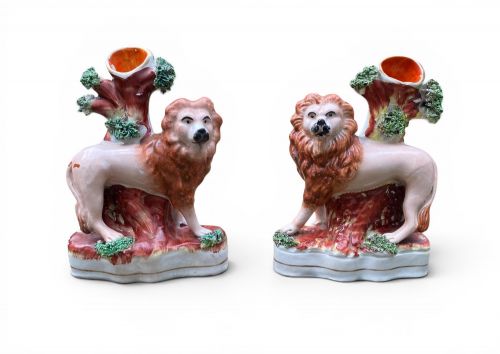


Earthenware Lion Figures
These earthenware lion figures command a room with their presence, bringing robust historical character and timeless modelling to a mantelpiece.
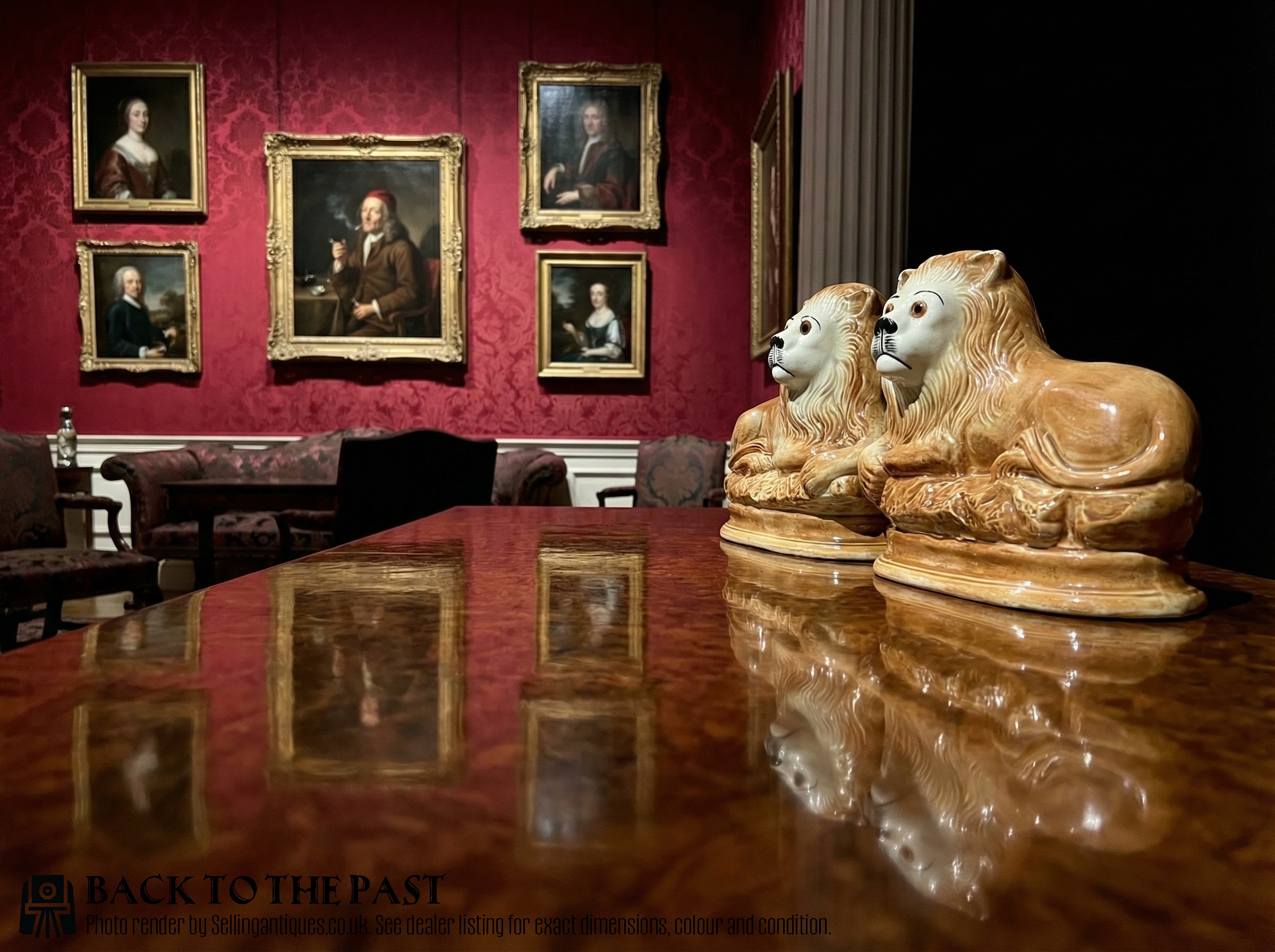
Earthenware Lion Figures
Earthenware lion figures represent a diverse tradition of ceramic modelling spanning British, European, and Asian workshops. When you search for earthenware lion figures, you encounter everything from traditional Staffordshire pairs to Chinese and Japanese Buddhist examples.
The Staffordshire tradition dominates this page, frequently taking the form of paired mantel ornaments or functional spill vases. These English pottery pieces capture the Victorian fascination with exotic and domestic beasts.
Beyond the British figures, the selection broadens to include continental European tin-glazed wares and Asian pottery models. Each origin brings distinct cultural interpretations to the majestic feline form.
Materials and Making
Makers shaped these earthenware lion figures using local clays before applying specialised surface treatments. Lead glazes and lustres provided protective sheens and rich surface textures to the fired ceramic.
Treacle glazes and vibrant enamels added deep colour and varied tonal variation across the bodies and manes. Some pieces relied on tin-glazing techniques, particularly within German fayence traditions, to achieve smooth white backgrounds.
The selection includes Japanese Meiji and Chinese Qing Dynasty pottery alongside British Victorian pieces.
Assessing Quality
The crispness of the modelling sets superior earthenware lion figures apart from simpler commercial output. Detailed facial expressions and well-defined manes indicate skilled hand-modelling before the glazing stage.
The application of glaze and enamel also dictates overall visual success. Controlled brushwork and deep, even colour distribution elevate decorative impact across both British pairs and Asian ceramic sculptures.
Rockingham Pottery·Lancaster and Sons of Hanley
The Earthenware Lion Figures Glossary
- Earthenware
- Porous pottery fired at lower temperatures than stoneware or porcelain. It requires a glaze to become impermeable to liquids.
- Spill vase
- A hollow ceramic holder designed to store wooden tapers used for lighting pipes and candles. They often flank seated animal figures on Victorian mantelpieces.
- Treacle glaze
- A dark, translucent brown lead glaze rich in manganese. It creates a glossy, syrup-like finish popular on nineteenth-century British pottery.
- Medici lion
- A classical marble sculpture motif depicting a majestic lion resting its paw on a sphere. British potters frequently copied this posture for decorative fireplace ornaments.
Earthenware Lion Figures: Frequently Asked Questions
What are earthenware lion figures?
These pieces are ceramic sculptures modelled in the shape of lions, originating from various periods and international potteries. They serve primarily as decorative ornaments for mantelpieces and display shelves.
Many examples take the form of paired Staffordshire figures, while others represent Asian Buddhist lions or European tin-glazed models. Their construction relies on fired clay finished with glazes, enamels, or lustres.
How were these figures used?
Historic owners placed these ceramic beasts on mantelpieces, sideboards, and tables as symbols of strength, status, and decoration. Some variations incorporated functional elements such as hollow cylinders behind the animal to hold wooden tapers.
Paired figures often sat symmetrically at either end of a fireplace to frame the hearth. Smaller pieces functioned as bookends or general decorative display objects within Victorian parlours.
How do I date these pieces?
Dating relies on stylistic clues, glaze characteristics, and underlying ceramic bodies. Nineteenth-century British pieces often display distinctive treacle glazes or moulded pearlware surfaces.
Earlier examples from the eighteenth century typically utilise tin-glazing techniques. Comparing the modelling style and base characteristics against documented pieces helps narrow down the period.