


Brown Ceramic Lions
Brown ceramic lions bring powerful presence to a room, ranging from Staffordshire mantel ornaments to carved Japanese figures.
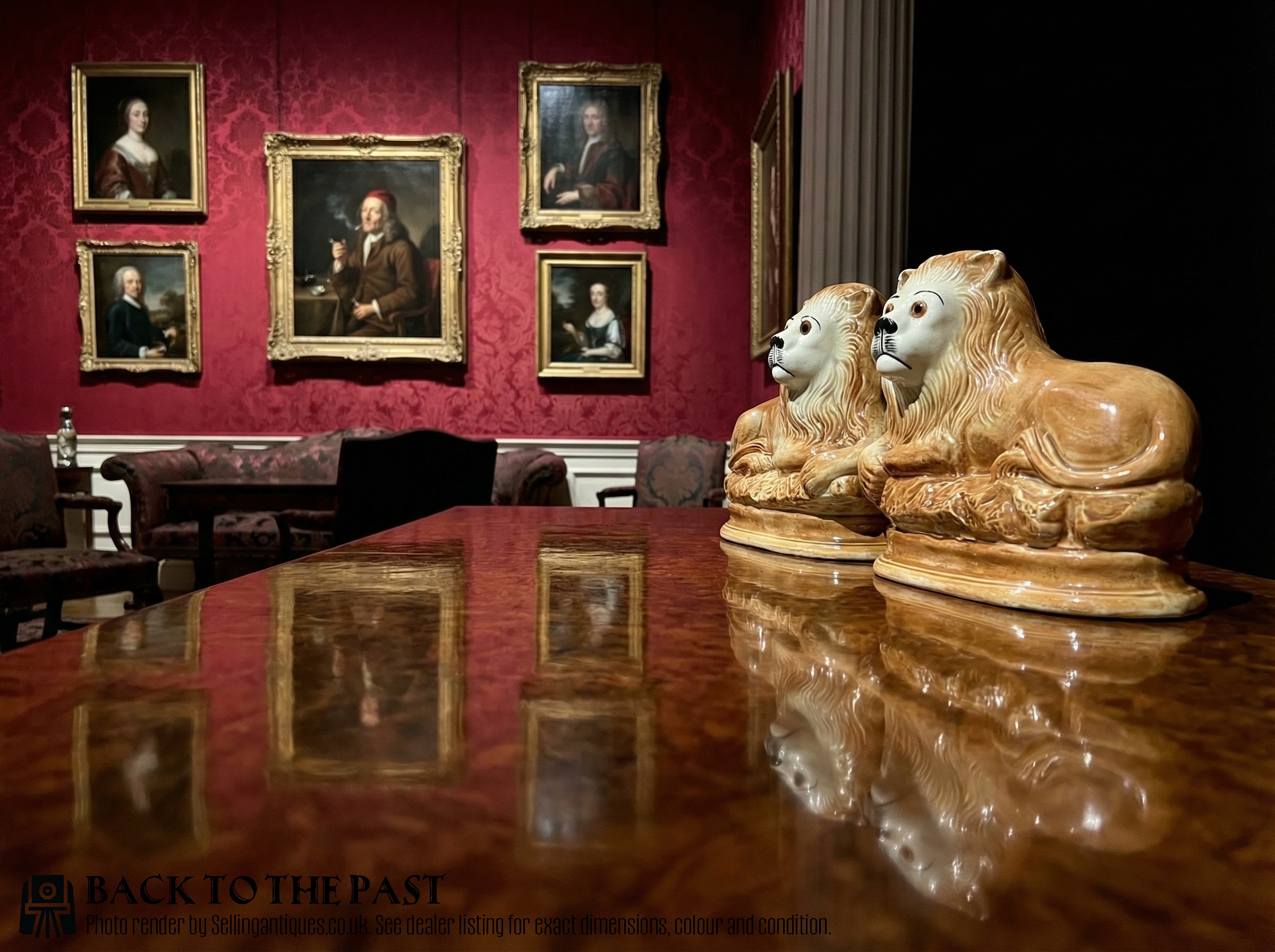
Brown Ceramic Lions
Brown ceramic lions encompass both fierce English mantel ornaments and traditional Asian temple guardians. When searching for brown ceramic lions, buyers encounter everything from Staffordshire pottery pairs to Chinese Shiwan Buddhistic lion dogs and Japanese Bizen models.
The English examples on this page are typically Victorian Staffordshire pieces modelled as couchant or standing beasts. These Staffordshire lions often feature rich treacle glazes that pool in the fur and mane.
Asian traditions provide alternative interpretations through Buddhistic lion dogs and ShiShi figures. These creatures share shelf space with architectural elements like terracotta mask wall sculptures.
How they were made
Potters shaped these figures from earthenware, stoneware, and terracotta using moulds or hand modelling techniques. Earthenware bodies received rich lead or treacle glazes that ran deep into the fur and crevices during firing.
Treacle glaze has a habit of pooling so thickly in the lion's mane that it looks like hot molasses.
What varies in quality
The application of treacle or lead glaze dictates the visual weight of the object. Even glazes that puddle richly without dulling the underlying clay separate better examples from flatly finished ones.
Rockingham Pottery·Lancaster and Sons of Hanley
The Brown Ceramic Lions Glossary
- Treacle glaze
- A dark, translucent brown lead glaze that pools thickly in recesses and gives pottery a glossy, treacle-like appearance. It defines the classic appearance of nineteenth century Staffordshire animal figures.
- Staffordshire
- A generic term for pottery made in the Staffordshire Potteries region of England. These works include the decorative lions commonly found on Victorian mantelpieces.
- ShiShi
- A traditional Japanese guardian lion dog derived from Chinese Buddhistic iconography. These figures sit on temple gates or domestic shelves to ward off evil.
- Couchant
- A heraldic term describing an animal lying down with its head raised. Many ceramic lions adopt this posture for stability on shelves and mantelpieces.
- Terracotta
- Fired unglazed clay ranging in colour from orange-brown to deep red. It serves as the body for architectural ornaments and wall masks.
Brown Ceramic Lions: Frequently Asked Questions
What are Staffordshire lions?
Staffordshire lions are earthenware figures produced in nineteenth century England to decorate domestic mantelpieces. Potters often modelled them in pairs to face inwards towards a clock or fireplace.
These figures typically display heavy treacle glazes and painted glass eyes. Victorian households placed them prominently in parlours as symbols of British strength and domestic respectability.
How do I identify a Shi Shi?
A Shi Shi is a Japanese guardian lion dog modelled with curly manes and fierce expressions. They derive from Chinese Buddhist traditions and appear in materials like Bizen stoneware.
Unlike English mantel lions, these figures often possess one paw resting on a brocade ball or a young cub. Their forms reflect Eastern religious sculpture rather than Western decorative ornament.
Where were these lions placed?
English ceramic lions sat in pairs on mantelpieces, chiffoniers, and sideboards in nineteenth century homes. Their inward-facing poses framed the central domestic hearth.
Asian ceramic lions served as guardian figures placed near entryways, altars, or within scholars' spaces. Terracotta masks acted as wall-mounted architectural ornaments.
How do I care for glazed pottery?
Dust these ceramic figures gently with a soft, dry brush to prevent dirt accumulation in the glaze crevices. Avoid harsh chemical cleaners that can strip surface paint or damage old earthenware bodies.
Keep them away from areas of high moisture and direct sunlight to protect the glaze and any added pigments. Stable indoor environments prevent stress on older ceramic structures.