


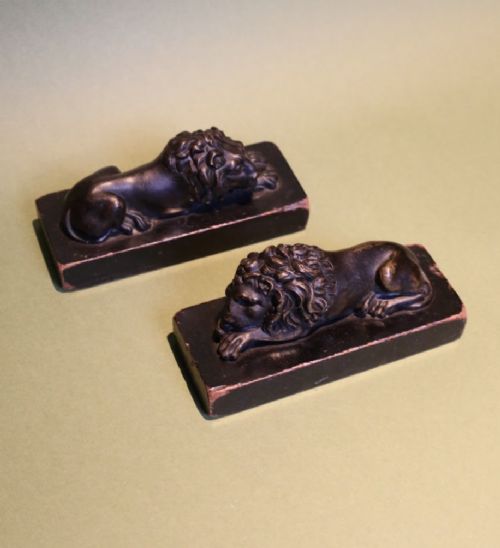


Dark Bronze Bookends
Dark bronze bookends bring weight and classical form to a shelf, keeping volumes secure while displaying heavy metal and marble craftsmanship.
Dark Bronze Bookends
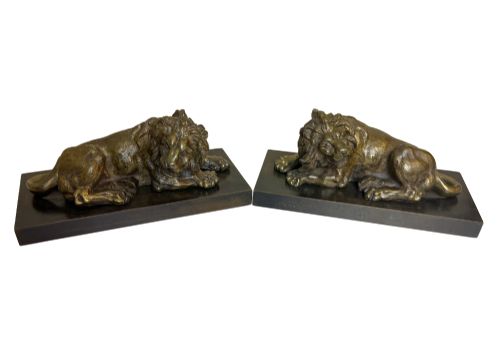
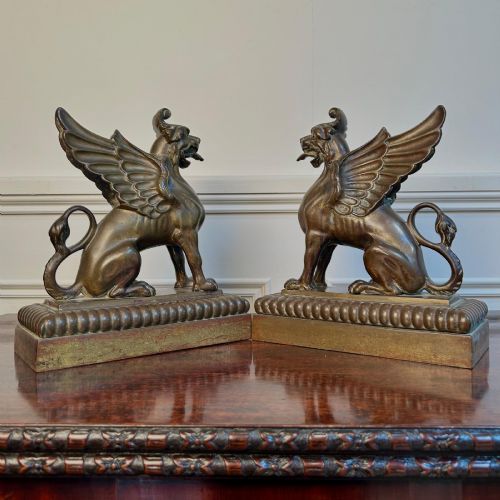
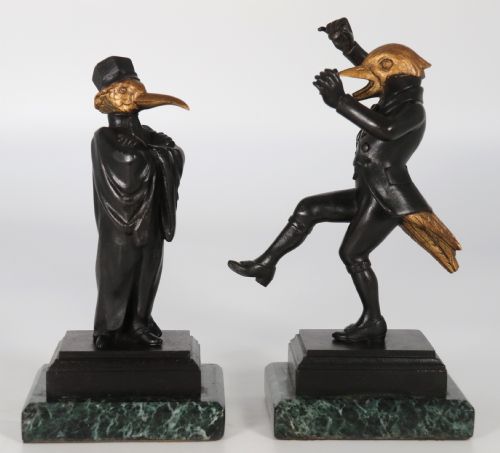
Dark bronze bookends are functional sculptures designed to support rows of books, drawing on heavy materials and classical or decorative forms. When exploring dark bronze bookends, buyers encounter paired figures ranging from heraldic beasts and mythological creatures to theatrical birds and literary figures.
The selection on this page spans several distinct eras, notably the nineteenth century, the Victorian period, and the Art Deco style of the early twentieth century. Pieces take the form of lions, griffins, putti, and classical ladies, often adapted from larger sculptures or Grand Tour souvenirs.
How they were made
Makers utilised traditional foundry techniques to cast these pieces, primarily working in bronze, parcel-gilt bronze, and spelter. Many examples incorporate heavy bases made of marble, Sienna marble, or timber to provide the necessary weight for holding books upright.
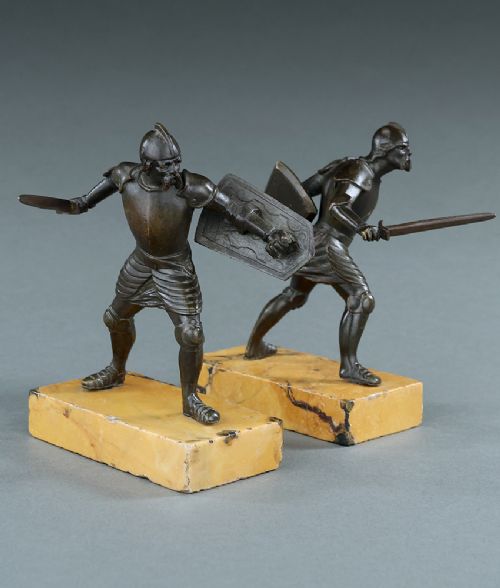
Surface finishes vary from deep patination to partial gilding, highlighting the sculptural details of figures such as duelling knights, resting lions, and classical cupids.
Dark Bronze Bookends Retail Price Guide 2026
Typical asking prices for dark bronze bookends among the pieces listed under this phrase on Sellingantiques today, from the lower quarter to the upper quarter. They describe what is for sale here now, not the wider market.
William Shakespeare stands alongside duelling Renaissance knights and theatrical birds on the shelf.
What varies in quality
The choice of base material also marks a distinction, with dense Sienna marble and finely grained timber offering a more substantial foundation than lighter metals.
Franz Gruber·K and O
The Dark Bronze Bookends Glossary
- Spelter
- A zinc alloy commonly used as a cost-effective substitute for bronze in decorative figures and bookends, particularly during the Art Deco period.
- Parcel-gilt
- A decorative treatment where selected areas of the bronze surface are gilded with gold leaf while the rest retains its dark patination.
- Grand Tour
- A cultural journey undertaken by wealthy Europeans that inspired the creation of small bronze sculptures and architectural models collected as souvenirs.
- Neoclassical
- A style drawing on the art and architecture of classical antiquity, frequently seen in figures of cupid, classical ladies, and lions.
- Patina
- The surface sheen and coloration developed on bronze over time through oxidation and handling, which indicates the age and authenticity of the metal.
Dark Bronze Bookends: Frequently Asked Questions
Are these pairs always matching?
Most entries represent matched pairs designed to sit at either end of a row of books, cast from the same moulds.
Some historical examples, particularly those adapted from sculptures, function as symmetrical bookends despite minor variations in individual patination.
How heavy are they?
These pieces use substantial metal and stone bases, such as marble or timber, to ensure they remain stable under the weight of heavy volumes.
Smaller pairs rely on solid bronze casting to gain the density required for shelf use.
Can they hold heavy books?
The inclusion of dense materials like marble and solid metal gives these objects the necessary heft to support large hardbacks.
Their substantial bases anchor them firmly against sliding volumes.
How do I date them?
Dating relies on stylistic clues, such as the geometric lines of Art Deco pieces or the classical ornamentation typical of nineteenth-century Victorian work.
Foundry marks and the choice of base materials, like Sienna marble, also help place pieces within specific periods.