


Bronze Lion Paperweights
Bronze lion paperweights bring the muscular poise and enduring weight of the king of beasts straight to the desk, blending classical sculpture with functional heft.
Bronze Lion Paperweights
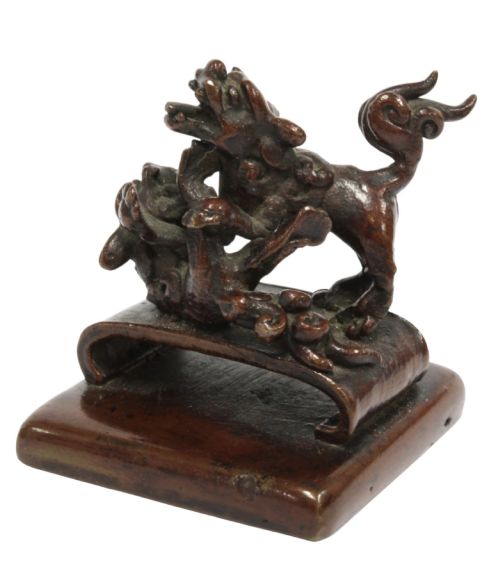
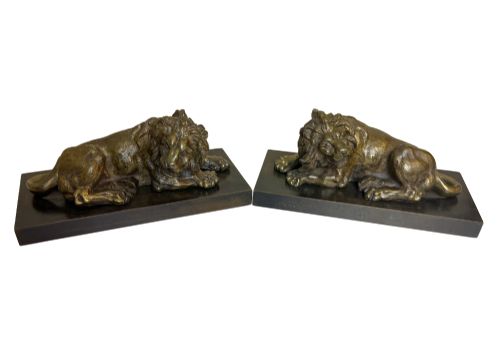
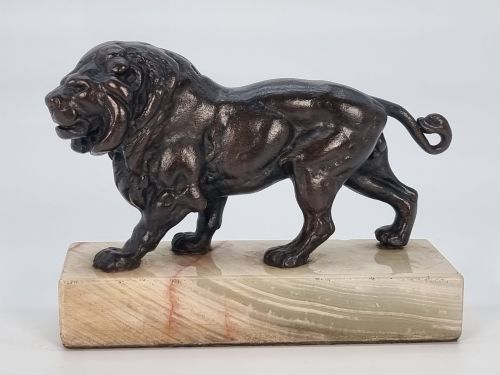
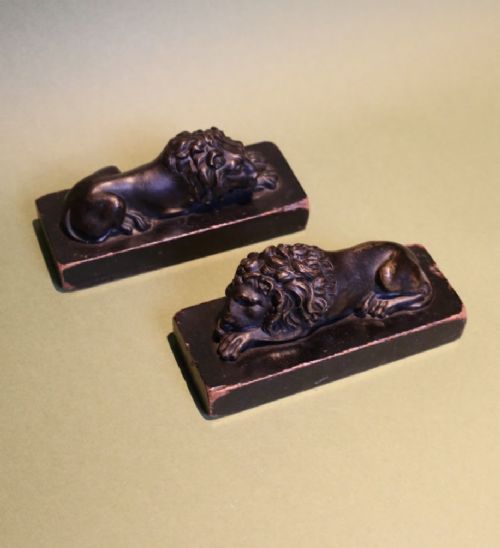
When you search for bronze lion paperweights, you encounter a robust mix of sculptural desks accessories spanning the seventeenth century to the twentieth century. These pieces range from substantial resting pairs and prowling studies to miniature fountain heads and scholarly seals.
The assortment on this page reflects diverse origins, moving from French animalier works and Venetian Grand Tour souvenirs to English Regency designs and late Ming Dynasty scholar items. Most examples you will meet lean towards nineteenth century production, often set upon marble or onyx plinths.
Makers and foundries represented include well-known names such as Franz Bergman, Al Barye, and the Barbedienne foundry, alongside anonymous artisans. Whether cast as Canova lions or winged beasts of Saint Mark, each object serves as both a heavy paperweight and a miniature work of art.
How they were made
The creation of these heavy figures relies on traditional metal casting techniques, resulting in dense bronze forms that provide the necessary weight for holding down paper. Many items are further enhanced with cold-painted pigments to bring realistic colour and depth to the metallic surface.
Materials documented across the items include bronze, marble, onyx, cold-painted bronze, and timber.
What varies in quality
The distinction between standard commercial castings and superior examples lies in the crispness of the chasing and the fidelity of the anatomical detail. Finer works display sharply rendered fur and powerful bone structure rather than soft, smoothed edges.
The choice and integration of the base material also dictate the tier of the piece, with high-quality mounts using dense, well-figured onyx or marble rather than plain timber. Provenance to notable founders or artists further elevates the standing of individual studies.
Franz Bergman·Al Barye·Barbedienne
The Bronze Lion Paperweights Glossary
- Animalier
- A nineteenth-century artistic movement focused on the realistic depiction of animals. Sculptors in this style studied living beasts closely to capture authentic movement and anatomy.
- Cold-Painted Bronze
- A technique where bronze sculptures are painted with non-heat-resistant oil paints and left to dry naturally. This method was widely used by Viennese foundries in the late nineteenth and early twentieth centuries.
- Grand Tour
- A traditional trip through Europe undertaken by upper-class Europeans in the eighteenth and nineteenth centuries. Travellers often returned with small bronzes and classical antiquities as souvenirs.
- Canova Lions
- Sculptural lion figures modelled after the famous tomb monuments by Antonio Canova. These powerful resting beasts became popular subjects for Grand Tour bronzes.
- Scholar's Seal
- A small Chinese carving or casting used for stamping ink seals. These items were traditionally kept on the desks of educated officials and literati.
Bronze Lion Paperweights: Frequently Asked Questions
How were they used?
Their primary function was keeping loose papers secure on writing desks in studies and offices. Wealthy collectors also displayed them on bookshelves and library tables as decorative art.
Smaller examples sometimes doubled as desk seals or inkwell attachments.
How do you live with them?
Place them on a desk, mantelpiece, or library table where their weight and tactile metal surfaces can be appreciated up close. They fit comfortably into both traditional studies and modern minimalist workspaces.
Maintenance involves simple dusting with a soft cloth to protect the metal and any painted or stone surfaces.
How do you tell periods apart?
Stylistic clues such as Neoclassical severity, Victorian naturalism, or Ming Dynasty scholarly motifs point directly to the era of manufacture. The presence of cold-painting often indicates late nineteenth or early twentieth-century Viennese production.
Base materials like onyx and marble frequently align with late nineteenth-century Grand Tour or French studio work.