



Grand Tour Bronze Lions
These grand tour bronze lions capture the spirit of classical antiquity, bringing the majesty of Rome and Venice directly into a room.
Grand Tour Bronze Lions
When you search for grand tour bronze lions, you encounter miniature sculptures and ornamental pieces brought back by travellers from their journeys through Italy. The pieces on this page span the Regency, Georgian and nineteenth-century periods, capturing famous ancient prototypes in metal.
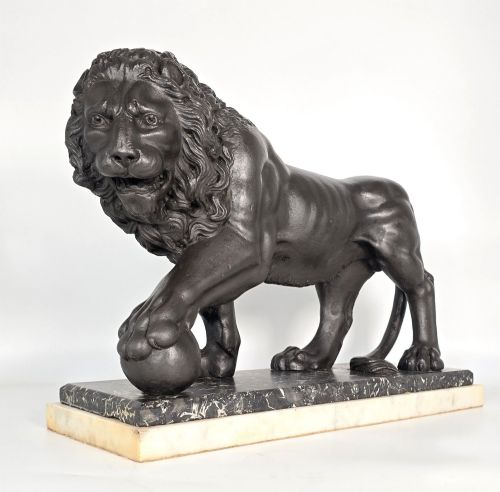
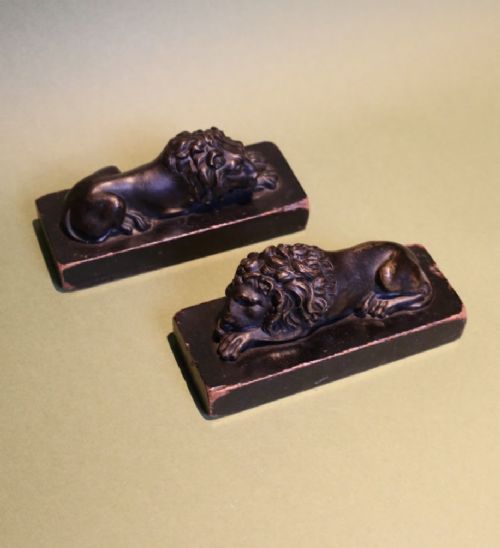
You are most likely to meet pairs modelled on the famous Canova lions, the Medici lions, or the Capitoline lions. These figures often rest upon marble plinths or feature in functional objects such as candlesticks, tazzas and fountain heads.
The sculptural forms range from seated beasts and winged lions of Saint Mark to decorative paw vases. Each item reflects the neoclassical taste of collectors who wished to commemorate their travels with tangible pieces of classical sculpture.
How they were made
The makers cast these grand tour bronze lions using bronze, patinated metal, gilt bronze and ormolu. Many examples incorporate timber or rest upon bases of solid marble, providing a heavy and contrasting foundation for the metalwork.
Foundries achieved varied surface finishes, from dark patination to gilt highlights and silvered details on related items like tazzas. The casting technique captured intricate muscular detail and facial expressions derived directly from famous Italian monuments.
Listings feature items from the Regency, Georgian and nineteenth-century periods, utilising bronze, marble, patinated metal and ormolu.
What varies in quality
The quality of the mountings, such as the veining and polish of the marble plinths or the precision of gilt bronze elements, elevates certain examples above standard productions. Better pieces demonstrate a careful balance between the metal figure and its base, reflecting the skill of the nineteenth-century workshop.
Antonio Canova
The Grand Tour Bronze Lions Glossary
- Grand Tour
- A traditional trip through Europe, chiefly Italy, undertaken by upper-class young men in the eighteenth and nineteenth centuries to study the arts. Souvenirs purchased along the way included small bronzes of famous monuments.
- Canova Lions
- Sculptures based on the marble lions carved by Antonio Canova for the tomb of Pope Clement XIII in Rome. These reclining beasts became popular subjects for nineteenth-century souvenir bronzes.
- Medici Lions
- A pair of matching marble lion sculptures, one original Roman and the second a sixteenth-century pendant by Flaminio Vacca, housed in the Loggia dei Lanzi in Florence. Miniature bronze copies were frequently acquired by travellers.
- Capitoline Lions
- Ancient feline sculptures located at the Campidoglio in Rome. Grand tour artists often reproduced these powerful figures in bronze.
- Ormolu
- Gilded bronze used for decorative mounts and objects during the eighteenth and nineteenth centuries. The technique involves applying a mercury and gold amalgam to a bronze base.
- Tazza
- A shallow cup or bowl mounted on a stem and foot, used for display or serving. Surviving nineteenth-century examples incorporate bronze and silvered elements.
Grand Tour Bronze Lions: Frequently Asked Questions
What are grand tour bronze lions?
Grand tour bronze lions are small metal sculptures created as souvenirs for travellers visiting Italy during the nineteenth century. They replicate famous classical and neoclassical lion monuments seen in Rome, Florence and Venice.
These pieces allowed collectors to display classical art within their homes. They range from simple tabletop figures to decorative elements on candlesticks and fountain heads.
How were these bronze lions displayed?
Victorian collectors typically placed these bronze lions on mantelpieces, desks or an architectural bookcase. Many items include heavy marble bases designed to anchor the sculpture and provide an elegant display surface.
Pairs of lions were often arranged symmetrically to frame a central decorative object. Their compact size made them well-suited for domestic interiors influenced by neoclassical taste.
How can I identify a Canova lion?
Canova lions are typically depicted in a relaxed, reclining posture rather than standing or sitting upright. They derive from the monumental lions guarding the tomb of Pope Clement XIII.
Souvenir versions in bronze capture this distinct recumbent pose and calm expression. They often appear as matched pairs on marble plinths.
What is the difference between Medici and Capitoline lions?
Medici lions are modelled after the historic pair in Florence, traditionally shown with one paw resting upon a sphere. Capitoline lions reference the ancient Roman sculptures located on the Capitoline Hill.
Both types were popular subjects for nineteenth-century foundries producing grand tour souvenirs. Examining the stance and the positioning of the paws helps distinguish the two classical prototypes.
Are these items made of solid bronze?
Many grand tour pieces consist of cast bronze or patinated metal, sometimes featuring gilt bronze or ormolu highlights. They are frequently mounted on heavy marble or timber bases.
The combination of metals and stone provided stability and a refined finish. The materials used reflect the standard practices of nineteenth-century European foundries.