

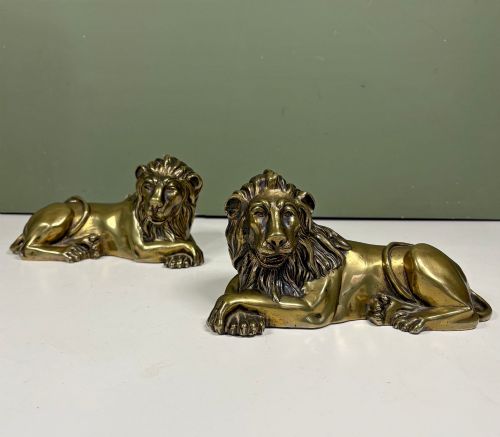
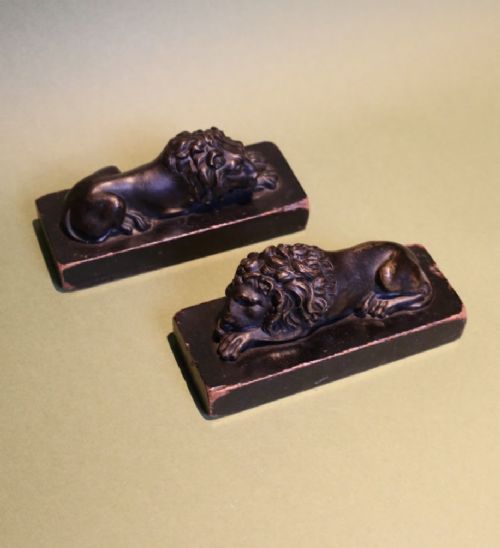


Pair of Lion Bookends
These pair of lion bookends bring sculptural weight and classic authority to a shelf, anchoring heavy volumes with cast metal, carved stone, and glazed ceramic.
Pair of Lion Bookends
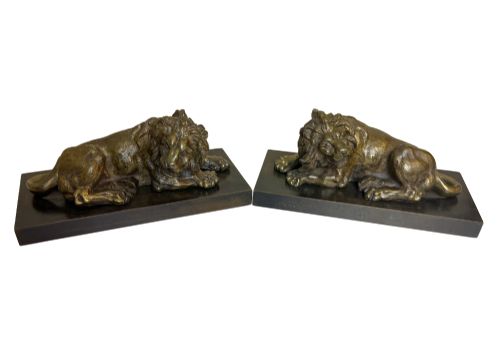
When you search for pair of lion bookends, you encounter heavy functional sculptures designed to support rows of books while depicting powerful feline guardians. The most frequent examples met on this page span the nineteenth century and the early twentieth century, taking the form of cast metal or ceramic figures.
These objects draw heavily on classical antiquity and grand tour souvenirs, frequently reproducing famous monuments such as the Canova lions or Medici lions. They appear in materials ranging from heavy cast iron and bronze to English pine, ceramic, and marble bases.
Beyond standard bookends, the category absorbs related sculptural pairs including doorstops, desk seals, and foo dogs that serve the identical decorative purpose on a library shelf. Victorian and Art Deco stylistic influences dominate, bridging domestic utility with formal mantelpiece ornament.
How they were made
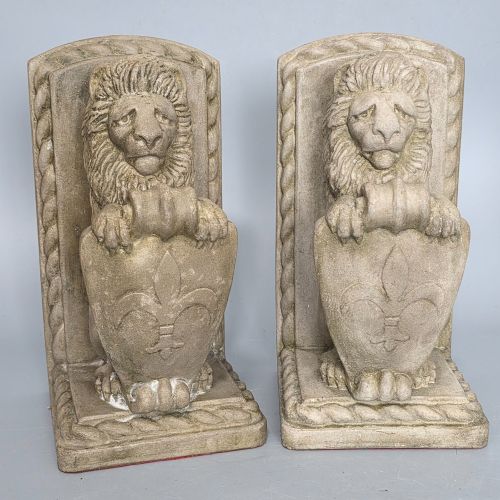
Ceramic and earthenware versions rely on slip casting or hand moulding, finished with treacle glazes or monochrome paints before kiln firing. Stone and wood variations involve direct carving, shaping serpentine, marble, soapstone, jade marble, and pine into symmetrical recumbent or seated guardian beasts.
Several stone guardians moonlight as desk seals and doorstops, proving that domestic lions are remarkably versatile beasts.
What varies in quality
Material density and base construction also dictate the upper tier of quality. Heavy solid bronze or substantial carved serpentine commands greater presence than lightweight spelter, while integrated marble or stone plinths add structural stability and visual gravity.
C Omin·Lancaster and Sons of Hanley
The Pair of Lion Bookends Glossary
- Canova lions
- Replicas of the monumental sculptural lions carved by Antonio Canova for the tomb of Pope Clement XIII in Rome. These models became extremely popular Grand Tour souvenirs throughout the nineteenth century.
- Medici lions
- Pair of marble lion sculptures guarding the Villa Medici in Rome, one original antique and one Renaissance addition. They were widely copied in bronze, brass, and stone during the nineteenth century.
- Foo dogs
- Traditional Chinese guardian lions, also known as Shi Shi, frequently depicted as mythical protectors. They appear in nineteenth-century decorative objects carved from soapstone, jade marble, and cast iron.
- Treacle glaze
- A rich, dark, translucent brown lead glaze applied to earthenware and pottery during the nineteenth century. It produces a glossy, high-shine surface that accentuates moulded relief details.
- Spelter
- An alloy of zinc and lead used widely in the early twentieth century as a cheaper alternative to bronze. It accepts metallic paints and bronze-effect finishes to mimic solid cast bronze.
Pair of Lion Bookends: Frequently Asked Questions
Are these old bookends heavy enough for large books?
Most examples utilise dense materials such as solid bronze, cast iron, marble, and serpentine, giving them the necessary mass to hold up rows of heavy volumes.
Lighter ceramic or wooden pairs often rely on wide bases to distribute weight and maintain stability against shifting books.
How do I tell nineteenth century pairs from later revivals?
Nineteenth-century pieces generally show deeper patination, hand-finished chasing on metal surfaces, and heavier wear to the bases. Later twentieth-century revivals often feature lighter alloy compositions or standardised modern felt pads beneath.
Examining the casting seams and the depth of the surface detail helps clarify the period of manufacture.
What is a Grand Tour lion?
Grand Tour lions are miniature bronze or stone replicas of famous monumental sculptures that wealthy travellers collected in Italy during the nineteenth century. They served as scholarly souvenirs of classical art and architecture.
These pieces typically display exceptional casting quality and patination reflecting Italian foundry work of the period.
How should I clean bronze lion bookends?
Dust metal surfaces gently with a soft, dry cloth to prevent the accumulation of grit in the crevices of the mane and paws. Avoid chemical polishes that strip away the historical patinated surface.
Preserving the original finish maintains both the visual depth and the character of the metal.