

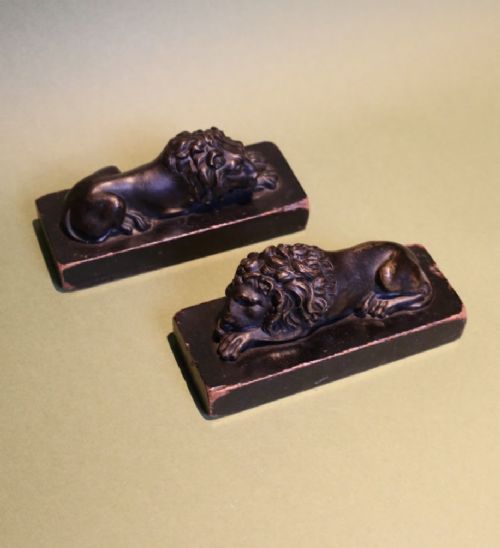


Neoclassical Bronze Lions
Neoclassical bronze lions are sculptural figures and decorative objects capturing classical antiquity, valued for their imposing presence in period interiors.
Neoclassical Bronze Lions
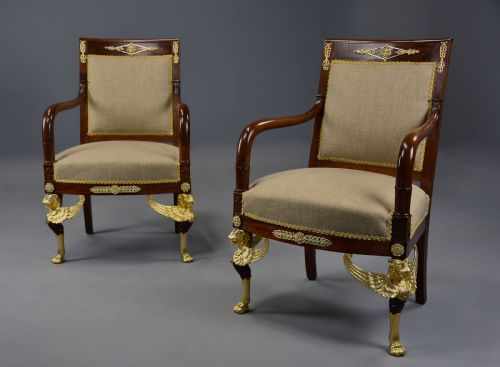
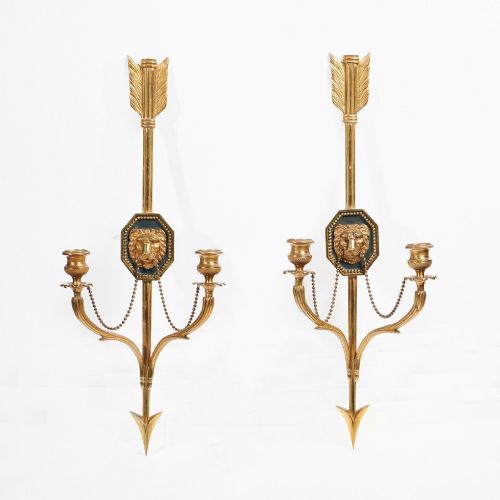
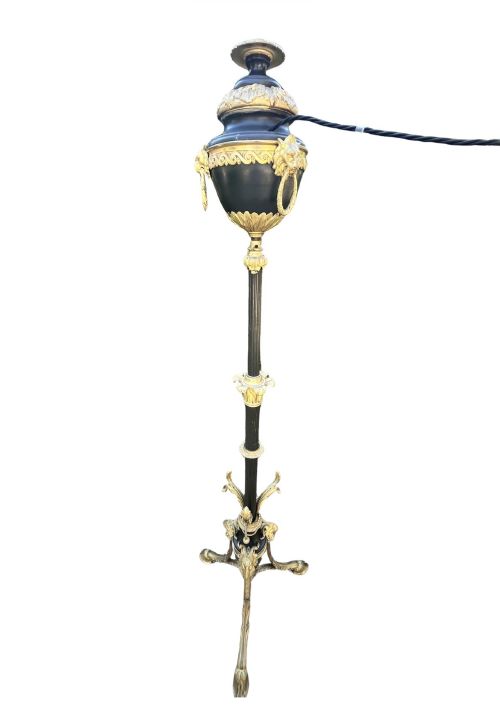
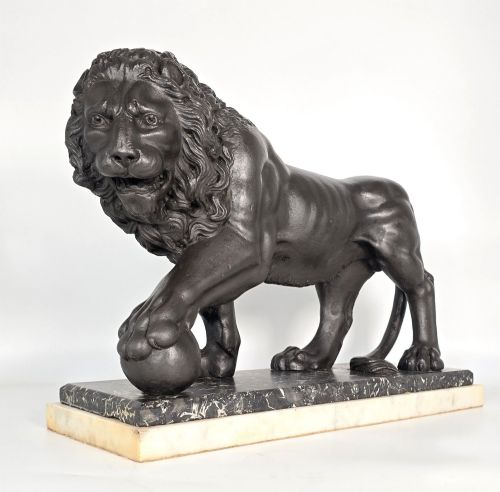
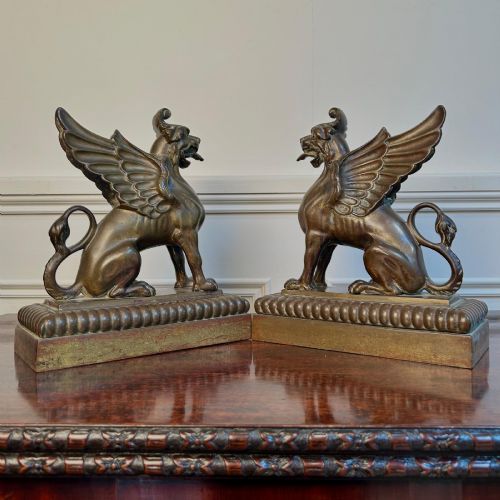
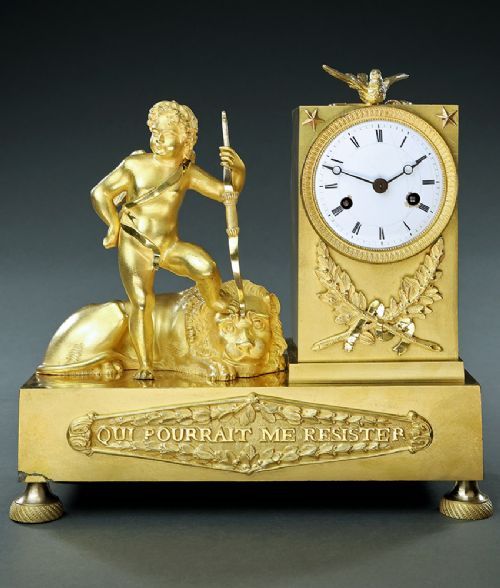
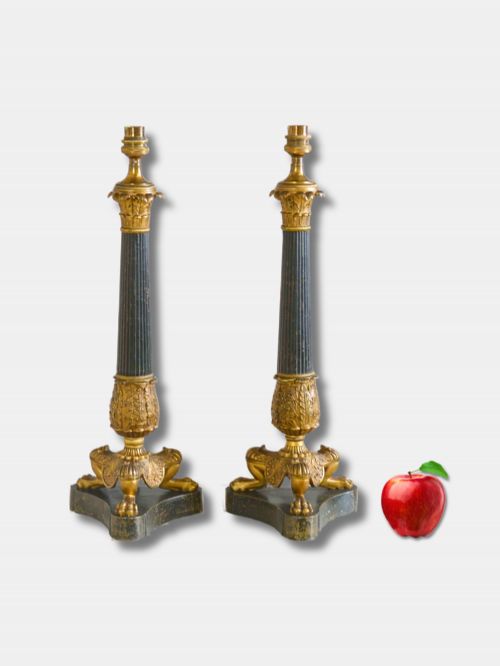
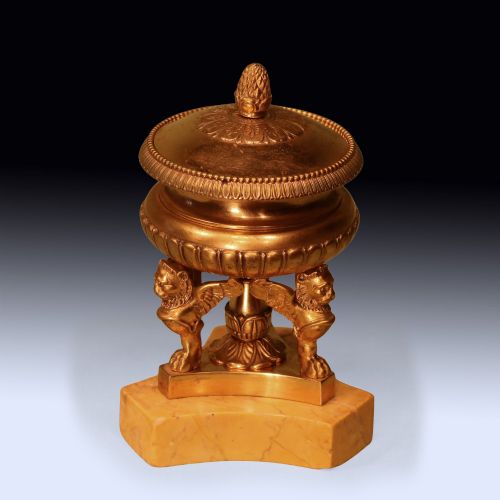
Neoclassical bronze lions cover sculptural figures, mantel clocks, inkwells, and lighting mounted with cast bronze or ormolu representations of these animals. Buyers encounter models inspired by famous classical monuments, including the Canova lions, the Medici lions, and the Capitoline lion, frequently acquired during the Grand Tour.
The objects span the nineteenth century, including Regency, Victorian, and Edwardian periods, alongside French Empire and Empire Revival styles. Most examples take the form of paired sculptures on marble plinths, functional desk accessories, or architectural mounts on clocks and lamps.
Originating largely from French and Italian workshops, these pieces bring classical symmetry and sculptural weight to domestic spaces. They reflect nineteenth-century taste for antiquities and classical mythology, utilising enduring metalwork and stone bases.
Materials and production methods
Items are cast in bronze, patinated bronze, or gilt bronze, often referred to as ormolu, combined with natural stones such as marble and alabaster for plinths and bases. Molten metal was poured into detailed moulds, employing traditional sand casting or lost-wax techniques before undergoing hand chasing and finishing.
Surface treatments range from dark chemical patination to bright fire gilding, highlighting anatomical details of the muscular figures. Metal components are secured to heavy stone pedestals using threaded pins or integrated fixings, creating stable architectural objects.
Listings feature nineteenth-century items spanning the Regency, Victorian, and Edwardian periods, utilising materials such as ormolu, patinated bronze, marble, and alabaster.
Distinguishing quality in cast metalwork
The integration of the metal figure with its base indicates the level of craftsmanship, particularly in the precision of fit between bronze paws and marble plinths. High-grade items utilise rich fire gilding or stable, even patination that ages gracefully across the nineteenth century.
The Neoclassical Bronze Lions Glossary
- Ormolu
- Gilded bronze produced by applying a mercury and gold amalgam to a bronze object before heating to drive off the mercury. This technique creates a durable, luminous golden finish characteristic of French Empire metalwork.
- Patinated Bronze
- Bronze treated with chemical solutions to produce a specific surface colour, most commonly dark brown or green. It protects the metal while enhancing visual depth on sculptural forms.
- Grand Tour
- A traditional trip of Europe undertaken by upper-class young men in the eighteenth and nineteenth centuries to collect art and antiquities. Souvenirs included small-scale bronze models of famous classical monuments.
- Canova Lions
- Sculptural representations of the lions designed by Antonio Canova for the tomb of Pope Clement XIII in Rome. These reclining figures became popular subjects for nineteenth-century Grand Tour bronze models.
- Capitoline Lion
- An antique Roman marble sculpture of a lion mauling a horse, housed in the Capitoline Museums in Rome. Miniature bronze replicas were frequently cast as decorative desk ornaments and fountain heads.
Neoclassical Bronze Lions: Frequently Asked Questions
How were these bronze lions used?
Historically, these items served both decorative and functional purposes in affluent nineteenth-century homes, appearing on library desks as inkwells, on mantelpieces as clock garnitures, or on pedestals as standalone sculptures. They demonstrated the owner's classical education and refined taste.
Today, they function as decorative objects of art that anchor room schemes, adding architectural gravity and historical texture to mantelpieces, sideboards, and side tables.
How do I live with neoclassical bronze lions?
Place these solid metal objects on sturdy surfaces such as wooden sideboards, marble console tables, or mantelpieces where their weight is supported safely. Keep them away from direct moisture to protect exposed bronze patination and delicate stone bases.
Dust them gently with a soft dry cloth without applying modern chemical polishes, which can damage historic gilding or alter the natural patina of the metal over time.
How can I tell the period of a bronze lion?
Examine the casting quality, the type of patination, and the material of the base to determine the era of production. Nineteenth-century examples often feature hand-chased surface details and heavy Sienna or white marble plinths.
Reference the specific classical models, such as the Canova or Medici designs, alongside accompanying hallmarks, screws, or clock mechanisms to narrow down the manufacturing decade between the Regency and Edwardian periods.