

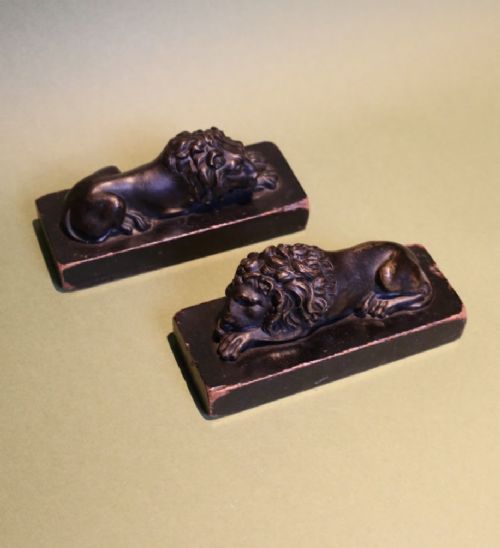


Victorian Lion Sculptures
Victorian lion sculptures are robust representations of strength and heraldry, rendered in metals, stone and timber to command any room or garden.
Victorian Lion Sculptures
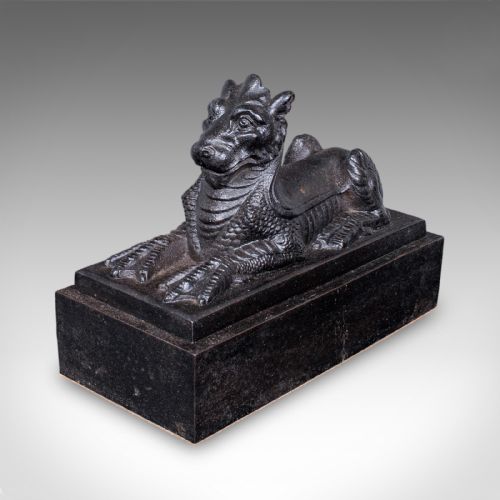
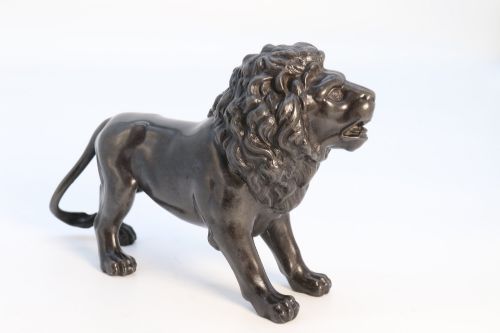
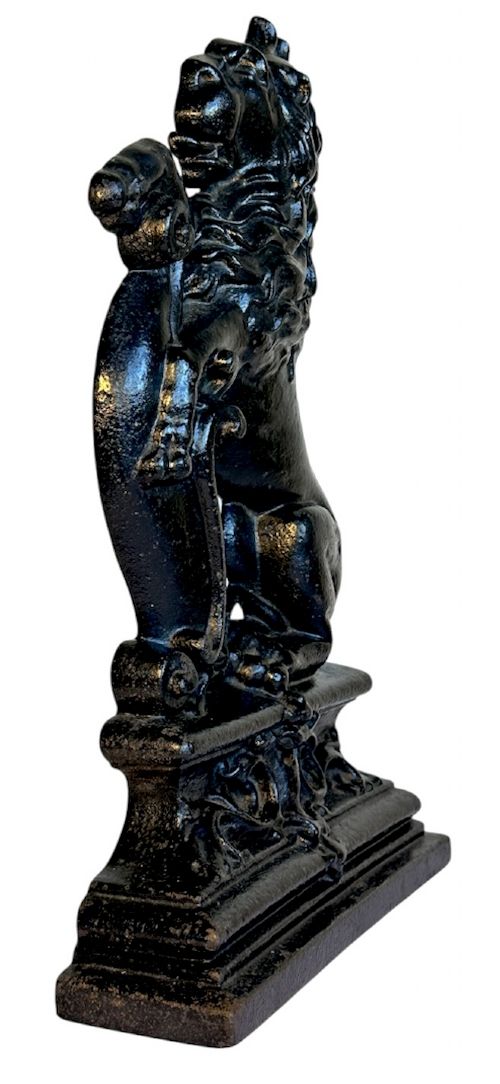
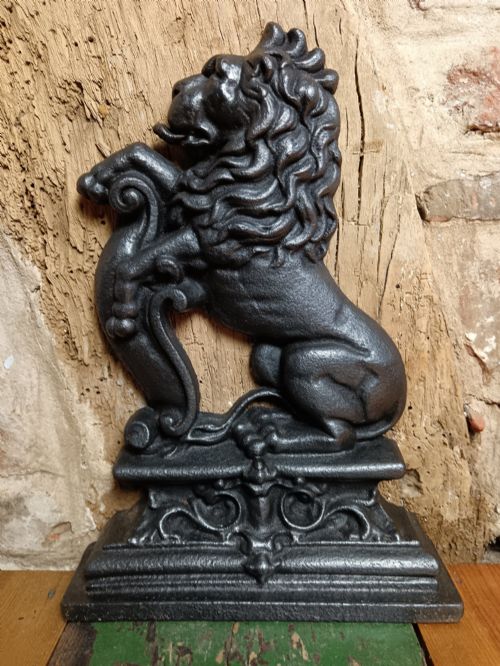
Victorian lion sculptures encompass a diverse array of forms, ranging from heavy cast iron doorstops and garden statues to intricate desk accessories and wall plaques. You will frequently encounter domestic utilitarian pieces, such as rampaging or resting doorstops cast in iron, alongside decorative bronzes and terracotta figures designed for both indoor display and garden settings.
The aesthetic reaches across several distinct revivals and regional interpretations, drawing upon Neoclassical, Gothic, and Black Forest traditions. Pieces often depict classical postures, such as recumbent lions or heraldic emblems, reflecting the nineteenth-century fascination with power, mythology, and architectural ornamentation.
Materials and methods
Carved wooden and ceramic objects rely on traditional subtractive and moulding skills, utilising solid walnut, terracotta, salt-glazed pottery, and marble. Black Forest woodcarvers shaped rich tiger oak and walnut into expressive wall masks and plaques, while ceramicists shaped terracotta and copper lustre glazes for large-scale garden and architectural ornaments.
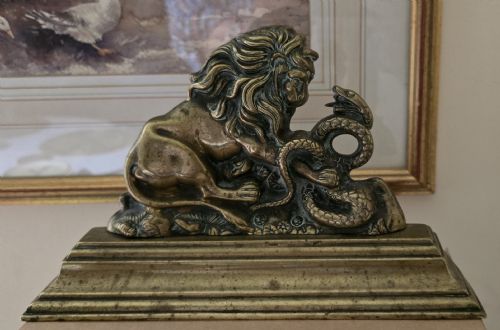
Some Victorian lions come equipped with serpent companions, guarding thresholds from more than just drafts.
Standards of craftsmanship
Quality rests upon the crispness of the casting or the depth of the carving, distinguishing sharply between mass-produced utility items and artist-led commissions. Finer bronzes and marbles exhibit anatomical precision and subtle surface finishing, whereas simpler doorstops rely on robust utility over fine detail.
The integrity of the material and the preservation of original finishes dictate the standing of a piece. Original paint, rich patination on bronzes, and untouched carved wooden surfaces elevate a sculpture above examples that have suffered heavy restoration or over-painting.
Antoine Felix Boure·Luigi Frullini
The Victorian Lion Sculptures Glossary
- Recumbent
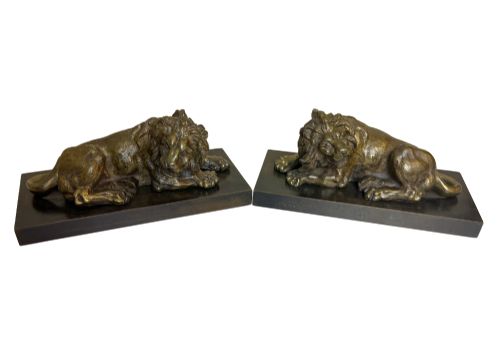
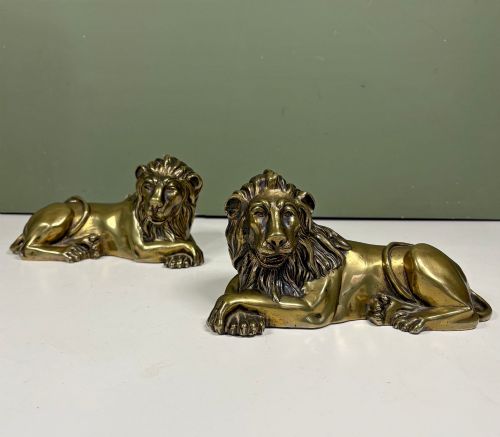
- Lying down or resting with the head raised. This posture is common in pairs designed to flank doorways or hearths.
- Rampant
- Standing on one hind leg with forelegs elevated in a striking pose. This heraldic stance is frequently seen on cast iron doorstops.
- Terracotta
- Baked red or buff clay used for durable figures and garden statuary. It often appears unglazed or with a painted finish.
- Heraldic
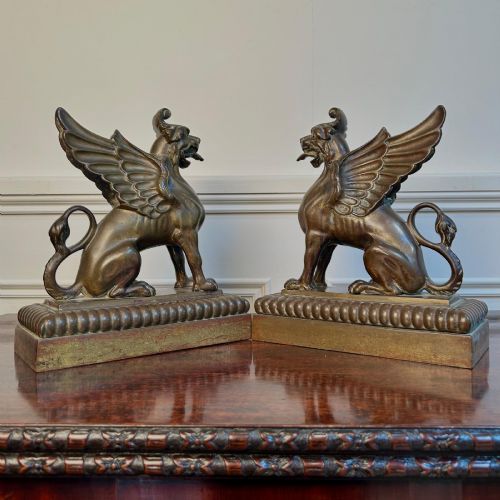
- Relating to coats of arms, crests, and lineage. These designs incorporate lions and griffins as symbols of authority and nobility.
- Black Forest
- A style of woodcarving originating in central Europe. It is characterised by highly realistic representations of animals carved in walnut and oak.
Victorian Lion Sculptures: Frequently Asked Questions
Where were these sculptures placed?
Many of these pieces served practical functions in nineteenth-century homes, acting as doorstops to hold heavy interior doors open or sitting on desks as inkstands. Larger terracotta and salt-glazed pottery versions were positioned outside to guard garden entrances and porticos.
Smaller bronze and carved wooden studies were intended for display within libraries, studies, and drawing rooms as decorative works of art.
How do I care for cast iron?
Cast iron requires protection from moisture to prevent rust formation, making a stable indoor climate ideal for doorstops and plaques. Dusting with a dry cloth is generally sufficient for maintenance.
Avoid applying harsh chemical cleaners that might strip the original painted or bronzed surfaces.
What is a door porter?
A door porter is a heavy, portable doorstop designed to be moved easily and wedged against large doors. They often feature an integrated handle or loop at the top for lifting.
Materials like brass and iron provided the necessary weight to hold heavy timber doors securely in place.
How do I distinguish periods?
Differentiating periods relies on identifying the characteristic design movements, such as Gothic Revival or Neoclassical, combined with material analysis. Nineteenth-century manufacturing methods left distinct casting seams and tooling marks that help verify the era.
Comparing the patina and wear patterns against documented examples from the same century also aids attribution.