






Heavy Bronze Bookends
Heavy bronze bookends bring weight and presence to a shelf, anchoring collections from the Victorian era through the Art Deco years with solid metal.
Heavy Bronze Bookends
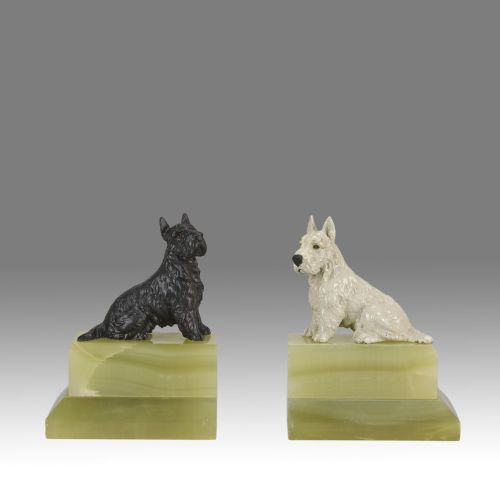
Heavy bronze bookends combine functional shelf support with sculptural artistry, featuring animal figures and classical motifs across the inventory. When searching for heavy bronze bookends, buyers encounter pairs shaped as terriers, owls, spaniels, bulldogs, squirrels, sea lions, elephants, and classical cupids.
The pieces appearing on this page span several decades from the late nineteenth century into the nineteen-thirties. Origins range from Austrian and Viennese workshops to French foundries, capturing styles from Edwardian naturalism to Neoclassical design and Art Deco abstraction.
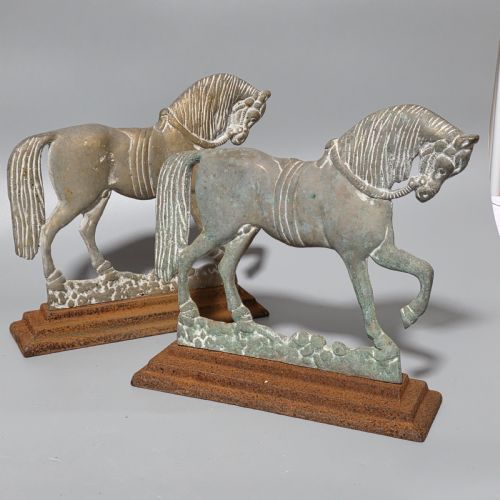
Formats also include related cast metal hardware such as doorstops alongside standard bookends. The primary focus remains substantial metal castings designed to keep volumes upright through sheer mass.
How they were made
Foundries utilised traditional metal casting techniques to produce these substantial desk and shelf accessories. Molten bronze and brass were poured into moulds, occasionally supplemented by spelter or cast iron for economic or structural reasons.
Many animal subjects received cold-painted finishes applied directly to the metal surface after casting. Artisans combined these metals with heavy stone bases such as marble and onyx to increase total weight and stability.
Foundries transformed stern guard dogs into domestic sentinels tasked with holding up cookery books and novels.
What varies in quality
The integration between the metal sculpture and the stone plinth marks another distinction in standard manufacture. Heavier, denser marble and onyx bases paired with patinated or cold-painted metal represent the upper tier of production.
Franz Gruber·K and O·C Omin
The Heavy Bronze Bookends Glossary
- Bronze
- An alloy consisting primarily of copper, traditionally combined with tin. It provides exceptional durability and takes patination well.
- Cold-Painted Bronze
- A technique where paint is applied to cold metal rather than fired in a kiln. This method allows for vivid polychrome animal depictions.
- Spelter
- A zinc alloy commonly utilised as a less expensive alternative to bronze. It offers similar casting capabilities but weighs less.
- Patination
- The surface coloration developed naturally over time or applied artificially by acids and heat. It enhances the depth of metal sculptures.
- Onyx
- A banded variety of chalcedony used extensively for heavy decorative bases. Its polished surface contrasts with the matte texture of cast metal.
Heavy Bronze Bookends: Frequently Asked Questions
How do I clean heavy bronze bookends?
Dust surfaces gently using a soft, dry brush to preserve any existing patination or cold-painted details. Avoid chemical polishes that strip historical surface character away from the metal.
Allow a natural protective layer to remain intact on the bronze. Water and harsh detergents will damage painted finishes and stone bases.
Why are some bookends mounted on marble?
Stone plinths add necessary mass and friction to prevent heavy volumes from sliding off shelves. Materials like marble and onyx also introduce contrasting colour and texture.
Combining metal sculpture with stone bases was a popular manufacturing method during the early twentieth century. It elevated simple shelf supports into decorative desk objects.
What is the difference between bronze and spelter?
Bronze is a robust copper alloy that patinates richly and feels noticeably heavier in the hand. Spelter is a softer zinc alloy often used for decorative castings.
Items cast in spelter typically require a heavier stone base to compensate for the lighter metal weight. Inspecting the underside often reveals the lighter grey colour of spelter beneath worn areas.
How can I date an art deco bookend?
Art Deco pieces from the nineteen-thirties typically feature stylised geometric lines and streamlined animal forms. They reflect the modern design movements of the interwar period.
Earlier Victorian and Edwardian examples lean towards realistic animal anatomy and ornate classical detailing. Comparing stylistic markers helps place objects within their decade of manufacture.