






Antique Marble Bookends
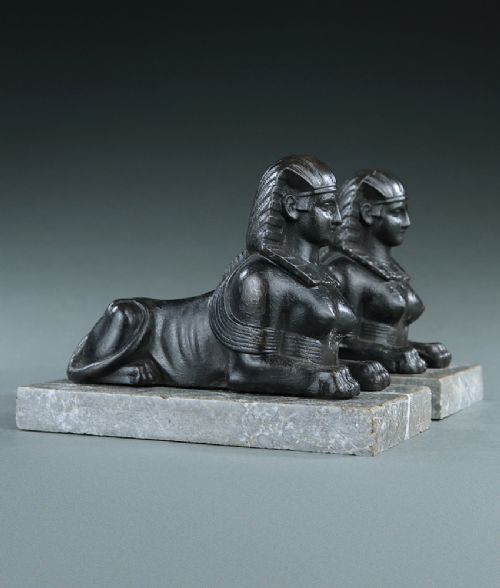
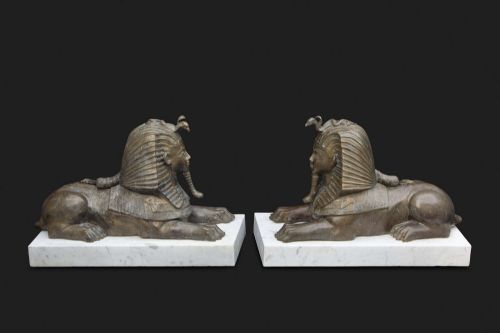
These antique marble bookends bring heavy stone and cast metal figures to the shelf, turning utilitarian shelf-keepers into sculptural displays.

Antique Marble Bookends
Antique marble bookends appear in forms ranging from heavy geometric blocks to figurative compositions featuring animals and classical motifs. These desk accessories serve primarily to anchor rows of volumes while functioning as decorative works of art in their own right.
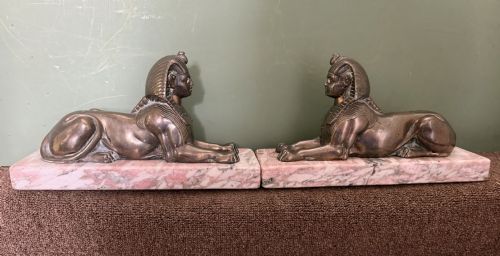
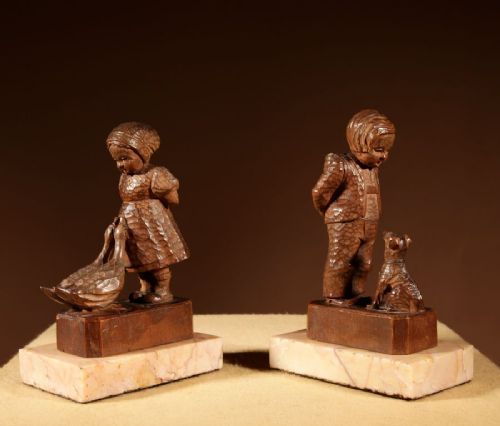
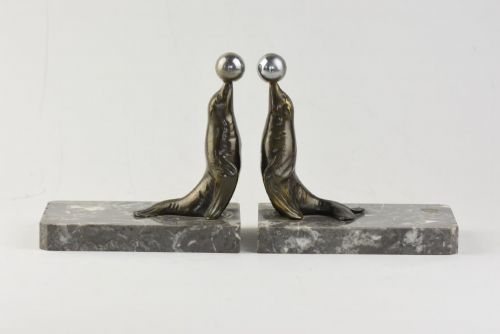
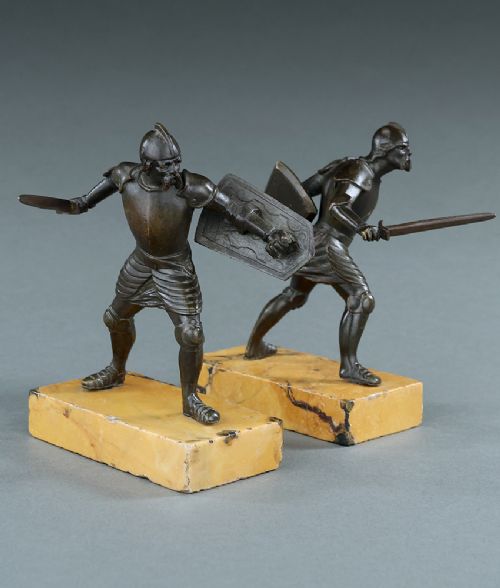
The versions most frequently met on this page combine dense stone plinths with mounted metal figures, particularly animals and classical subjects. Art Deco iterations sit alongside nineteenth century Grand Tour pieces, offering varied interpretations of figurative and architectural design.
Makers utilised contrasting materials to create visual weight, pairing white and green stones with patinated metals, bronze, and spelter. These pieces reflect distinct periods from Victorian revivalism through to the clean lines of the 1930s.
Materials and construction
Casting metal components required molten bronze, spelter, or chrome poured into intricate moulds to form figures of animals, birds, and classical subjects. Artisans then applied patination, gilding, or chrome plating to finish the surface details before mounting the figures onto prepared stone bases.
Stonemasons shaped marble, serpentine, alabaster, and soapstone blocks using cutting and polishing tools to achieve smooth or faceted surfaces. Heavier stones provided the necessary ballast to hold heavy volumes in place on the shelf.
Antique Marble Bookends Retail Price Guide 2026
Typical asking prices for marble bookends among the pieces listed under this phrase on Sellingantiques today, from the lower quarter to the upper quarter. They describe what is for sale here now, not the wider market.
Materials recorded on this page include marble, bronze, spelter, serpentine, chrome, and alabaster.
Craftsmanship and design
The quality of the stone base differentiates standard production from finer pieces, with select items utilising dense Italian serpentine, Carrara marble, or carved alabaster with rich natural veining. Poorer examples rely on plain, unvaried stone or lightweight composites that lack the substantial heft required for functional book support.
The Antique Marble Bookends Glossary
- Spelter
- A zinc alloy commonly used as a less expensive alternative to bronze for casting sculptural figures. It accepts patination well to simulate heavier metals.
- Grand Tour
- A nineteenth century cultural travel practice that inspired souvenir sculptures and architectural models purchased in Italy. These often depicted classical lions, hounds, and monuments.
- Serpentine
- A group of green silicate minerals often used as a decorative stone for bases and carvings. It presents a mottled appearance reminiscent of serpent skin.
- Patinated metal
- Metal treated with chemicals, heat, or paint to produce a coloured surface finish. This technique highlights relief details on figurative castings.
- Shi Shi
- A traditional guardian lion figure derived from Chinese art and mythology. These are frequently carved from soapstone or jade marble.
Antique Marble Bookends: Frequently Asked Questions
How heavy are they?
Most antique marble bookends rely on dense stone plinths to provide substantial weight for holding heavy books upright.
The inclusion of solid bronze or cast metal figures adds further heft, ensuring the pieces remain stable under pressure.
Are they all pairs?
The selection includes numerous matched pairs designed to support books from both ends of a shelf.
Some listings feature individual sculptural elements or desk accessories that can be displayed independently.
What periods do they cover?
The inventory spans the nineteenth century through to the Art Deco period of the 1930s.
Victorian and Edwardian pieces sit alongside later modernist designs influenced by Egyptian Revival and classical themes.
How do I clean the stone?
Delicate stone surfaces require gentle dusting with a dry cloth to prevent moisture damage.
Harsh chemical cleaners should be avoided to protect the polished finish of the marble and the patination on the metal figures.