
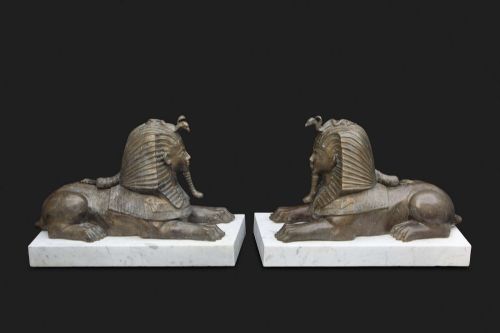





French Bookends
These French antique bookends anchor a shelf with sculptural weight and period design, combining bronze, marble, and patinated metal into functional art.
French Bookends
French antique bookends range from monumental bronze sphinxes on Carrara marble plinths to playful Art Deco animal figures and classical ladies. When buyers search for french antique bookends, they encounter sturdy shelf supports cast in heavy metals, carved stone, and painted iron.
The selections span the nineteenth century through the Art Deco era of the 1930s. Animals, mythological beasts, and human figures dominate the forms, turning ordinary rows of volumes into curated displays.
How they were made
Foundry workers shaped these heavy objects using bronze, spelter, and cast iron, often mounting figurative sculptures onto solid marble bases. Patination and paint added surface depth to the metal components.
Makers utilised casting techniques to capture fine details in animal fur, classical drapery, and architectural plinths. Chromed finishes and polished stone also appear among the later twentieth-century and Art Deco examples.
The listings span the nineteenth century, 1880, 1900, 1920, and 1930, utilising marble, bronze, spelter, and cast iron.
What varies in quality
The quality of the mounting matters significantly, particularly how securely the metal sculpture fixes to its marble plinth. Heavier stone bases and richer patination elevate the visual presence of the piece on the shelf.
The French Bookends Glossary
- Spelter
- A zinc-based alloy commonly used as a cost-effective alternative to bronze in decorative French figures. It takes patination well but remains softer than true bronze.
- Carrara marble
- A type of white or blue-grey marble quarried in Italy, frequently utilised for the heavy plinths supporting French sculptures. It provides a stable and weighty base.
- Patinated metal
- Metal treated with chemicals or heat to produce a coloured surface finish. This technique protects the underlying material while enhancing aesthetic depth.
- Art Deco
- A design style popular in the 1920s and 1930s characterised by sleek lines, geometric forms, and stylised animal or human motifs. It defines many of the twentieth-century pieces here.
French Bookends: Frequently Asked Questions
How heavy are these bookends?
These pieces use dense materials such as marble, bronze, and cast iron to provide the necessary weight for holding heavy volumes upright. The combination of metal sculptures and stone plinths ensures substantial physical presence.
Smaller animal figures weigh less while still offering enough mass to secure standard books. Monumental pairs require particularly sturdy shelving to support their combined stone and metal bulk.
Can I mix different periods on one shelf?
Mixing pieces from the nineteenth century with 1930s Art Deco examples creates an eclectic display if the overall scale remains balanced. Matching the visual weight of the objects prevents smaller pieces from disappearing next to monumental ones.
Material continuity helps unify diverse styles across a single bookcase. Placing bronze figures near marble accents ties different decades together harmoniously.
How do I clean marble and bronze?
Dusting surfaces regularly with a soft cloth preserves the patination on bronze and spelter without disturbing the finish. Avoid harsh chemical cleaners that can strip historical treatments from the metal.
Marble plinths require mild soap and water applied sparingly with a damp cloth. Dry the stone thoroughly immediately afterward to prevent water marking.
Were all these originally made as bookends?
Some items started life as standalone sculptures or decorative book rests before being adapted or paired for use on shelves. The versatility of nineteenth-century bronzes allowed workshops to repurpose figures into functional shelf supports.
Art Deco examples were typically designed specifically as matching pairs for libraries and studies. This intentional pairing ensures balanced proportions at either end of a row of books.