


1930s Spelter Figures
These 1930s spelter figures bring dynamic Art Deco movement and striking metallic presence to any room.
1930s Spelter Figures
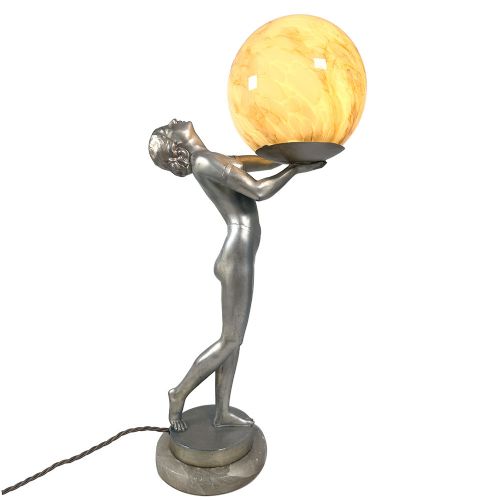
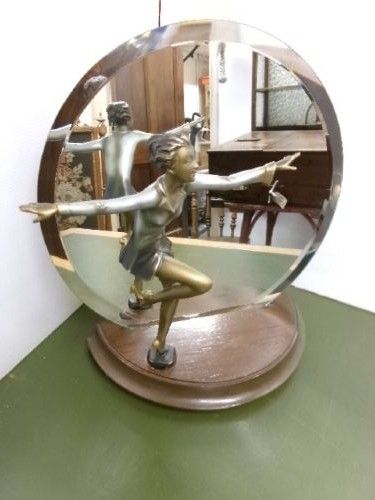
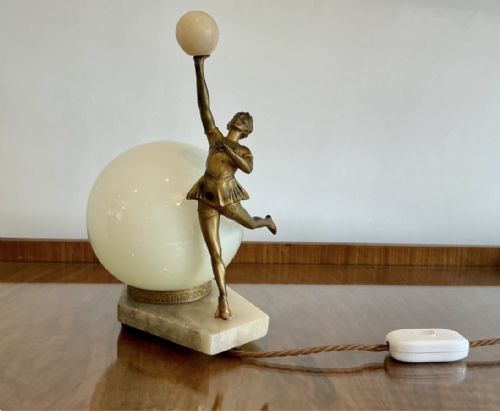
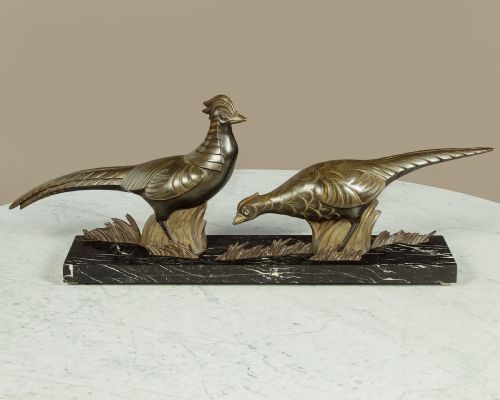
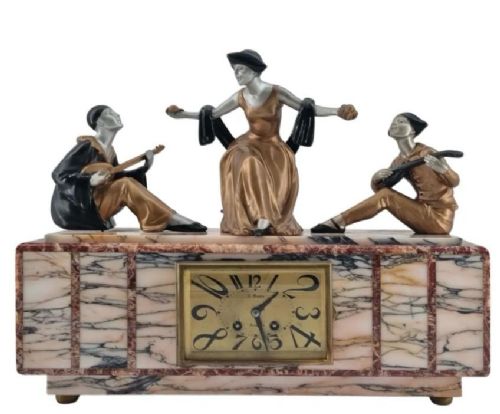
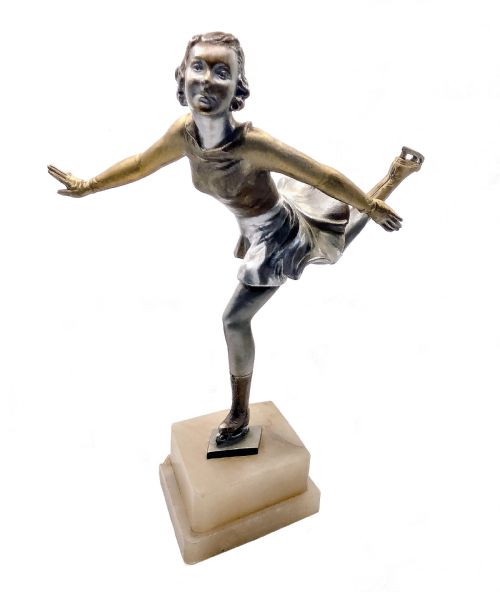
When you search for 1930s spelter figures, you encounter decorative sculptures, bookends, table lamps, and figural clocks from the Art Deco period. These pieces frequently depict dancers, athletes, animals, and Pierrot characters captured in motion.
The version you are most likely to meet on this page is a French Art Deco figure mounted on an onyx, marble, or alabaster base. Many of these sculptures combine the metal body with integrated lighting, glass elements, or cold painted surfaces.
How they were made
These figures are cast from spelter, an inexpensive white metal alloy primarily composed of zinc, which was utilised as a workable alternative to bronze. Artisans frequently applied patinated finishes, cold paint, or metallic coatings to simulate the appearance of richer materials.
Many of these sculptures are mounted directly onto heavy stone bases made of marble, onyx, or alabaster to provide stability. Certain functional pieces incorporate brass, bronze elements, and glass components to form lamps, clocks, and table lighters.
Listings combine spelter with onyx, marble, and alabaster across decorative lamps, bookends, and sculptures.
What varies in quality
Quality in these pieces rests upon the crispness of the casting detail and the artistry of the patination or cold painted finish. Superior examples display fine facial expressions, intricate drapery folds, and dynamic postures that reflect skilled sculptural design.
The selection of the base material also distinguishes the tier of a piece, with finely polished marble, onyx, or alabaster providing a more substantial presentation than simpler mountings. Signed works attributed to known sculptors command greater attention for their artistic execution.
Josef Lorenzl·P Sega·Geo Maxim·H Bal·Chiparus
The 1930s Spelter Figures Glossary
- Spelter
- A zinc-based alloy commonly utilised for decorative castings during the early twentieth century. It serves as the primary metal medium for these Art Deco sculptures.
- Patinated metal
- Metal treated with chemical solutions to produce a specific surface colour or aged finish. This technique enhances the visual depth of the figural costume and form.
- Cold paint
- Paint applied to a metal object after casting without subsequent high-temperature firing. It provides vibrant colour to figures but remains susceptible to chipping over time.
- Garniture
- A set of decorative ornamental objects designed to be displayed together, typically comprising a mantel clock flanked by matching side pieces. They often feature spelter figures mounted on stone bases.
- Pin dish
- A small shallow tray designed for holding pins or small trinkets, frequently incorporating a small spelter figure as a decorative centrepiece.
1930s Spelter Figures: Frequently Asked Questions
What is spelter metal?
Spelter is a zinc alloy that sculptors utilised as an economical alternative to bronze during the Art Deco era. It allows for sharp casting details while remaining lighter than solid bronze.
Because the metal is relatively soft, objects cast in spelter were typically mounted on heavy stone bases to ensure stability and balance.
How do I clean these figures?
Dust these sculptures gently with a dry, soft cloth to protect the delicate patinated surface or cold painted details. Avoid using liquid cleaners, abrasives, or polishes that can strip away the original finish.
Take particular care around stone bases, ensuring moisture does not seep into fissures in the marble or onyx.
Are these figures French?
Many of the pieces recorded here originate from France, which was a major centre for Art Deco metalwork and sculpture production during the period. French studios produced a vast range of figural lamps, bookends, and decorative groups.
Artisans in these workshops often paired metal castings with imported marble and onyx bases.
What are figural lamps?
Figural lamps integrate a sculpted human or animal form directly into the lighting design, often holding a globe or glass shade. They served both as functional interior illumination and sculptural art pieces.
These lamps frequently combine spelter figures with stone bases and glass elements typical of the Art Deco style.