



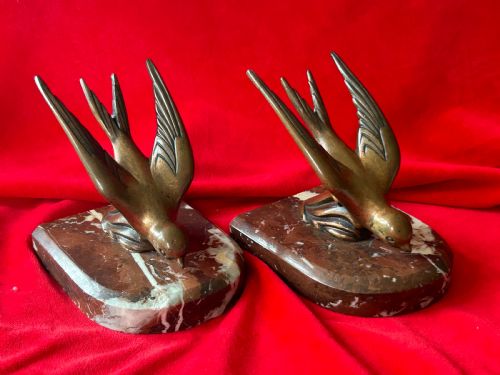

Art Deco Bookends
These art deco bookends bring sculptural form to heavy volumes, merging 1930s design with the practical weight needed on a shelf.
Art Deco Bookends
Art deco bookends are functional desktop and shelf accessories designed to hold rows of books upright while displaying the distinctive geometric or figurative motifs of the interwar period. When you search for this phrase, you encounter heavy functional sculptures produced across the early twentieth century, most frequently dating from the 1920s and 1930s.
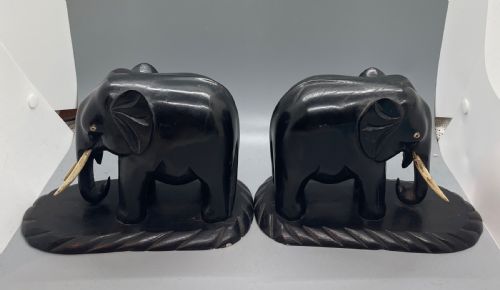
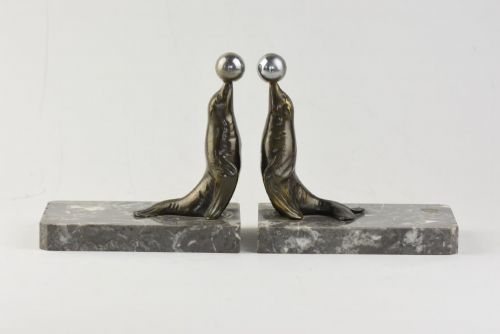
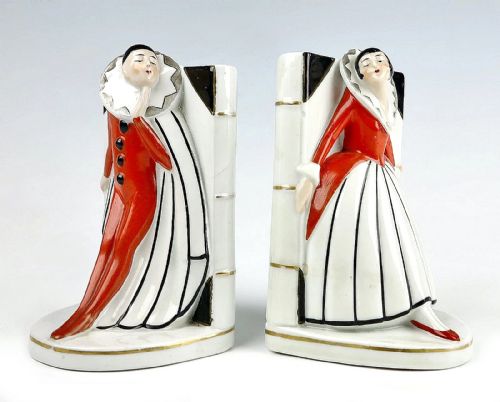
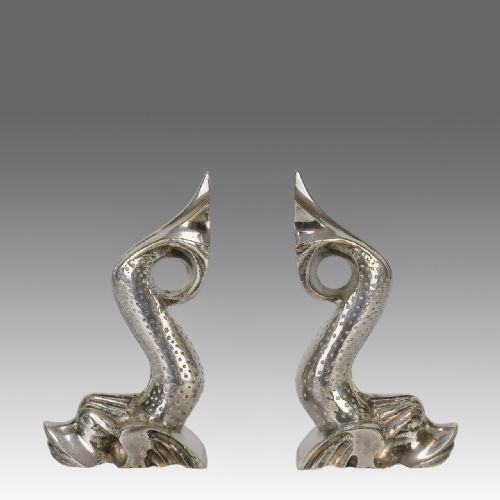
The most common examples on this page are matched pairs depicting animals, human figures, or architectural forms mounted on solid bases. These pieces balance decorative ambition with dense materials like marble, bronze, and hardwood to achieve the necessary stability.
How they were made
Makers utilised a range of casting and carving methods, frequently combining cast metals such as bronze, brass, spelter, and chrome with heavy stone bases made of marble, onyx, or alabaster. Spelter often received a silvered or bronzed finish to imitate more costly metals.
Woodworking also played a significant role, with hardwoods carved or assembled into geometric shapes or animal silhouettes. Cold painting and patination provided surface colour and detail to figurative subjects ranging from dogs to human dancers.
Art Deco Bookends Retail Price Guide 2026
Typical asking prices for art deco bookends among the pieces listed under this phrase on Sellingantiques today, from the lower quarter to the upper quarter. They describe what is for sale here now, not the wider market.
Listings feature items spanning the nineteenth century through to the 1930s, constructed from marble, bronze, spelter, hardwood, chrome, brass, and alabaster.
What varies in quality
The choice of base material also dictates the character of a piece; thick veined marble or heavy onyx provides both superior weight and a more finished aesthetic compared to lighter woods or secondary metals. The articulation of the design, whether representing a sleek greyhound or an athletic figure, separates standard ornamental objects from accomplished sculptural work.
F Abella & Sons·Franz Gruber·C Omin·V Ramirez·Karl Hagenauer·Compton Potters Art Guild·Herzig·Max Le Verrier·Bagley & Co·Thornton Smith·Jamar·Dan Karner·Charles·H Moreau·H Wandaele·Frankart Inc·George Studdy
The Art Deco Bookends Glossary
- Spelter
- A zinc alloy commonly utilised as a less expensive alternative to bronze for sculptural figures during the interwar period. It often received a bronze or silvered finish.
- Cold painted
- A method where paint is applied to metal objects without being fired in a kiln. This technique is frequently found on bronze and spelter animal figures.
- Alabaster
- A fine-grained, translucent stone used for bases and carved forms. It provides a soft, luminous appearance that differentiates it from opaque marble.
- Book trough
- A desk accessory integrating bookends with a small wooden or metal shelf for holding a selection of volumes. It serves the same organisational purpose as a standard pair.
- Patina
- The surface coloration and sheen acquired by metal or wood through age and handling. A well-preserved patina indicates original finishing rather than modern restoration.
Art Deco Bookends: Frequently Asked Questions
How heavy are these bookends?
Most pairs incorporate dense materials like marble, bronze, or hardwood to ensure they can anchor a row of heavy books without sliding. The weight varies depending on the scale and the combination of stone bases with metal figures.
Smaller pieces made entirely of lighter metals or wood rely on a wide footprint rather than sheer mass to keep volumes upright. Checking the base material gives a clear indication of how securely a pair will hold large books.
Where were most of these made?
A significant proportion of these pieces originated in France and Austria, which served as major centres for decorative metalwork and ceramics during the interwar decades. British and German workshops also produced substantial numbers of figurative and utilitarian shelf supports.
Export markets distributed these items widely, meaning regional styles often crossed borders. Maker marks or country stamps on the base or casting generally clarify the place of manufacture.
Can I use them with modern books?
These pieces function effectively with modern hardbacks and paperbacks, provided the row is substantial enough to engage the height of the sculpture. Their solid construction makes them well suited for everyday shelf organisation.
Placing them on felt or rubber pads helps protect polished wooden shelves from the heavy marble or metal bases. They handle standard library loads while adding a distinct period aesthetic to contemporary interiors.
What subjects are most common?
Animals represent the most frequent theme, with dogs such as terriers and greyhounds, alongside elephants, big cats, and birds appearing regularly. Human figures, including classical archers, dancers, and sports participants, also form a major part of the design repertoire.
Geometric forms and architectural silhouettes appear less frequently than figurative subjects. The choice of subject often reflects the popular culture and design interests of the 1920s and 1930s.