




Art Deco Desk Decor
Art deco desk decor brings the sharp geometry and sleek materials of the nineteen-twenties and nineteen-thirties directly to your workspace.
Art Deco Desk Decor
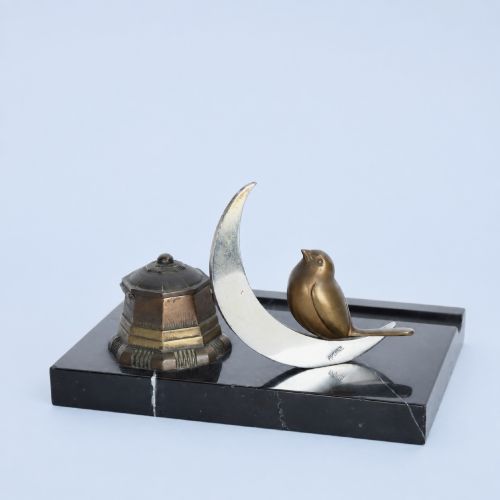
Art deco desk decor encompasses functional accessories and sculptural ornaments designed to grace a study or office during the interwar years. When you search for art deco desk decor, you encounter items intended to organise stationery or simply enhance the desktop with modern style.
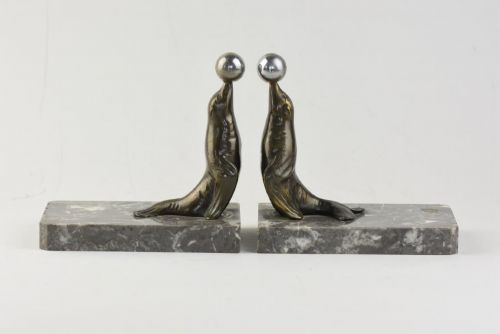
The most common forms on this page include bookends shaped as animals or figures, perpetual calendars, and inkwells. These pieces translate the rigorous lines of the period into everyday objects for the writing table.
Materials span from polished metals and marble to early plastics, reflecting the industrial optimism of the era. The surviving examples demonstrate how workplaces of the period embraced both maritime themes and stylised fauna.
How they were made
Manufacturers of the period utilised contrasting materials, often pairing heavy marble bases with patinated bronze or cast metal figures. This combination provided stability for desk accessories while creating the striking visual juxtaposition characteristic of the style.
Chrome and sterling silver appeared alongside early synthetic materials like bakelite, showing a willingness to adopt modern industrial substances. Metal components were frequently patinated or cast with sharp detailing to define figures and geometric motifs.
What varies in quality
The selection of base materials also distinguishes better examples, with dense black marble and substantial bronze or silver weights outperforming lighter alloys and hollow constructions. Integration between the decorative element and the utilitarian function remains seamless in finer workshops.
The Art Deco Desk Decor Glossary
- Perpetual calendar
- A desk accessory with adjustable cards, dials, or rollers designed to display the date year after year. These often incorporated silver mounts or streamlined metal housings.
- Inkwell
- A small container for liquid ink placed on a desk near a pen tray. Examples from this period frequently featured hinged covers and heavy glass or metal reservoirs.
- Bakelite
- An early form of synthetic plastic prized for its durability and rich colour range. It was frequently utilised for knobs, bases, and decorative panels on office items.
- Patinated metal
- Metal treated with chemicals or heat to produce a specific surface colour and finish. This technique heightened the textural contrast on sculptural desk ornaments.
Art Deco Desk Decor: Frequently Asked Questions
What items count as art deco desk decor?
These pieces include utilitarian office items and small ornaments made to sit upon a writing table. Common forms involve bookends, calendars, inkwells, and small figural sculptures.
Most surviving examples date from the nineteen-twenties and nineteen-thirties. They utilise materials like marble, bronze, and chrome to bring industrial styling into the study.
How were perpetual calendars used?
Perpetual calendars allowed workers to change the displayed day and month manually using small knobs, cards, or sliding indicators. They sat permanently on the desk without needing replacement each January.
Many incorporated precious metals or tortoiseshell mounts alongside metal frameworks. Their design turned a simple office necessity into a focal point of the desktop.
How do I identify nineteen-thirties pieces?
Nineteen-thirties items often display streamline modern influences, featuring smooth curves and simplified geometric forms inspired by industrial transit and architecture. Figures from this decade lean towards stylised depictions of animals and human subjects.
Materials during this period heavily featured chrome plating and cast metals alongside traditional marble. The overall aesthetic prioritised clean silhouettes over fussy ornamentation.
Where should I place these items?
These accessories suit working desks, bookshelves, and mantelpieces where their compact scale can be appreciated. Bookends work effectively to anchor rows of volumes while serving as sculptural accents.
Pairing inkwells or calendars with other period metalwork creates a cohesive display. Their robust construction ensures they handle everyday placement on modern surfaces.