
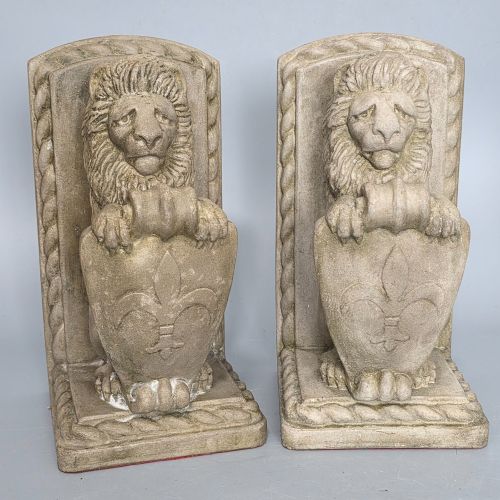


Carved Stone Bookends
Carved stone bookends steady your shelves with substance, bringing mineral weight and sculptural presence to a room.
Carved Stone Bookends
When you search for carved stone bookends, you encounter substantial desk accessories and sculptural pairs designed to hold volumes upright. These items span Victorian, 1930, 19th Century, 1940, 1850, and 1860 periods.
You are most likely to meet pairs fashioned from serpentine, marble, soapstone, cast stone, and alabaster. Their forms range from Grand Tour classical lions and hounds to Art Deco squirrels, Chinese Dogs of Fo, and cherub figures.
The objects cross several aesthetic traditions, including Neoclassical Revival, Victorian Chinoiserie, Chinese Export, and Chinese Qing Style. They function simultaneously as practical book rests and decorative shelf sculptures.
How they were made
Makers shaped these pieces from dense natural minerals like serpentine, marble, soapstone, and alabaster using traditional carving and polishing techniques. Artisans also utilised cast stone combined with spelter elements to achieve sculptural relief and architectural detail.
The working of hard stone required skilled hand labour, particularly for intricate subjects such as the Dogs of Alcibiades, lions, putti, and Shi Shi seals. Natural veining and tonal variations within the stone dictate the visual character of each finished pair.
Listings feature materials spanning natural serpentine, jade marble, soapstone, alabaster, and cast stone across the Victorian and Art Deco eras.
What varies in quality
Quality rests upon the precision of the carving and the fidelity of the sculptural form, whether depicting an Art Deco squirrel or a Neoclassical lion. Finer examples display crisp anatomical detail and balanced proportions that mark superior workshop output.
The choice of material elevates a piece, with high-grade serpentine, jade marble, and translucent alabaster offering richer visual depth than standard cast stone. The integrity of the stone and the matching of the pair determine the overall standard.
The Carved Stone Bookends Glossary
- Serpentine
- A group of green silicate minerals often polished for decorative objects. It yields a smooth, mottled surface resembling snake skin.
- Grand Tour
- A traditional cultural excursion of Europe undertaken by wealthy young men in the 18th and 19th centuries. Souvenirs included miniature marble sculptures of classical antiquities.
- Soapstone
- A soft, talc-based metamorphic rock easily carved into detailed figures. It possesses a soapy feel and was frequently used for Chinese export carvings.
- Dog of Fo
- A traditional Chinese architectural guardian lion. These mythical beasts appear frequently in pairs on export and Victorian decorative items.
- Alabaster
- A fine-grained, translucent stone prized for its soft luminosity. It takes a high polish and suits geometric Art Deco forms.
Carved Stone Bookends: Frequently Asked Questions
What are carved stone bookends?
Carved stone bookends are heavy sculptural pairs fashioned from materials like marble, serpentine, and soapstone to support rows of books.
They serve as both functional desk accessories and decorative shelf ornaments reflecting various historical periods and styles.
How do I date antique bookends?
Dating relies on identifying the stylistic markers of periods such as Victorian, Art Deco, or the 19th-century Grand Tour tradition.
Material choices, manufacturing techniques, and subject matter provide further clues to the age of the stone carving.
Where were these stone pieces made?
Origin points include European workshops producing Grand Tour classical replicas and Chinese artisans carving soapstone export pieces.
British and continental makers also utilised local stone, cast materials, and imported minerals to create diverse sculptural forms.
How do I clean stone bookends?
Maintenance requires gentle dusting with a dry or slightly damp soft cloth to protect the polished mineral surface.
Harsh chemical cleaners should be avoided because they can dull natural marble, alabaster, and soapstone.