




Vintage Marble Bookends
These vintage marble bookends are heavy functional sculptures that anchor a shelf with distinct period character.
Vintage Marble Bookends
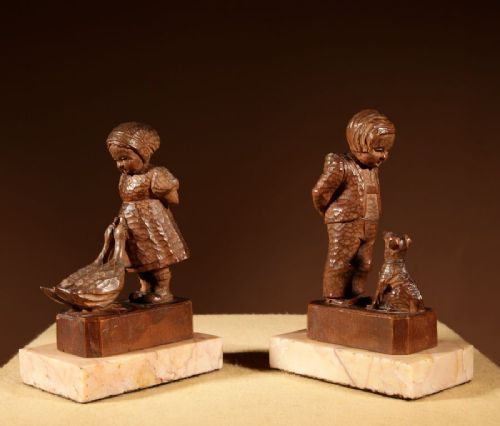
When you search for vintage marble bookends, you encounter decorative supports designed to hold upright rows of volumes on a desk or shelf. These pieces range from sleek Art Deco animal figures to nineteenth-century Grand Tour sculptures and Black Forest carvings.
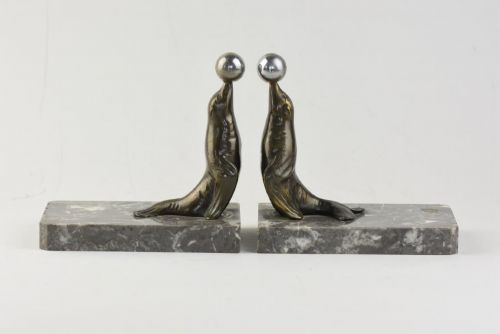
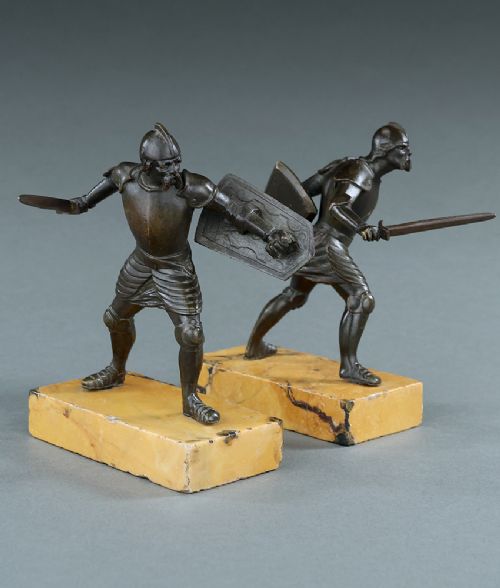
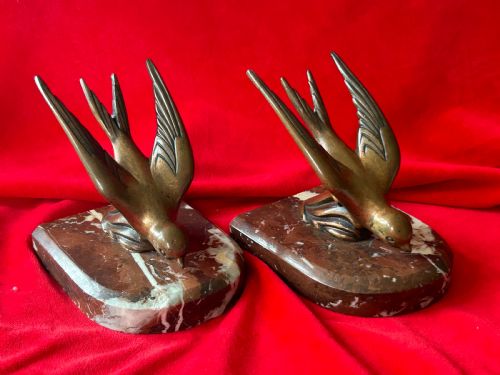
The most common examples on this page date from the Art Deco period, typically featuring stylised animals such as elephants, squirrels, spaniels, and sea lions mounted on contrasting stone bases. Earlier Victorian and nineteenth-century versions lean towards classical motifs, including Renaissance knights and hound figures.
Beyond standard bookends, the selection extends to related desk accessories and sculptural pairs carved from stone, sometimes paired with metal mounts. Each pair balances utilitarian weight with the decorative ambitions of its specific era.
How they were made
Makers utilised natural stones, principally marble and alabaster, alongside variants like Sienna marble and jade marble, shaping them into solid blocks that provide the necessary gravity to support heavy books. These stone bases and sculptural elements are frequently combined with cast metals, including spelter, bronze, and chrome.
Figurative components display distinct manufacturing techniques, from the hand-carved wooden details of Black Forest pieces to the cast spelter and bronze figures typical of French Art Deco production. Artisans mounted these metal or carved figures securely onto heavy stone plinths to create balanced pairs.
Listings feature periods spanning from the Victorian era and the nineteenth century through to the 1920s and 1930s Art Deco movement.
What varies in quality
Material selection also defines the tier of a piece, with distinct veining in the marble, the use of specialised stones like Sienna or alabaster, and patinated bronze rather than lighter spelter marking out finer examples. The structural integrity of the joinery between the heavy stone and the mounted figure completes the assessment.
The Vintage Marble Bookends Glossary
- Spelter
- A zinc-lead alloy frequently cast into decorative figures and patinated to imitate bronze during the late nineteenth and early twentieth centuries. It provides a lighter and more affordable alternative to solid bronze.
- Alabaster
- A fine-grained, translucent stone used extensively for carving decorative objects and architectural details. It offers a softer texture and lighter appearance than standard marble.
- Grand Tour
- A nineteenth-century cultural tradition where affluent travellers collected classical antiquities and miniature sculptures. Pieces associated with this movement often reproduce famous classical statues or motifs in marble and bronze.
- Sienna marble
- A decorative yellow and brown limestone quarried in Italy, highly prized for its rich natural veining. It appears frequently in ornamental bases and decorative desk objects.
- Dog of Fo
- A traditional Chinese guardian lion motif often rendered in stone or jade. These mythical creatures frequently appear in pairs guarding entrances or supporting heavy volumes.
Vintage Marble Bookends: Frequently Asked Questions
How do I identify Art Deco bookends?
Art Deco pieces from the interwar period typically feature streamlined animal subjects like elephants, squirrels, and spaniels mounted on geometric stone bases. Chrome, spelter, and polished marble dominate the materials from this era.
These designs emphasise symmetry, clean lines, and stylised forms rather than the ornate classical detailing seen in nineteenth-century works.
What is the difference between spelter and bronze?
Spelter is a softer zinc alloy that was widely cast for decorative sculptures and bookends during the early twentieth century. It is lighter than bronze and often shows a painted or patinated surface finish.
Bronze is a heavier copper alloy that takes a finer detail in casting and maintains durability over centuries. Bronze figures generally indicate a higher tier of production than spelter equivalents.
Where were most of these bookends made?
The listings show production from various European workshops, with a strong representation of French manufacturers active during the Art Deco period. Other geographic origins include German Black Forest carvers and Chinese workshops producing jade marble and soapstone items.
Grand Tour pieces reflect Italian influence and nineteenth-century classical revival styles.