


Chinese Guardian Lion Statues
These Chinese guardian lion statues stand as formidable sentinels, carved and moulded to protect sacred spaces and domestic interiors alike.
Chinese Guardian Lion Statues
When you seek out chinese guardian lion statues, you encounter sculptural pairs that draw upon centuries of symbolic protection in domestic and temple settings. The selection on this page ranges from compact desk ornaments to substantial temple guardians.
Most examples you meet here emerge from the nineteenth and early twentieth centuries, spanning the Qing Dynasty and the Meiji Period. These figures appear frequently as matched pairs, traditionally guarding thresholds and sacred entrances.
Forms vary from fierce temple bronzes and carved wood figures to modest ceramic bookends and soapstone carvings. Collectors find both traditional Chinese workmanship and occasional European interpretations influenced by chinoiserie tastes.
Materials and Construction
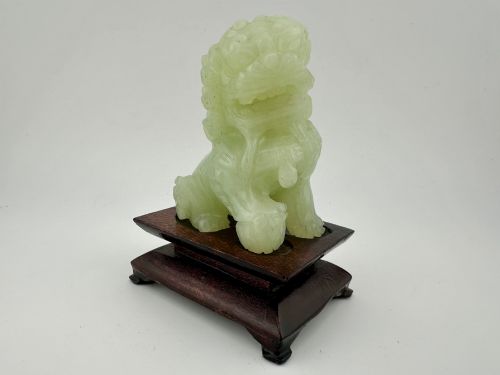
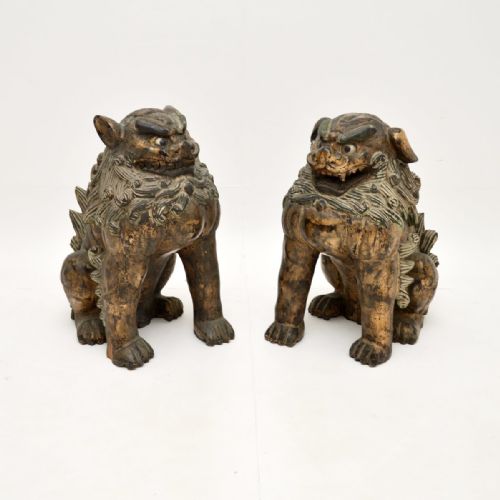
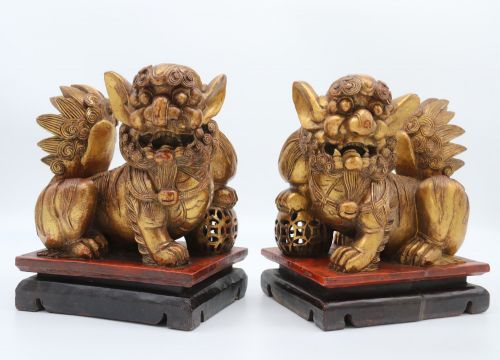
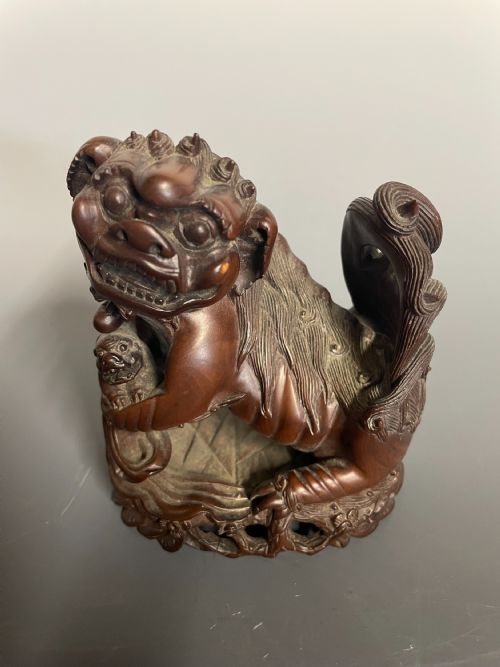
Carvers shaped these guardians from dense hardwoods, root wood, and boxwood, employing meticulous hand-chiselling to define flowing manes and muscular forms. Other makers utilised stone, soapstone, and jade marble, bringing weight and permanence to the figures.
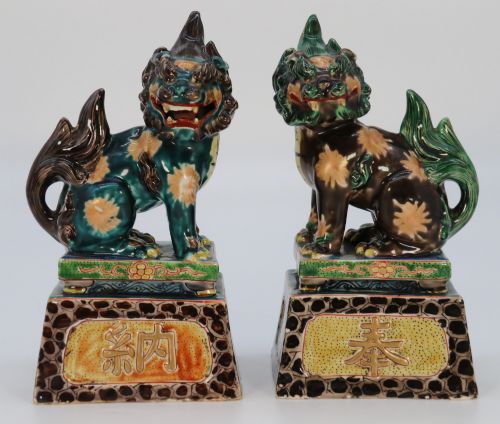
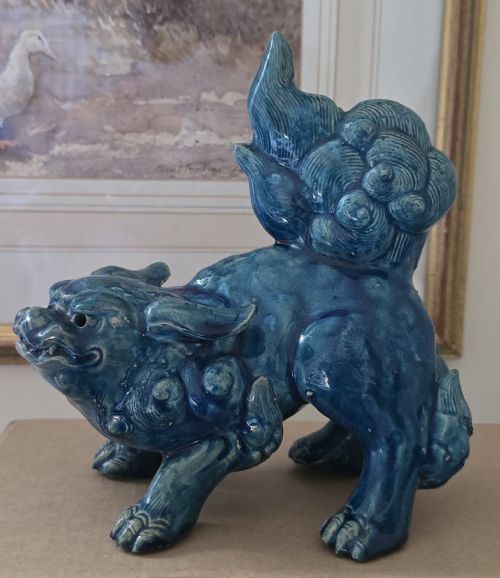
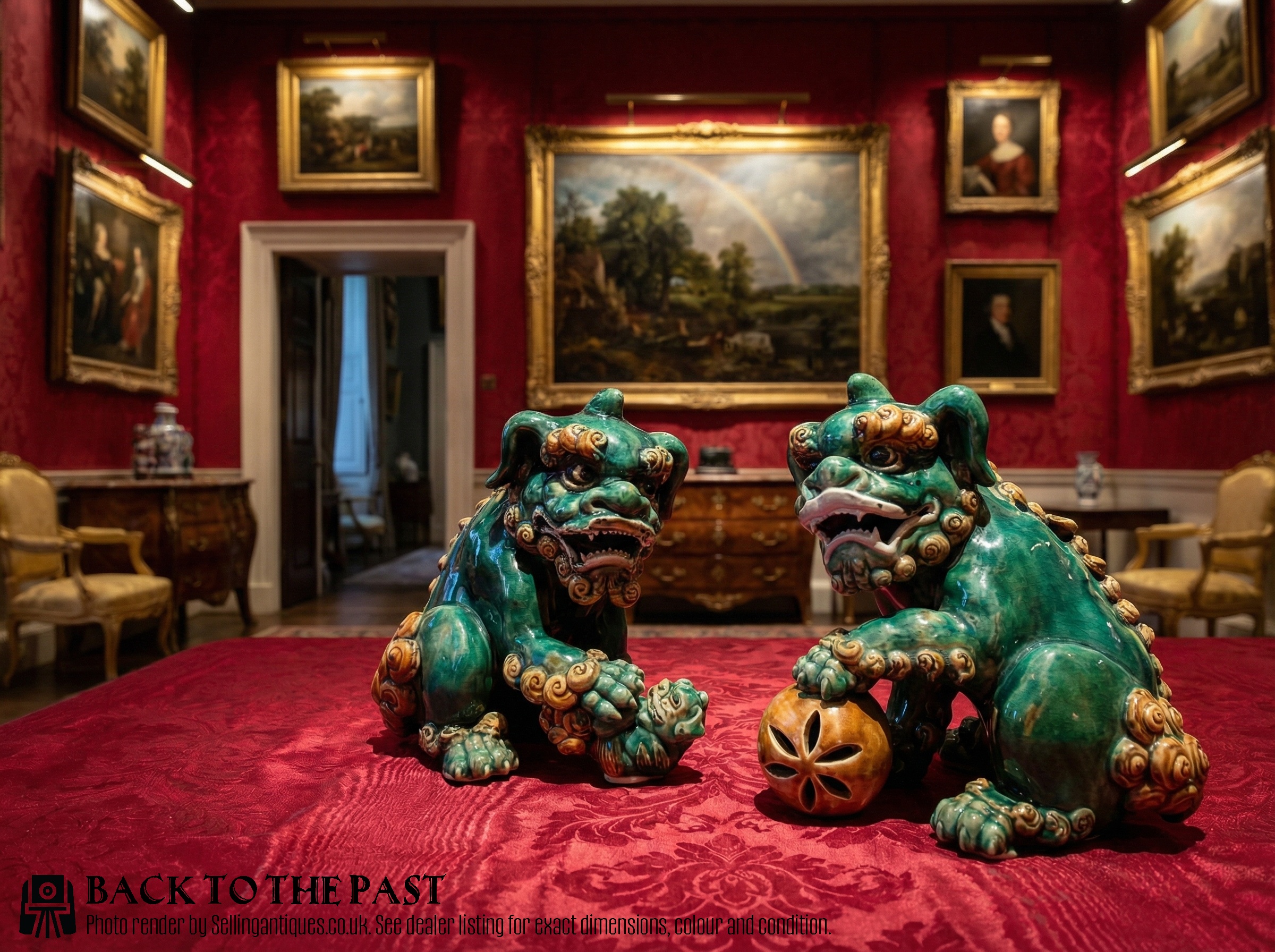
Metalworkers cast bronze and brass examples, sometimes applying gilt surfaces or incorporating turquoise glazes on ceramic bodies. Potters also deployed sancai glazing and polychrome paint over earthenware and porcelain to create rich surface colour.
Materials across these listings include carved wood, bronze, soapstone, ceramic, and cast iron from the nineteenth and early twentieth centuries.
Judging Quality and Execution
Quality rests primarily in the vigour of the carving and the fidelity of the cast. Superior pieces display anatomical depth and expressive facial details rather than flat or formulaic surface decoration.
The choice of medium dictates much of the character, with finely grained boxwood or heavy patinated bronze achieving greater definition than softer earthenware. Intact original surfaces, whether gilt, lacquer, or glaze, elevate the standing of any figure.
The Chinese Guardian Lion Statues Glossary
- Foo Dog
- A colloquial Western term for Chinese guardian lions, derived from Buddhist iconography. These mythical beasts combine the majesty of the lion with the loyalty of the hound.
- Shiwan
- A ceramic tradition originating from Guangdong province, known for expressive figural pottery and distinctive glaze effects. Shiwan pieces often show robust modelling and rich earthy tones.
- Sancai
- A traditional three-colour glaze technique characteristic of Chinese ceramics. Artisans typically combined amber, green, and cream or white tones across the earthenware body.
- Meiji Period
- The era of Japanese history spanning from 1868 to 1912, representing a time of distinct artistic output. Japanese interpretations of guardian lions from this period appear alongside Chinese works.
- Chinoiserie
- The European interpretation and imitation of Chinese artistic traditions and motifs, popular in decorative arts. This aesthetic influenced Western manufacturers crafting decorative figures.
Chinese Guardian Lion Statues: Frequently Asked Questions
What is the difference between foo dogs and temple lions?
Both terms describe the same mythical guardian creatures, though temple lions often imply larger, heavier bronzes or stone figures made for sacred architecture.
Smaller domestic pairs usually bear the designation of foo dogs or lion dogs, intended for interior display and bookends.
How are pairs arranged correctly?
Traditional placement dictates that the male lion holds a brocade ball beneath his paw, while the female restrains a playful cub.
When facing the pair, the male traditionally sits on the right and the female on the left.
Are these statues always made of ceramic?
Ceramic and earthenware examples form a significant portion of the selection, but artisans worked in many different mediums.
Surviving pieces frequently utilise carved wood, bronze, soapstone, brass, and cast iron.
How do I date an antique guardian lion?
Dating relies on examining the material patination, tool marks, and glaze characteristics alongside stylistic traits of the period.
Nineteenth-century pieces often show distinct wear patterns and construction methods typical of the late Qing Dynasty.
How do I care for wooden guardian lions?
Wooden and lacquer figures require stable ambient humidity and protection from direct sunlight to prevent timber movement.
Gentle dusting with a soft, dry cloth preserves the original surface without stripping historical patination.