
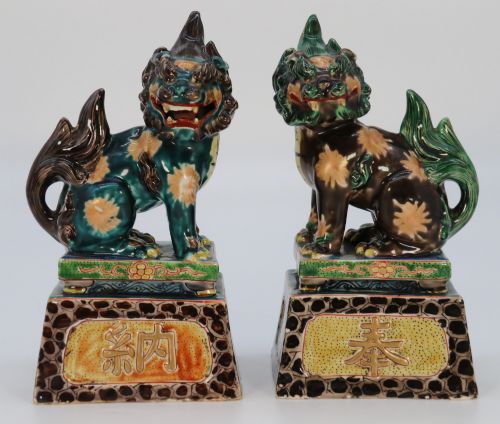
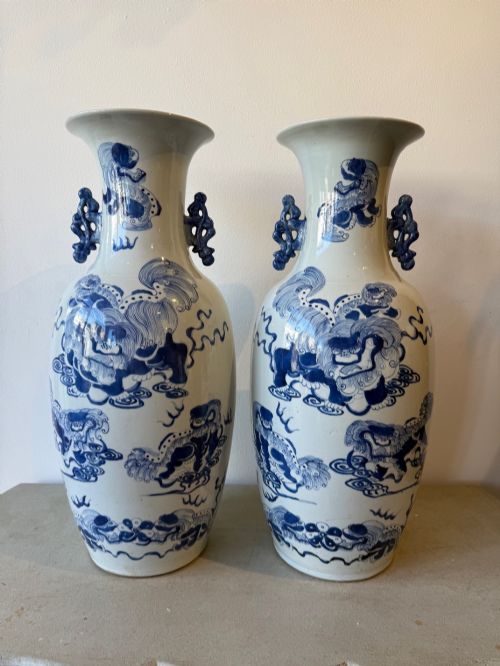


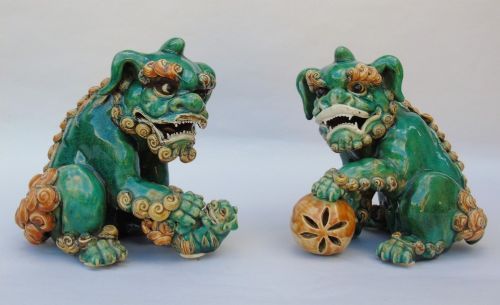
Pair Ceramic Foo Dogs
These pair ceramic foo dogs are guardian figures of immense presence, modelled in porcelain, pottery, and stoneware to protect domestic spaces.
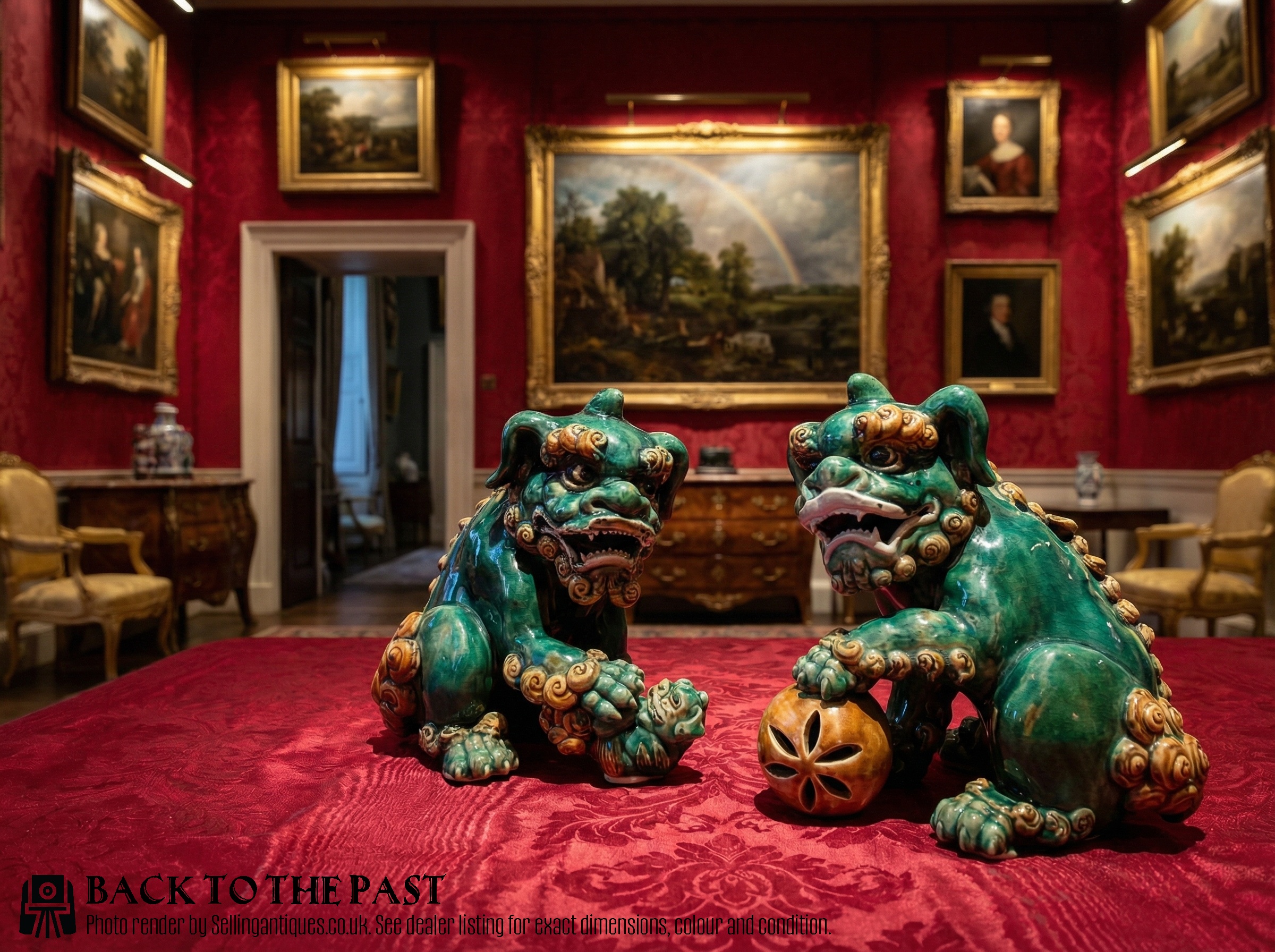
Pair Ceramic Foo Dogs
When you search for pair ceramic foo dogs, you encounter guardian figures rooted in traditional forms, predominantly styled as Chinese Shiwan Buddhistic lion dogs, Chinese Qing style, and Chinoiserie. These protective guardians appear in various guises across the inventory, ranging from decorative figures and figurines to large vases and table lamps.
The versions you meet most frequently on this page date from the nineteenth century and the early twentieth century, reflecting both Late Qing dynasty aesthetics and Victorian interpretations. Alongside traditional ceramic bodies, some listings incorporate related forms such as temple jars and lidded vases executed in Japanese Imari style.
Makers and workshops across these periods utilised diverse decorative traditions, yielding Canton porcelain hand-painted examples, sancai glazed pieces, and blanc de chine lamps. The selection demonstrates how these protective beasts crossed between purely ornamental decorative figures and functional furnishings like table lamps.
How they were made
Makers shaped these guardian figures from ceramic, porcelain, and stoneware bodies, often finishing the surfaces with hand-painted details, cobalt glaze, or enamel. Artisans employed traditional moulding and throwing techniques to achieve the characteristic muscular forms of the Buddhist lions.
Surface decoration frequently involved rich glazing techniques such as sancai and cobalt blue, alongside the application of gold leaf for accentuation. Some pieces integrate structural elements of brass and fabric, particularly those adapted into table lamps during the nineteenth and twentieth centuries.
Listings feature ceramics spanning the nineteenth century, nineteen hundred, and nineteen twenty, utilising porcelain, stoneware, and cobalt glaze.
What varies in quality
The refinement of the modeling and the precision of the hand-painted enamel or cobalt glaze separate the finest figures from simpler productions. Artisans who invested greater care into the facial expressions and muscular articulation of the lions achieved a far more commanding presence.
The integrity of the ceramic body and the preservation of original surface finishes, whether sancai glaze or blanc de chine, dictate the standing of a piece within the range. Consistency between the two figures in a pair remains a primary indicator of original intent and balanced craftsmanship.
The Pair Ceramic Foo Dogs Glossary
- Foo dog
- A traditional Western term for a Chinese guardian lion or Buddhist lion, depicting mythical protector beasts that traditionally flank temple gates.
- Blanc de chine
- A French term for white porcelain originating from Dehua in China, prized for its smooth, milky glaze.
- Sancai
- A traditional type of Chinese ceramic decoration using three glaze colours, typically incorporating shades of amber, green, and creamy white.
- Imari style
- A decorative scheme originating in Japan, characterised by distinctive iron red, cobalt blue, and gilt motifs on a white porcelain ground.
- Chinoiserie
- European artistic style reflecting Chinese artistic influences, popular across decorative arts and furniture.
Pair Ceramic Foo Dogs: Frequently Asked Questions
What are pair ceramic foo dogs?
These are paired guardian lion figures modeled in ceramic, porcelain, or stoneware, originating primarily from the nineteenth and early twentieth centuries.
They represent traditional Buddhist guardian beasts designed to ward off negative influences and protect the spaces they inhabit.
How were pair ceramic foo dogs used?
Historically, these guardian figures stood in pairs flanking entrances, doorways, or altars to provide spiritual protection and denote status.
In later domestic settings, they transitioned into decorative mantel ornaments, table lamps, and vessels paired with occasional furniture.
How do I live with pair ceramic foo dogs?
These sculptural figures suit placement on mantelpieces, sideboards, or dedicated tables where their form and glaze can be appreciated.
Because many examples date from the nineteenth century or earlier, stable placement away from heavy foot traffic protects their ceramic and porcelain bodies.
How do I tell periods apart?
Dating relies on observing stylistic markers such as Late Qing dynasty conventions, Victorian adaptations, or early twentieth-century manufacturing traits.
Examinations of the glaze type, such as sancai or Canton enamel work, alongside the potting technique, help establish the era of creation.