


Chinese Ceramic Foo Dogs
These Chinese ceramic foo dogs are symbolic guardian figures modelled in porcelain, earthenware and pottery, prized for bringing protection and traditional character to an interior.
Chinese Ceramic Foo Dogs
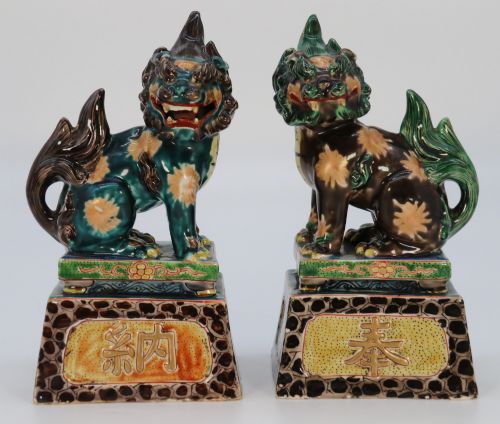
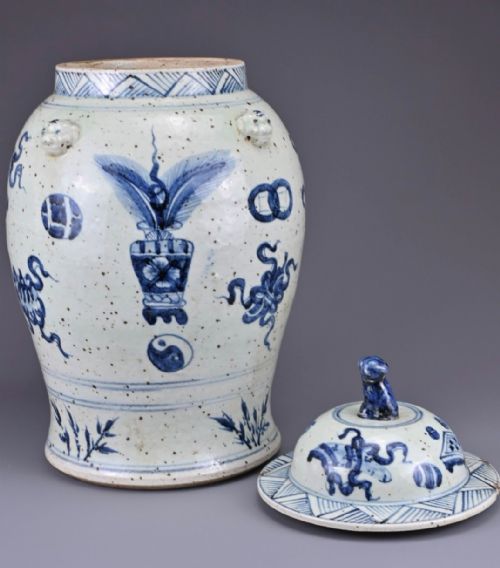
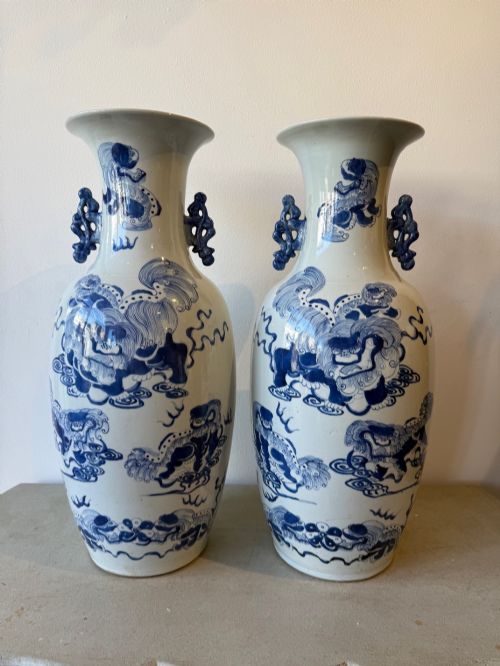
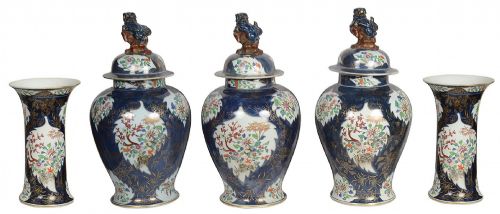
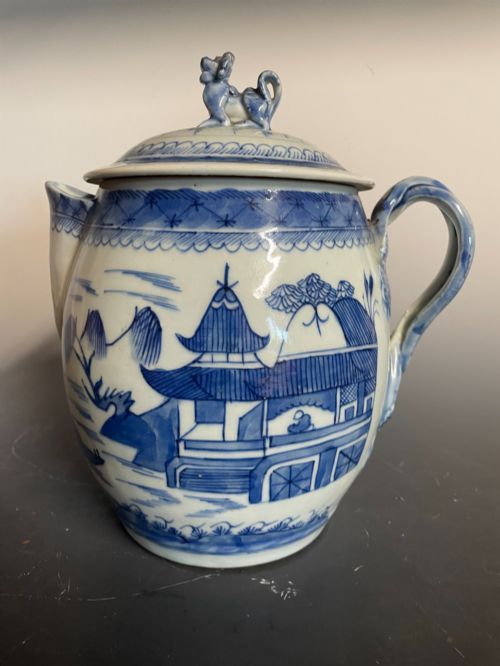
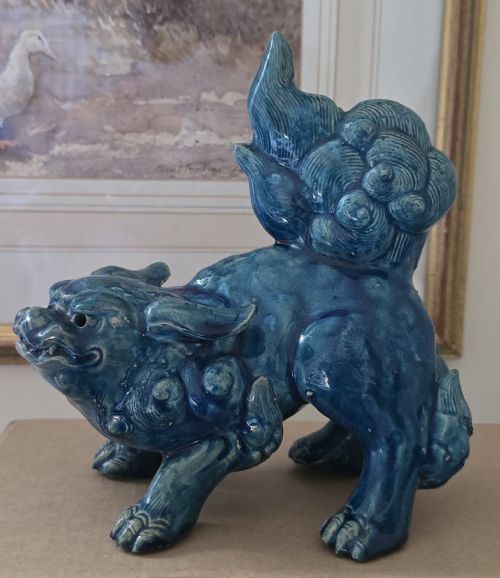
When you search for chinese ceramic foo dogs, you encounter guardian figures that take several forms, including paired temple jars, table lamps, small jars, and standalone ceramic sculptures. The pieces on this page span from the seventeenth century through the nineteenth and early twentieth centuries, reflecting diverse periods such as the Qing Dynasty and the Japanese Meiji period.
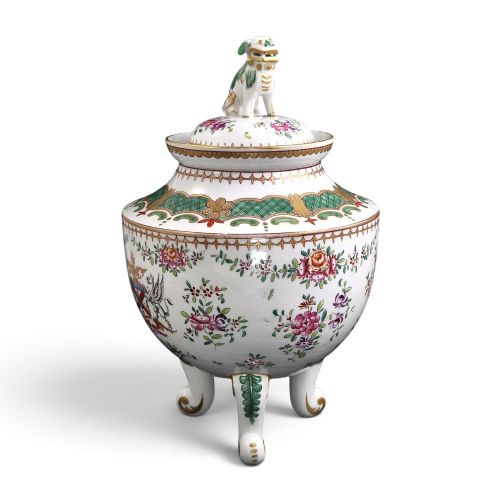
The objects include traditional pairs of Buddhist lion dogs alongside related forms such as blue and white vases, armorial porcelain vessels, and figural jugs. Makers and workshops from different eras produced these works using styles that range from Chinese Ming and Qing interpretations to Chinoiserie and Japanese influences.
Assessing quality and execution
Quality rests in the crispness of the modelling, the control of the glaze, and the precision of the hand-painted enamels. Superior examples display confident brushwork and balanced proportions that maintain the fierce yet protective expression characteristic of the guardian figures.
Finer works achieve a harmonious integration between the ceramic body and the surface decoration, whether in a monochrome pale green glaze or a complex multi-coloured enamel palette. The distinction lies in the deliberate execution of details rather than the mere presence of ornamentation.
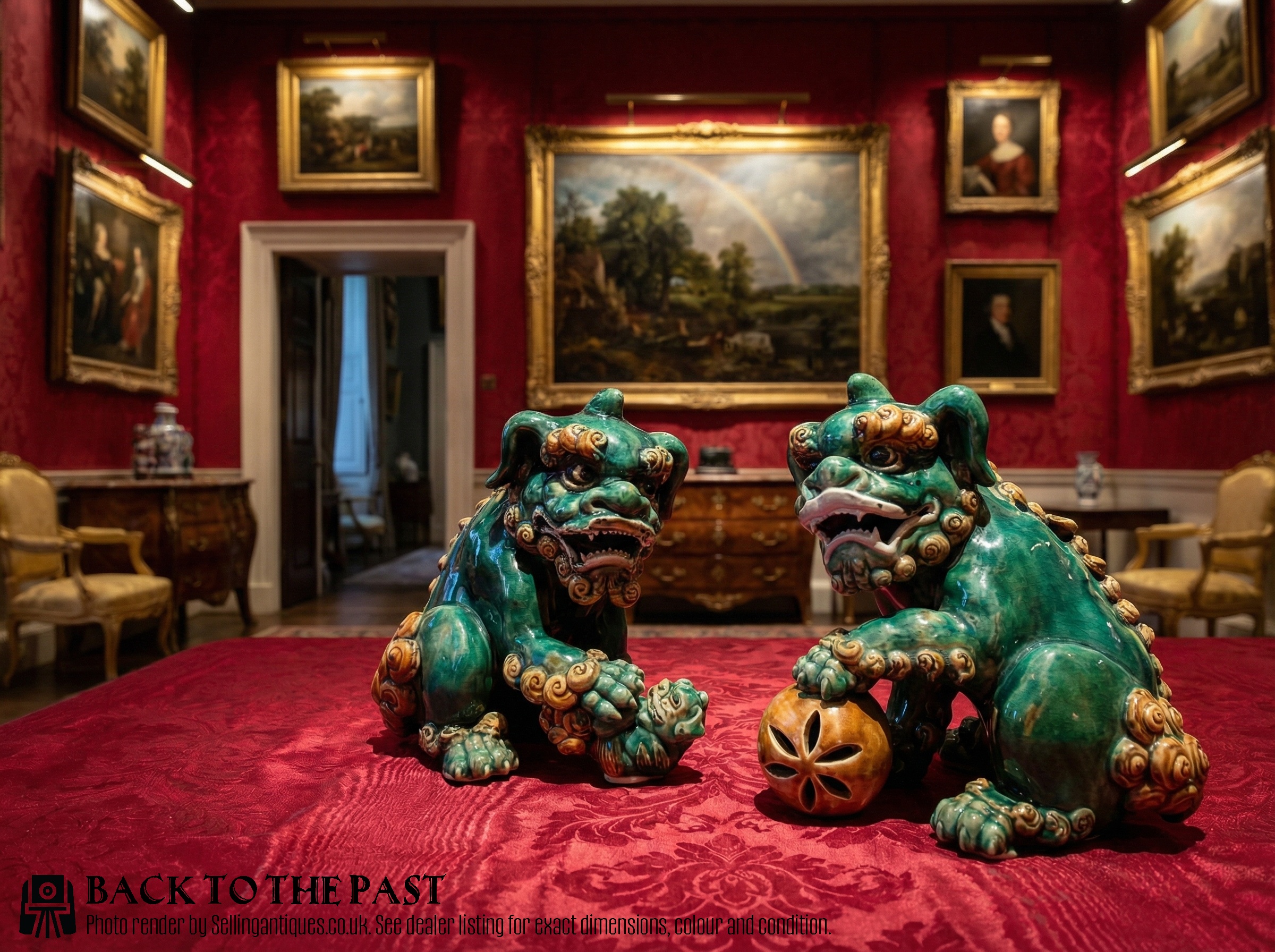
One guardian lion steadfastly rests its paw on a woven ball while its partner quietly restrains a mischievous cub.
Samson Paris
The Chinese Ceramic Foo Dogs Glossary
- Foo dog
- A traditional guardian lion figure placed outside temples and homes to ward off negative spirits. These ceramic sculptures often appear in pairs guarding an entrance or flanking a vessel.
- Famille rose
- A palette of opaque enamels introduced in the eighteenth century, dominated by pink or rose colours. It allows for delicate, nuanced shading on porcelain surfaces.
- Sancai
- A three-colour glaze tradition typically combining amber, green, and cream or off-white tones. Artisans utilised this technique extensively on earthenware and pottery bodies.
- Blanc de chine
- A pure white porcelain produced in Dehua, China, valued for its glossy surface and smooth texture. It frequently highlights the contours of figurative sculptures and lamps.
- Wucai
- A polychrome ceramic decoration technique meaning five colours, typically combining underglaze blue with overglaze iron red, green, yellow, and black enamels.
Chinese Ceramic Foo Dogs: Frequently Asked Questions
What is a foo dog?
A foo dog is actually a representation of a Chinese guardian lion rather than a canine. These mythical beasts historically stood outside palaces and temples to provide spiritual protection.
Over centuries, the form transitioned into decorative ceramics, table lamps, and mantel ornaments designed for domestic interiors.
How do I display a pair?
Traditional placement involves positioning the pair facing each other across an entryway, mantelpiece, or surface. The male typically holds a brocade ball beneath his paw while the female restrains a cub.
Matching pairs create visual symmetry and maintain the traditional protective balance intended by the maker.
Are these figures functional?
Most foo dogs serve a purely decorative or symbolic role as sculptural art. However, some historical examples function as the lids for temple jars or incorporate wiring as table lamps.
Their primary purpose remains aesthetic enhancement and the introduction of traditional cultural motifs into a room.
How do I distinguish periods?
Dating relies on examining the ceramic body, the characteristics of the glaze, and the style of the painted enamels. Earlier Qing and seventeenth-century pieces display different potting techniques compared to late nineteenth-century or early twentieth-century export wares.
Comparing the baseline clay and pigment saturation helps separate traditional Asian manufacture from later European revival pieces.