
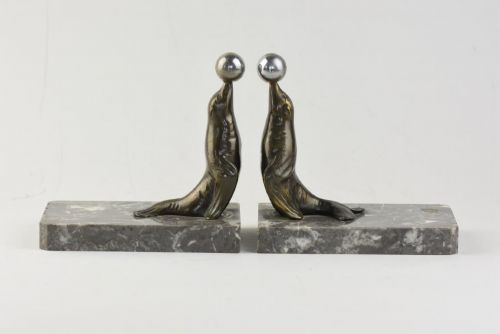





Art Deco Marble Bookends
Art deco marble bookends combine heavy stone plinths with metal animal figures to anchor a shelf with period weight and clean lines.
Art Deco Marble Bookends
Art deco marble bookends comprise sturdy stone bases paired with metal sculptural elements, designed to support rows of volumes on a shelf. These pieces date principally from the nineteen twenties and nineteen thirties, reflecting the geometric and stylised aesthetic of the period.
The objects frequently incorporate figural subjects mounted directly onto marble or alabaster plinths. Animal subjects predominate across the selection, ranging from domestic dogs and cats to exotic wildlife.
Originating largely from French workshops, these items utilise substantial stone slabs to provide the necessary weight for holding books upright. Collectors encounter both plain architectural forms and elaborate sculptural compositions.
How art deco marble bookends were made
Craftsmen paired natural stone bases in marble or alabaster with metal figures cast in bronze, spelter, or brass. The metal components were often finished with silvering, chrome plating, or patination to achieve the desired metallic lustre.
Foundries utilised casting techniques to produce figurative elements such as elephants, sealions, and birds, which were subsequently fixed to prepared stone plinths. The marble bases were cut, polished, and sometimes combined with contrasting stone varieties to emphasise the geometric forms characteristic of the style.
Spotted on shelves: terriers, pelicans, and elephants holding up the heavy reading.
What varies in quality
The distinction between tiers of the range lies in the choice of materials and the fidelity of the casting. Solid bronze figures mounted on high-grade marble represent the upper echelon, whereas spelter castings on simpler alabaster form the more accessible category.
Execution of detail in the metalwork and precision in the stone cutting determine the refinement of the piece. Crisp lines in the sculptural elements and well-finished stone edges elevate the overall presence of the object on the shelf.
Max Le Verrier
The Art Deco Marble Bookends Glossary
- Spelter
- A zinc alloy commonly utilised as a less expensive alternative to bronze for cast figures. It frequently received a bronze, silvered, or painted finish to simulate more costly metals.
- Alabaster
- A softer, translucent stone often used for bases in place of denser marble. It provides a lighter appearance with distinct natural banding.
- Patination
- The surface finish or colour achieved on metal through age or chemical treatment. This process enhances the definition of the cast details.
- Plinth
- The solid block of marble or stone that serves as the foundation and weight for the bookend. It anchors the vertical decorative element.
- Verdi marble
- A green-toned decorative stone frequently employed in French bases from the period. Its distinctive coloration complements metallic animal figures.
Art Deco Marble Bookends: Frequently Asked Questions
How heavy are they?
The weight derives primarily from the dense marble or alabaster bases, which are sufficiently heavy to support standard rows of books.
Smaller pairs utilise compact stone plinths, while larger figurative compositions require substantial mass to maintain stability on a shelf.
Are the figures solid bronze?
Metal components vary across the range between solid bronze and plated spelter. Bronze elements exhibit greater weight and durability, whereas spelter figures are cast alloys with surface finishes.
Examination of the underside or unexposed areas often reveals the composition of the metal used in the casting.
Where were they made?
Many examples originate from French foundries active during the interwar decades. These workshops produced numerous decorative metal and stone accessories for domestic interiors.
Stylistic conventions and material combinations point directly to the manufacturing centres operating in France during the nineteen twenties and thirties.
How do I clean marble bases?
Maintenance requires dry or slightly damp cloths to remove dust from the stone surfaces without damaging the polish. Abrasive cleaners should be avoided to preserve the natural finish of the marble or alabaster.
Metal figures mounted on the stone need gentle treatment to protect any remaining silvering, chrome plating, or patination.