


19th Century Garden Statues
These 19th century garden statues bring weight and classical character to an outside space.
19th Century Garden Statues
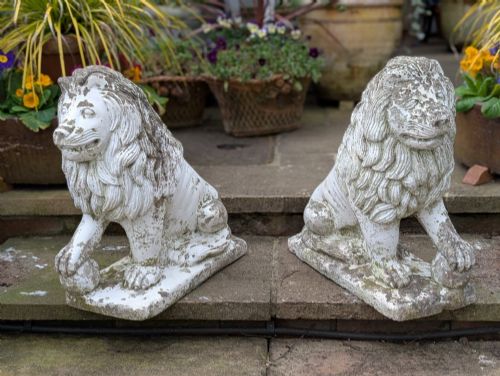
When you search for 19th century garden statues, you encounter heavy masonry and cast metal designed to withstand the weather while holding classical form. The selection on this page centres heavily on terracotta and marble, taking the shape of lions, figures of Venus, and classical maidens.
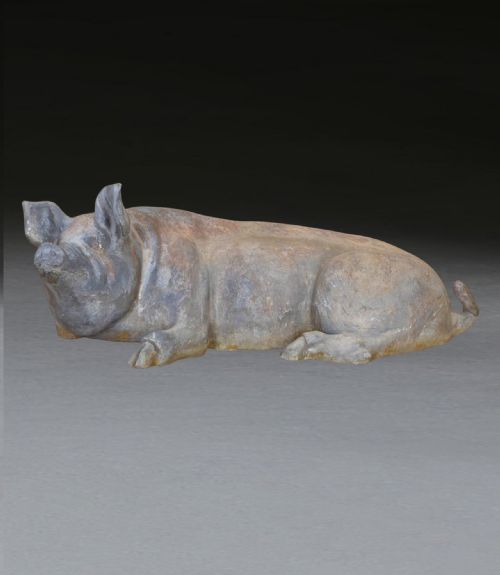
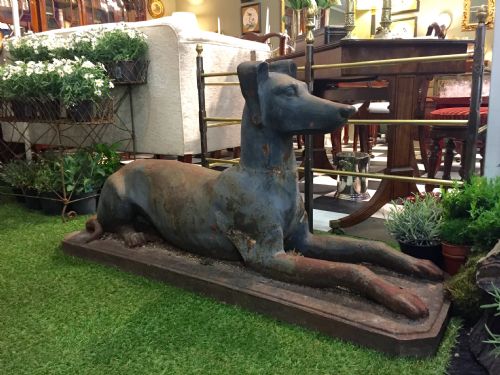
You see pieces ranging from substantial French Medici lions to English lead pigs and grand Italian marble sculptures. Forms also include carved Carrara marble busts and terracotta dogs, reflecting both European country house traditions and Grand Tour tastes.
How they were made
Makers shaped these pieces using durable media suited to outdoor display, relying primarily on terracotta, cast stone, lead, and carved marble. Terracotta works were moulded and fired in sections to create large figures like lions and dogs, while marble statues and busts were hand-carved from solid blocks.
Metalwork involved casting lead and iron into detailed moulds, as seen in the large dogs produced in the manner of Henri Jaquesmart. Stoneware and plaster also appear, finished with paint or left in their natural state to weather over time.
Listings feature materials spanning terracotta, lead, stoneware, and carved Carrara marble.
What varies in quality
The distinction between ordinary and exceptional pieces lies in the fidelity of the carving and the purity of the material. Hand-carved Carrara marble displays crisp drapery and facial expression, whereas secondary pieces rely on simpler moulded terracotta or cast stone.
Proportion and scale dictate the visual impact of each piece, with well-balanced pairs of lions or figures commanding attention through symmetry and anatomical accuracy. Weathering and surface patina also contribute to character, provided the underlying material remains sound.
Henri Jaquesmart·Greuze
The 19th Century Garden Statues Glossary
- Carrara marble
- A type of white or blue-grey marble from the city of Carrara in Italy, prized for classical sculpture and architectural ornaments. It was the favoured material for Grand Tour busts and classical maidens.
- Terracotta
- Baked red-brown clay used for large-scale figures and architectural ornaments. It allows for detailed moulding before firing in kilns.
- Medici lions
- A pair of marble lion sculptures guarding the Villa Medici in Rome, widely copied in various scales during the nineteenth century. They typically feature one paw resting on a sphere.
- Grand Tour
- A traditional trip of Europe undertaken by upper-class young European men of means in the eighteenth and nineteenth century. It resulted in the acquisition of art, sculpture, and antiquities.
- Plinth
- A heavy base or pedestal supporting a statue, column, or bust. Stoneware and carved stone examples elevate garden sculpture above ground level.
19th Century Garden Statues: Frequently Asked Questions
How do I care for stone statues?
Stone and terracotta garden figures require minimal interference, though avoiding harsh chemical cleaners preserves the natural surface.
Protecting vulnerable pieces from sitting in standing water during freezing winter months prevents cracking.
Can terracotta stay outside all winter?
Most nineteenth-century terracotta handles outdoor conditions well, but severe frost can damage unsealed or porous clay.
Moving large busts and figures under cover during the coldest months adds longevity.
What is a Grand Tour statue?
Grand Tour pieces are sculptures and busts acquired by travellers visiting classical sites in Italy during the nineteenth century.
These smaller or portable works brought classical antiquity back to English and European country houses.
Where should I place a garden lion?
Pairs of lions traditionally flank gateways, entrance steps, or the ends of a terrace wall to create a formal boundary.
Their substantial weight requires a level stone base or paved foundation for stability.